OBITUARY
Dr. Edwin H. Kolodny
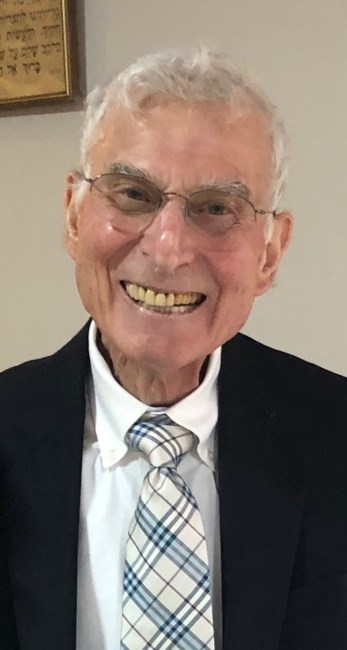
Dr. Edwin Kolodny, a renowned neurologist and geneticist whose distinguished career advanced the understanding and treatment of inherited metabolic and degenerative diseases of the nervous system, died on November 20, 2026 surrounded by a family that was always the center of his life.
Over the course of an extraordinary career as a physician, researcher, educator, and academic leader, Dr. Kolodny made significant contributions to the fields of neurology and neurogenetics, with particular expertise in Jewish genetic diseases.
He served as the Bernard A. and Charlotte Marden Professor of Neurology and Chairman of the Department of Neurology at the New York University School of Medicine, as well as Director of its Division of Neurogenetics. He served on numerous scientific advisory boards and authored many articles published in leading medical journals.
A native of Brookline, Massachusetts, Dr. Kolodny attended Boston Latin School before earning his A.B. from Harvard College, graduating cum laude in Economics. He received his M.D. with honors from the NYU School of Medicine.
Following medical school, he trained in Internal Medicine for two years at Bellevue Hospital in New York before completing his residency in Neurology at Massachusetts General Hospital in Boston. He subsequently spent three years at the National Institutes of Health in Bethesda, Maryland, training in neurochemistry.
Dr. Kolodny then returned to Boston and Harvard Medical School, where he rose to the rank of Professor of Neurology and served as Director of the Eunice Kennedy Shriver Center. He later returned to NYU, where he led the Department of Neurology and continued his work as a clinician, researcher, teacher, and mentor.
Throughout his career, Dr. Kolodny received numerous awards and honors recognizing his contributions to medicine. These included the Alpha Omega Alpha Award of the National Tay-Sachs and Allied Diseases Association and recognition among Best Doctors in America. His expertise was recognized internationally, and he served as a visiting professor at medical schools in Israel and elsewhere around the world.
As impressive as his professional accomplishments were, those who knew him best understood that medicine was only one part of who he was.
Dr. Kolodny was endlessly curious and took great pleasure in the things he loved. He was an avid stamp collector who regularly attended stamp shows and delighted in understanding not only the stamps themselves, but the history and stories behind each one. He was also a passionate and accomplished home chef, particularly proud of his repertoire of tagines. He devoted hours each week to cooking, making sure that he and his beloved wife, Roz, could enjoy a gourmet meal together night after night.
But above everything else was family.
Dr. Kolodny and his wife, Dr. Roselyn Kolodny, a pediatrician, built a family of which he was enormously proud. They had four children, Nancy Lieberman, Dr. Leonard Kolodny, Robin Leshem, and Noah Kolodny; two sons-in-law, Ralph Lieberman and Erez Leshem; two daughters-in-law, Debby and Michelle Kolodny; and 12 grandchildren: Naomi, Tamar, Benjamin, Rachel, Daniel, Sarah, Roey, Eitan, Elah, Spencer, Levi, and Micah.
His grandchildren, in particular, were a source of tremendous joy and pride.
For Dr. Kolodny, showing up for family mattered. He took special pride in being present for weddings, bar and bat mitzvahs, and the milestones that marked the lives of the people he loved. Each year, he brought his extended family together for Passover, creating an opportunity not simply to take a vacation, but to ensure that generations of the family could spend meaningful time together and celebrate their Jewish faith and traditions.
Those gatherings reflected what mattered most to him: family, tradition, learning, food, and the simple privilege of being together.
Dr. Kolodny leaves behind an extraordinary legacy. In medicine, it can be found in the patients he cared for, the physicians and scientists he taught and mentored, and the body of knowledge he helped advance. But his most cherished legacy lives in the family he and Roz built, in the traditions he worked so deliberately to preserve, and in 12 grandchildren who will carry his stories, values, curiosity, and love forward.
For all that he accomplished in a remarkable career, his proudest role was not professor, physician, researcher, or chairman.
It was husband, father, and grandfather.
Show your support
Add a Memory
Share Obituary
Get Reminders
Services
Funeral Service
Committal Service
Share
Service
SHARE OBITUARYSHARE
- GET REMINDERS
v.1.18.1