
OBITUARY
Dr. James Evan Sabin
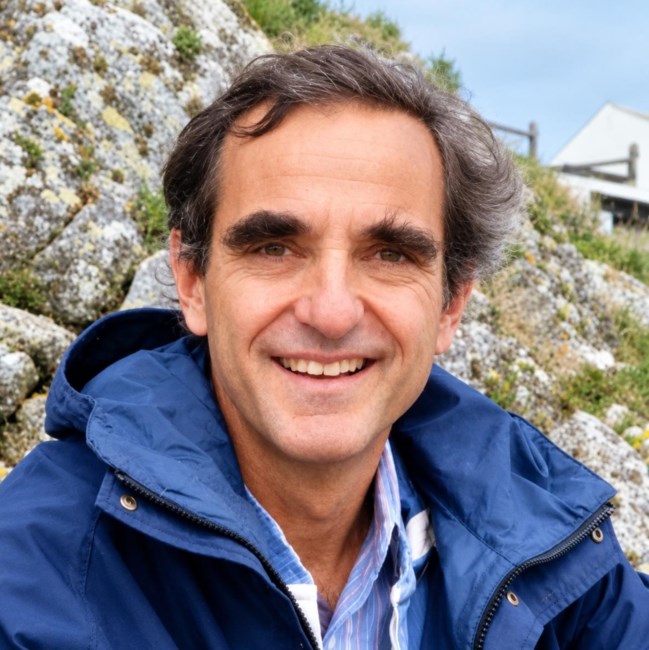
Dr. James Evan Sabin, age 87, a wonderful husband, father, grandfather, physician, friend, and mentor, died on Wednesday, October 14, 2026. Jim was a caring and thoughtful listener, an engaged spirit with endless energy, and the cultivator of a pair of world-class eyebrows.
Jim died at home peacefully, holding the hand of his beloved wife of 65 years, Margery Sabin. He is survived by her, his sons Michael Sabin and Paul Sabin, and their spouses, Deborah Sabin and Emily Bazelon. He is also survived by his grandchildren, Zachary Sabin and his wife Eliza Baird-Daniel, Matthew Sabin, Elena Sabin, Eli Sabin, and Simon Bazelon. We are mourning our loss and also remembering a person who lived with kindness, generosity, and wisdom.
Born an only child in New York City to Oliver Sabin and Vivian (Shenkin) Sabin, Jim grew up playing baseball and tennis, loving summer camp and his friends, and pondering the meaning of life. He valued family unity and a life of purpose above all. Though his strongly (ok stubbornly) held principles could at times challenge those around him, he was a peacemaker who cherished his relationship with Margery, with his sons Paul and Michael, and with an extended network of grandchildren and close family and friends of multiple generations. He strived to bring the family together regularly, and loved maintaining long and dear friendships from summer camp, high school, college, and both his and Margery’s workplaces.
Jim was a calm man in constant motion; he lived life with quiet gusto. He loved hiking the Green and White Mountains, jumping into swimming holes, and pausing on high ridgelines. He ran road races and sprinted up and down the house stairs in the midst of New England winters. He taught Michael and Paul to throw a curveball and a left hook (but failed to pass on the one-handed set shot).
He loved his many trips with Margery, particularly their cross-country drive in the “Pink Tuna Fish” (a car that had to be entered by climbing in the trunk, or so we are told); their dozens of visits to medieval Fanghetto in the Maritime Alps; their shared working vacations to India, China, and London; and times leading student trips with Putney Student Travel and Semester at Sea. They shared more than twenty idyllic summers at Middlebury’s Breadloaf School of English campus in Vermont. Jim savored fresh bread, ripe cheese, and local wine and always appreciated interactions with curious groups of local schoolchildren. He taught his own children to love travel and the outdoors, exhorting them to engage with the world’s offerings around them and preaching that the sun was “about to come out” and a reenergizing “second wind” was surely imminent. He was known for telling his grandchildren long stories about dragons and his personal friend Superman to propel them up steep stretches of trail or to pass the afternoon.
Jim was a great listener with an astounding memory for details. Family members and friends recount how Jim listened to their stories, concerns, and interests, and later continued these discussions with follow-up questions and enduring care for their success and happiness. He remembered the lyrics of folk ballads, college fight songs, mildly obscene limericks from the 1940s, details of neighbors' bat-mitzvah speeches from 50 years earlier, and most of all the personal aspirations and challenges of people he interacted with over his full and rich life. He was a trusted mentor, friend, and confidant of so many. He was often consulted by friends, and friends of friends, at critical junctures or challenging moments, and he was deft and generous in extending his empathy and wisdom beyond the circle of his professional practice.
Jim was also passionate about his medical career, where he spent more than five decades at the crossroads of clinical psychiatry, organizational leadership, and health care ethics. His career was driven by his interest in people’s stories, his own intellectual curiosity, and his commitment to fairness and ethical decision-making. Jim earned a B.A. in Philosophy and Psychology from Harvard College in 1960 and an M.D. from Harvard Medical School in 1964. He appreciated the depth and interpersonal connections provided by the direct service to patients in his community mental health work. In 1975, he joined the psychiatry practice of the Harvard Community Health Plan, a not-for-profit HMO, treating patients with serious mental illness. Jim oversaw the launch of Harvard Community Health Plan’s Wellesley Center and then moved to a similar administrative role in the main Kenmore Center. Not surprisingly, his leadership style was marked by his special skills in listening and facilitation.
In 1986, Jim joined the Harvard Community Health Plan’s teaching center and began a long collaboration with the philosopher Norman Daniels, co-developing a framework for fair, transparent health-care rationing called “Accountability for Reasonableness.” Jim and Norman’s book, “Setting Limits Fairly: Can We Learn to Share Medical Resources?” was published in 2002. Jim co-authored another book the following year with Steven Pearson and Ezekiel Emanuel, titled “No Margin, No Mission: Health Care Organizations and the Quest for Ethical Excellence.”
Jim had a talent for reinventing himself. As a clinician, manager, and thinker, Jim’s throughline was his conviction that ethical reasoning should be part of the everyday decisions of doctors, administrators, and patients. In 1999, he became the leader of the Harvard Pilgrim Health Care Ethics Program, allowing him to help other doctors and professionals think through the difficult trade-offs that are an inherent part of medical practice and organizational leadership.
Over the next twenty years, Jim developed cases for and facilitated more than 100 meetings of the Ethics Advisory Group, building a nationally recognized model for organizational ethics. He wrote more than 250 online essays for his Health Care and Organizational Ethics blog and the Hastings Center’s “Over 65” column. His influence extended through his service as Vice Chair of the American Medical Association Council on Ethical and Judicial Affairs, where he led a three-year study on physician-assisted suicide or aid in dying. In 2018, he received the Massachusetts Psychiatric Society’s Lifetime Achievement Award. In retirement, he led courses on Albert Camus, Robert Frost, and Antigone, and took classes in literature, theater, and autobiography at the Harvard Institute for Lifelong Learning.
One of Jim’s many students concisely captured the essence of his approach to his work and to life in general: “Jim was a mentor to me and a kind man with great integrity.” Jim will be remembered by all as a very special person - wise, loving, thoughtful, and fully engaged with life and the people around him.
All are welcome at the Celebration of Life for Jim Sabin. The celebration will be held on October 24 at 3:30 pm in the Sanctuary of Hebrew College, 1860 Washington Street, Newton, MA, and will be streamed online at https://www.reyim.org/livestream/
In lieu of flowers, memorial contributions in Jim’s honor may be made to the Appalachian Mountain Club (www.outdoors.org) or to the James E. Sabin Fund for Bioethical Leadership in Healthcare at the Hastings Center (https://www.thehastingscenter.org), indicating that the donation is in memory of James E. Sabin.
Show your support
Add a Memory
Share Obituary
Get Reminders
Services
Memorial Service
Newton, MA
SHARE OBITUARYSHARE
- GET REMINDERS
v.1.18.0