
OBITUARY
Angelo Mirabella
July 26, 1937 – November 25, 2025
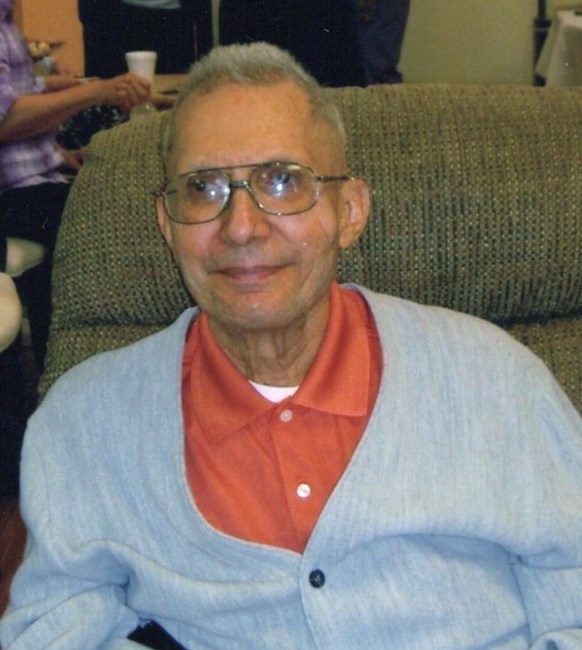
Angelo Mirabella, the New York-born son of Italian immigrants whose love of learning stretched beyond his field of psychology to music, mathematics and photography, died Nov. 25 at University of Maryland Baltimore Washington Medical Center. He was 88.
Angelo, a retired research psychologist and resident of Charlestown Senior Living Community in Catonsville, would say he never realized as a child that his family was poor. Early on, he lived with his parents and three older siblings in a four-room apartment on Mott Street in Manhattan’s Little Italy. They shared a bathroom down the hall with several families, and their bathtub, in the kitchen, doubled as a countertop when covered. Angelo excelled as a student and became the first in his family to graduate from college, going on to earn a doctorate in psychology at the University of Massachusetts, Amherst.
He and his wife Eleanor Nancy (Sigillo) Mirabella lived at Charlestown since December 2021.
Besides his wife of 63 years, he is survived by two daughters, Lorraine Mirabella Gately, of Towson, and Nancy (Mirabella) Hausler, of Catonsville; son-in-law Bob Hausler of Catonsville; four grandchildren, Joseph Michael Gately, of Pittsburgh, Pennsylvania, Benjamin Hausler, of Fort Hood, Texas, Briana Hausler, of Catonsville, Paul Joshua Gately, of Towson, a brother-in-law and sister-in-law, Joe and Virginia Sigillo, of Sun Lakes, Arizona; and seven nieces and nephews.
During weekly visits to his grandchildren growing up, Angelo played with the kids, planted tomatoes and zucchini in the garden and fixed things in the house. He’d then take a break, sitting quietly with an open briefcase full of pens, pencils, calculator, lined yellow pads and math books, solving equations.
“He had a unique whistle that would be only for calling the cats over, and I still remember that soft tune,” Briana Hausler, 19, said. “His remarks, like saying, ‘Yes, Sir,’ to Grandma after giving him orders, or ‘Hold the Wire’ when switching the now-wireless landline back to a new person, would always manage to lighten the mood.”
Paul Gately, 19, would cut short playtime at family gatherings so he could watch the History Channel with his grandfather and learn about the War of 1812 and other events. Benjamin Hausler, 22, still marvels at the child-size walking stick his grandfather carved for him to take on hikes. He recalled family birthday dinners at Christina’s Italian restaurant in Wheaton and time with his grandparents at Wheaton Regional Park playground.
“It was my favorite place to go whenever I went down there,” Benjamin Hausler said.
When first-born grandchild Joseph Gately was about 2, he’d mimic the “Grandpa walk,” clasping his hands behind his back and strolling in the yard. When Joseph reached middle school,
Angelo helped him with math homework over the phone. His grandfather told college stories, stressing that he belonged to a “fraternity,” not a “frat,” Joseph recalled.
Angelo was born July 26, 1937, in New York, the youngest of four children of Sebastian “Sam” Mirabella, who worked as a union laborer doing carpentry and stone work, and Francesca “Frances” Mirabella, a homemaker and factory seamstress. Sebastian, born in 1895, left school after 5th grade, while Francesca, born in 1905, stayed in school through about 3rd grade. Both immigrated from their Sicilian hometown of Licodia Eubea near Catania to New York, Sebastian in 1915 and Francesca in 1920. They were married in 1925.
The family moved around 1944 from the $35-a-month Little Italy rental to an eight-room apartment in the Bronx. Angelo thought he’d hit it big with larger quarters in the predominantly Jewish and Italian community, where he and friends played stickball and stoop ball in the street and roamed the neighborhood after school.
Back then, Angelo said, parents would say, “‘Go out, don’t bother me.’” During one game, Angelo miscalculated a throw and hit a neighbor's window, breaking it. Those days were among the happiest of his childhood.
The family left the city around 1947 when Angelo’s father bought a 20-acre chicken farm in Ridgewood, New Jersey, from a lawyer friend. Besides a house, the property came with a dilapidated barn and two chicken coops, one of which housed 500 chickens. When the family adopted a dog from a next-door neighbor's litter, Angelo named him Duke because it sounded regal.
Angelo’s parents supplemented the farm income working in Manhattan, his father in construction and his mother as a seamstress. Angelo’s older brother, Tommy, attended husbandry school at Alfred University and hoped to expand the farm operation, but his views clashed with his father’s.
His parents separated around 1949, and he, his mother and siblings drove across the country to San Jose, California. They lived there a year, returning to New York so Angelo’s sister, Santa “Sandy” could get married in 1950.
Angelo graduated from Steinway Junior High School in Queens in 1952, where he served as a delegate on the borough student council and was among nine students with the highest average in major subjects for all years. While Angelo was in junior high, his brothers and mother went into a sandwich-making business. They would assemble food in their kitchen in Astoria, and later from rented space in Greenpoint, Brooklyn. In a precursor to today’s food trucks, they drove to factories and businesses, selling coffee, juice, donuts and sandwiches from their station wagon. Business boomed, but when the Brooklyn building was sold for redevelopment, they lost their store and could find no comparable space.
Angelo followed his brother Tommy’s footsteps in attending Stuyvesant High School in Manhattan, known for science, mathematics and technology. While in high school, he acted in a theater club.
He attended Cornell University with the help of a small scholarship, money from his father’s sale of the chicken farm and money he saved working summers with his father as a construction apprentice.
At Cornell, he studied engineering before switching to psychology. He became interested in human engineering and decided to specialize in research psychology. He graduated in 1959, then continued his education at the University of Iowa and Columbia University in New York, where he earned a Master's Degree.
Angelo met Eleanor on a blind date at a basement party in Brooklyn on New Year’s Eve 1959.
It was set up by Eleanor’s friend and the party’s hostess, Betty, whose fiance, Cornell student Nick, invited Angelo, his fraternity brother. Angelo and Eleanor began dating, keeping in touch while Angelo was away at graduate school.
“We spoke on the phone or wrote letters,” Eleanor said. “When he was home, we went out, for a drink, to a movie. Because Angelo didn’t have a car, he borrowed his brother Jim’s car that always smelled of coffee, since the brothers were selling coffee and breakfast out of their station wagon.”
With another couple, Louise and George, they’d occasionally take summertime day cruises up the Hudson River to Bear Mountain for picnics. Or they’d go out for a drink and listen to music and dance.
They were married in 1962 at Regina Pacis Church in Brooklyn, New York, where Eleanor grew up. They moved to Amherst, Massachusetts, where Lorraine was born, and Angelo attended the University of Massachusetts, graduating with a PhD in psychology in 1964.
After graduation, the family moved to New London, Connecticut, where Angelo worked for General Dynamics’ Electric Boat, one of the world’s earliest Navy submarine builders. While there, he wrote a report exploring how auditory and visual stimuli can affect sub signal detection, a copy of which his sister kept for many years. The family moved in 1966 to a newly built split-level in Gales Ferry, north of New London, where Nancy was born.
In 1970, the family moved to Kensington, Maryland, where Angelo began working as a research psychologist at the American Institutes for Research in Silver Spring.
Three years later, when the family moved to Wheaton, he took a job at the U.S. Department of Defense’s Army Research Institute in Alexandria, Virginia. He focused on military training research and served as Chief of the Simulation Systems Design Team in ARI’s Training Technical Area. He retired in 1999.
Angelo always stressed the importance of family, respect for people and the value of education well beyond school. His lifelong love of learning led him to teach himself to play the piano, speak rudimentary Italian and Portuguese, build woodworking projects and develop photos in his basement dark room. When his daughters enrolled in ice skating classes in the 1970s, he did too.
He also traveled with his family, belonged to a wine club, planted extensive vegetable gardens, listened to classical music, played the harmonica and reimagined the Beatles’ ‘Yellow Submarine’ on the recorder.
Every Saturday for decades, he grilled steak for dinner, regardless of the weather. He’d pull the grill just inside the garage, even when it snowed or rained.
A visitation will be held at Our Lady of the Angels Catholic Church, located at 711 Maiden Choice Ln, Catonsville, MD, 21228, on December 13, 2025, from 11:30 am to 12:00 am. A funeral Mass will follow at the same venue on December 13, 2025, 12:00 pm.
In lieu of flowers, the family asks that donations in Angelo’s name be made to American Action Fund for Blind Children and Adults, P.O. Box 17294, Baltimore, Md. 21298 or BrightFocus Foundation, which does Alzheimer’s Disease research, at 22512 Gateway Center Drive, Clarksburg, Md. 20871 or a charity of your choice.
Show your support
Add a Memory
Share Obituary
Get Reminders
DONATIONS
American Action Fund for Blind Children and AdultsP.O. Box 17294, Baltimore, Maryland 21298
BrightFocus Foundation22512 Gateway Center Drive, Clarksburg, Maryland 20871
Charity of Your Choice
Services
SHARE OBITUARYSHARE
- GET REMINDERS
v.1.18.0