
OBITUARY
Larisa Ivanovna Barringo
April 5, 1943 – October 8, 2025
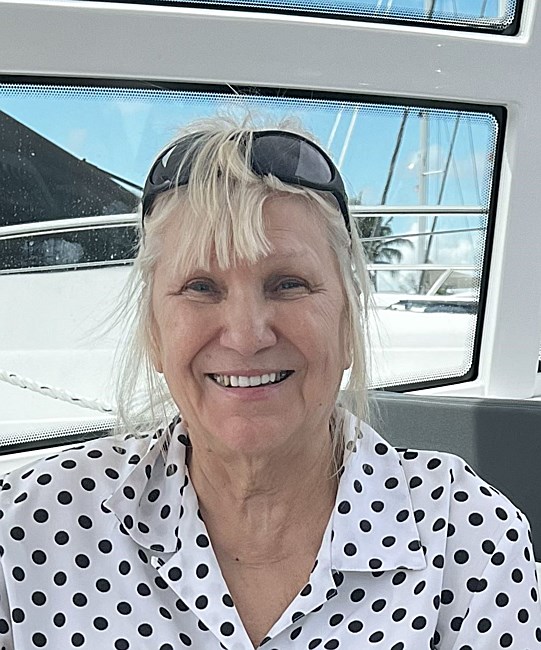
Larisa Ivanovna Kondrashova was born during World War II in the eastern part of the Soviet Union, in the Ural Mountains, where her father’s factory division was relocated from Bryansk to Sverdlovsk and became part of Uralmash, producing tanks for the front. One of seven children, she grew up during years of famine and hardship, learning resilience early in life.
Even in those difficult times, Larisa had a spirit of adventure and determination. In high school, she joined the basketball team, which gave her the rare chance to travel across the Soviet Union — and with it, small privileges that meant so much in those years: food coupons for cafeteria meals and a free uniform to wear. Through basketball, she earned her way into college and became a chemist in the 1960s.
Her life was full of movement and discovery. After graduating, she accepted a position on Sakhalin Island, in the Far East — a remote and windswept place that reflected her adventurous spirit and courage to go wherever life led. Later, she continued her career at the VAZ factory in Tolyatti, home of the Lada — the car that symbolized everyday life in the USSR. It was there that she met Dmitriy Naumovich (Bariban) Barringо, a conductor and composer — a local celebrity whose music filled concert halls. It was love at first sight: Larisa, a modern, platinum-blond beauty who could make elegance out of scarcity, and Dmitriy, the musician who would one day play the soundtrack of her life.
Together they lived with an adventurous spirit — moving to Nadym and later Pangody, newly built Siberian cities near the natural gas fields. They later spent several years in Ternopol, Western Ukraine. Emigrating to the United States in 1991 as part of the wave of Jewish refugees was their last great adventure, as they began a new life in Charlotte, North Carolina, determined to give their children a brighter future.
Starting over in America was not easy. With no English and only determination, Larisa began her new career earning $4.25 an hour at the Highland Mills pantyhose factory, where through hard work and dedication, she soon became one of the top producers. Her strength was quiet, her love constant. She devoted her life to her three daughters — Iryna, Nonna, and Ella — and to her six grandchildren — Maxim, Tatyana, Daniel, Victoria, Sarah, and Nikolai — who were her pride and joy.
Her favorite saying was “Yeshcho ne vechyer” — “It’s not evening yet.” To her, it meant that hope always remains and the best may still lie ahead.
Show your support
Add a Memory
Share Obituary
Get Reminders
Services
SHARE OBITUARYSHARE
- GET REMINDERS
v.1.18.0