OBITUARY
Dr. Sunjoo Pang
July 15, 1933 – September 8, 2026
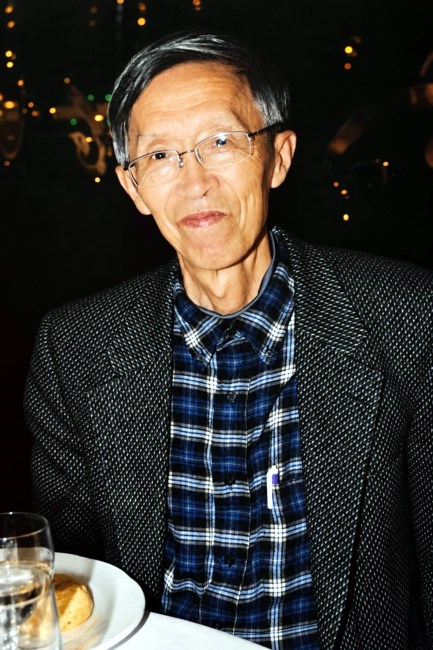
Dr. Sunjoo Pang, a pioneering historian whose lifelong work helped preserve and illuminate the history of modern Korea, passed away peacefully in Washington, D.C., on September 8, 2026, surrounded by his family. He was 93 years old.
Born on July 15, 1933 in Korea, Dr. Pang spent much of his childhood in China, where his father served as a missionary. He returned to Korea as a young man and began a lifetime devoted to scholarship, teaching, and preserving the historical record of his homeland. He earned his bachelor’s degree from Soongsil College and a master’s degree from Korea University, followed by a second master’s degree from the University of Washington and a Ph.D. from the University of Toronto in 1977.
For nearly fifty years, Dr. Pang served as an overseas committee member of the National Institute of Korean History (NIKH), conducting research primarily at the U.S. National Archives and the Library of Congress. He became one of the foremost experts on Korean-related archival materials in the United States.
Dr. Pang devoted himself to finding Korean history in places where few others knew to look. He searched through vast collections of declassified U.S. government records, military and diplomatic files, and documents captured from North Korea, identifying and preserving an extraordinary body of primary-source material. His work helped establish an invaluable foundation for scholarship on some of the most important and difficult chapters of modern Korean history, including the Korean War, the No Gun Ri tragedy, the history of “Comfort Women,” Korean immigration and independence movements, and the sovereignty of Dokdo. Over the course of his career, his discoveries became an enduring resource for generations of Korean historians and researchers.
Dr. Pang also taught at institutions including Hallym University and published more than 50 academic articles. His contributions to Korean historical research were recognized with numerous honors, most notably the Dongbaekjang (Camellia Medal) of the National Order of Civil Merit, one of the highest civilian honors awarded by the Republic of Korea.
Although Dr. Pang became widely respected as a scholar, his deepest legacy was also a personal one. He was a devoted husband, father, and grandfather whose love of history became woven into the life of his family. He married Keum Young Chung in 1972, and they shared nearly 52 years of marriage together.
His work took him to libraries and archives across the United States and abroad, often following a hunch that somewhere among the forgotten boxes and files might be a document that could shed new light on Korea’s past. Finding it brought him a genuine sense of joy and discovery.
His life was part of a remarkable family tradition of service. His father and grandfather were notable pastors and missionaries. Although he himself carried a quiet but firm faith throughout his life, Dr. Pang devoted himself to serving others through a different calling—as a historian and guardian of the historical record. He spent his life looking into the past so that future generations could better understand where they came from.
Dr. Pang was predeceased by his beloved wife, Keum Young, and his siblings, Sunzah, Sunhe, and Sunnim. He is survived by his son, David; daughter-in-law, Min Jeong; grandchildren, Kaitlin, Matthew, and Kristen; and many nieces, nephews, and extended family members. They will remember him not only for the history he preserved, but for the curiosity, dedication, and joy with which he pursued it.
A visitation will be held at Witzke Funeral Home, 5555 Twin Knolls Road, Columbia, Maryland, on Saturday, September 19, 2026, from 10:00 a.m. to 11:00 a.m., followed by a funeral service beginning at 11:00 a.m. Interment will follow at 1:00 p.m. at Crest Lawn Memorial Gardens, 2150 Mount View Road, Marriottsville, Maryland 21104.
Show your support
Send Flowers
Add a Memory
Share Obituary
Get Reminders
Past Services
Visitation
Funeral Service
Graveside
- SEND FLOWERSSEND
FLOWERS SHARE OBITUARYSHARE
- GET REMINDERS
v.1.18.0