
OBITUARY
James E. "Jimmy" Price Jr.
March 10, 1926 – February 1, 2014
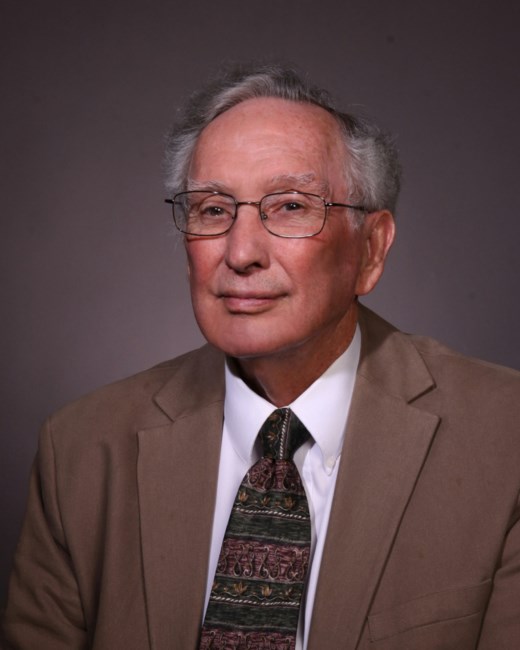
James Emory Price, Jr. - known to his friends as "Jimmy - died on Saturday, February 1, at the Magnolia Regional Health Center. He was born in Corinth, Mississippi, on March 10, 1926, to the late James Emory Sr. and Ephia Bell Price. He was a graduate of Corinth High School, Class of ’43, and went on to attend Tulane University, North Carolina State College, University of Mississippi, Tulane University Law School, University of Mississippi Law School, and Saint John’s College at the University of Oxford where he obtained the world’s most prestigious award, Rhodes Scholar.
During World War II, Jimmy served his country in the U.S. Army. After receiving his law degree, he returned to Corinth, where he lived for the rest of his life. He was a longtime member of First Baptist Church, Corinth, where he served as Chairman of the Deacons, Sunday School teacher, and Training Union teacher. Jimmy was a lifetime member of the Corinth YMCA Board of Directors. He coached 21 years for the YMCA baseball program. Through the years, he served as president of several organizations, including Hillandale Country Club, Corinth Welfare Association, and Corinth-Alcorn County United Way. He was also former Director of Corinth – Alcorn County Chamber of Commerce, a member and past president of Corinth School Board, a member of the State Board of Education.
During his lifetime, Jimmy won numerous awards and honors. The include the Corinth Rotary Service Award, Junior Chamber of Commerce Distinguished Service Award, Corinth’s Outstanding Citizen of 2001, Alliance Lifetime Achievement Award, and The Mississippi Bar 2011 Lawyer Citizenship Award.
A brilliant and well-loved attorney, Jimmy counted the following among his clients: Alcorn County, Alcorn County Electric Power Association, Alcorn County School District, The Alcorn County Board of Supervisors, Corinth Municipal Separate School District, and the Tishomingo County Municipal School District. He was a member of the Alcorn County Bar Association, Mississippi Bar Association, and the American Bar Association.
Along with his parents, Mr. Price was preceded in death by his sister, Carol Rohde.
Survivors include his wife, Doris Brown Price; one son, James E. (Jim) Price, III and wife Ruth; three daughters, Deborah Brunt and husband Jerry, Karen Butler and husband Skip, and Judy Lilly and husband Steve; ten grandchildren, Megan and husband Logan, Amanda and husband Sam, Charity and husband Jonathan, Jet and wife Kristen, Christy, Shannon, Brittany, Katherine, James IV, and Hannah; and a host of friends.
Recollections of His World War II Service
Born March 10, 1926, in Alcorn County, Mississippi, James E. “Jimmy” Price, Jr., graduated from Corinth High School in 1943. Jimmy received an engineering scholarship to Tulane University in New Orleans, Louisiana. He attended for one semester before enlisting in late 1943 in the ASTRP (Army Specialized Training Reserve Program). He was 17. The Reserves sent him to North Carolina State for a semester.
Then, Jimmy was sent to Camp Shelby, Mississippi, for assignment, and afterward to basic training at Camp Blanding, Florida. Following basic, he was sent to Ft. Benning, Georgia, and assigned to the 14th Infantry Regiment, 71st Division.
In December, 1944, Jimmy was preparing to return home to Corinth for Christmas leave when he learned that a lieutenant in his division named Maury Box was also from Corinth. Maury had a car – his father was the owner of the Ford dealership in Corinth – and he and Jimmy traveled home together.
After Christmas, Jimmy’s unit went to Fort Dix, New Jersey, in order to deploy to Europe. Before shipping out, they practiced abandoning ship – in subfreezing temperatures, with the snow three feet deep. Jimmy said, “That was very cold for this Southern boy.”
The trip from Ft. Dix to Calais, France, took 13 days. Jimmy was seasick 12 of the 13 days. “We were facing a potential encounter with a submarine one day, and I was too scared to be sick,” he recalled.
Jimmy landed in northern France on January 26, 1945, a little more than a month shy of his nineteenth birthday. Originally, he was assigned to be second scout. He was suddenly promoted when, after only a week or two in combat, the first scout was killed.
His unit went into action near Bitche, France, not far from the German border. When the artillery started firing, he realized, “This is not a game. It’s real shells and killing.” He spent that night in a fox hole he had dug with a skillet. Afterward, he heard that someone in the other company from his hometown was looking for him, and he knew it had to be Maury.
From Bitche, Jimmy’s unit fought their way to the German town of Speyer on the Rhine. They held up there, waiting to cross the river. In March, Jimmy was sitting in the window of a farmhouse when he heard a loud “swish.” He looked up to see a German fighter jet. Before that moment, Jimmy hadn’t known jets existed. “I almost fell out of the window,” he recalled.
When American troops captured the bridge across the Rhine at Remagen, about 120 miles north of Speyer, Jimmy and his company were transferred into General Patton’s Army and crossed the river at Remagen. Unlike others under whom Jimmy had served, Patton believed in moving fast, even if the artillery and supplies had to catch up later. Jimmy once saw Patton from a distance. He said, “I was taking some prisoners back to the rear. Patton was there, with his pistol on his hip.”
On Easter Sunday, April 1, Jimmy’s captain gave permission for a group of the men and a chaplain to hold Easter services in a house in a small German town. The unit had just taken the town and were waiting for the artillery to catch up. Their service had just started – the men had sung from memory the first verse of one hymn – when they received word that “a few” German soldiers were in the woods near the town, and they were to clear the Germans out. The woods outside the town consisted of trees that had been planted in rows.
As to the German soldiers, “It turned out to be a lot more than a few.” When Jimmy’s unit got approximately 100 yards into the woods, the German 6th SS Mtn. Div. Nord – one of the elite outfits of the German army – opened machine gun fire. Jimmy and his unit were pinned down in furrows between two rows of trees.
Jimmy’s sergeant crawled up to see where the machine guns were. Then, instead of crawling back, the sergeant in his eagerness stood up and was cut down by the machine gun fire.
A platoon friend named Jesus (pronounced hay-soos) Rodrigues was close to Jimmy when the German bullets caused a fragment from the tree above Rodrigues to fall, cutting his forehead. In the tension of the moment, Jimmy heard Rodrigues say, “Don’t worry. Jesus loves you.” With a chuckle, Jimmy recalled, “I started to shoot Rodrigues myself.”
Finally, Jimmy’s unit received a command to withdraw from the woods “so we could drop some artillery there.” The men withdrew to the edge of the woods and dug in. While in a fox hole at the edge of the woods, Jimmy heard a voice about 50 yards away constantly saying “Hilfe,” German for help. He struggled with whether to leave the safety of his hole and help. But he decided that he did not know if it was a trap. He also realized that he did not have any medical supplies to help the wounded. Later, the artillery arrived, and the Germans withdrew.
In mid-April, Jimmy was in Coburg, in east central Germany, when he received word that President Roosevelt had died. Roosevelt’s death was especially shocking to him because Roosevelt had been the only President he had known.
His company then turned south. On April 23, they helped liberate Flossenbürg concentration camp, located in the Oberpfalz Mountains of Bavaria, 40 miles east of Nuremburg. Jimmy remembered the scene as “a horrible sight, one I will never forget.” He recalled the prisoners, men just skin and bones, eagerly smiling through the fence that held up their skeletons. He said that some of the men in his battalion gave some of the released prisoners food and water, which was a mistake because it ended up killing them.
Still heading south, the unit made two major river crossings in two days, crossing the Regen River one day, and the next, crossing the Danube into Regensburg. At Regensburg, the men came under heavy fire. They were fired upon for 24 hours; their supplies had not caught up with them; but they were able to take Regensburg. After the battle, Jimmy’s squad was stationed in a house on the edge of Regensburg, to protect against Germans retaking the town. As he entered the front door of the house, he could see a bed in another room, but he was so tired he could not make it to the bed. Instead, he lay in the floor and went to sleep.
While in Regensburg, one young man in his unit who had a reputation for doing things wrong decided to go into the town. He later returned with 200 Romanian solders, who had come to him and told him they were looking for someone to surrender to. Jimmy laughed, recalling, “For that, the biggest goof-off in the company received a Silver Star.”
For several weeks – from the time Jimmy’s unit left Coburg – they fought alongside a tank outfit of black soldiers. At that time in the US military, black and white soldiers were segregated. The captain of the tank outfit had been captured and badly beaten. Jimmy said, “We got him back.” He recalled, “From that time on, the tank soldiers did not take any prisoners.” Jimmy said he was proud to have fought alongside the brave men in the tank outfit. Also, the experience totally changed his perspective. “That’s when I lost all my racial prejudices,” he explained.
From Regensburg, Jimmy’s division turned southeast into Austria, where they met the Russians. His division was the farthest east when the war in Europe ended. On May 9, he was sitting under a tree near a farmhouse when he received word that the Germans had surrendered and the war was over. He thought to himself, “I have survived this thing!”
At a German barracks in Neu-Ulm, in south central Germany, a memorial service was held for the men in his division who had been killed. Since that day, when Jimmy hears “Taps” played, he thinks of that memorial service. He stayed in Neu-Ulm for two months and then was moved to a German air base. He had obtained two German Walther pistols, a 32 and a 38. He sold one to a pilot for $200, which was a tremendous amount of money to him. He still has the second pistol.
In December, he received a 10-day leave to go to Paris, France. After his leave, he reported back to his unit, where he was informed by a fellow soldier that the captain was looking for him. The soldier told him General Patton had been killed, and the captain was looking for staff sergeants to be in the funeral procession. “It was bad weather, cold,” said Jimmy. “Since I had no desire to participate, I hid from him.”
In January of 1946, Jimmy was sent to Garmisch-Partenkirchen, in south Germany on the Austrian border. “I was placed in charge of a prisoner-of-war hospital,” Jimmy said. “By that time, I was a staff sergeant. One day the colonel and I traveled over the Alps to the German village of Oberammergau, where the Passion play is performed every 10 years. At the time, people in the village continued to ‘live’ their biblical roles even when the play wasn’t in production. We were bumping along, returning to Garmisch, when the colonel, who had a pistol, removed it and shot a deer. He prided himself on being a ‘crack shot,' but I wasn’t sure if it was skill or luck,” said Jimmy, chuckling.
While stationed in Garmisch-Partenkirchen (a place known for its ice skating and the site of the 1936 Winter Olympics), Jimmy let his army buddies talk him into going ice skating. His buddies said they would teach him. One got in front of him, pulling him by his skates. Jimmy fell face forward – cut his face, chipped his tooth and was knocked unconscious. En route to the military hospital, the ambulance caught on fire, and the medics laid him in the snow. Even that didn’t wake him up. The following day when he did come to in the hospital, he did not remember anything. He did not recall who he was or where he was. As his fellow soldiers visited and talked to him, his memory did return. Eventually, he recalled everything except the events of the accident or that night.
From Garmisch-Partenkirchen, he was sent to northern Germany to spend a week with the British troops. He sailed from the port at Bremen, Germany, to Fort Dix. Thankfully, the trip back to the US took only six days.
When getting ready to leave Garmisch, he exchanged addresses with other soldiers from his unit. One young man told Jimmy, “I’m from Corinth, Mississippi.” Jimmy said, “You’re from Corinth? I’m from Corinth too!” The young man, a Rainey, said he was really from Theo, a small community several miles outside Corinth. “We’d been together for months,” Jimmy said, “but neither of us knew the other was from the same place.” The Army became the other young man’s career, and he was later killed in service for his country.
Arriving in Fort Dix, Jimmy was almost sent to Massachusetts, instead of Mississippi, because his papers had gotten mixed up. When the error was discovered, his orders to go to Massachusetts were cancelled. He was discharged from service at Fort Dix, in April of 1946. He had just turned 20 years old.
Jimmy said, “As a 17-year-old, I was an immature Christian, but I recall once coming under heavy fire at a ‘T’ intersection from tanks only 100 yards away. I promised the Lord all the things I would do, if He would get me out of there.”
He said he was fortunate not to have been wounded or taken prisoner. He did receive a Combat Infantry Badge, which he is very proud to have been awarded.
Jimmy attended the University of Mississippi, earning a law degree and continues to practice in the law firm of Price & Krohn. He married Doris Brown of Monroe, Louisiana, who had moved to Corinth to work in music with the youth at First Baptist Church. They married in 1953 and have four children.
“I was reared by a precious Christian family, who were wonderful teachers. I am proud to have served my country and am thankful to have returned safely to my family and home in Corinth.”
Interview transcribed by Olivia Cooley and Hannah Gann
KHS Creative Writing Students
Corrections and revisions by Deborah Price Brunt 11-4-2013
Tribute from Amanda Brunt Bametz
Words could never fully express how great a man Granddaddy was.
As a child, I always looked forward to visiting Grandmama and Granddaddy. We always felt so accepted and loved during those times. And there was one place where my sister and I – and so many of the grandchildren – spent a lot of time: it was in Granddaddy’s chair.
Granddaddy would always sit in his chair when he was at the house. The chair was perfectly placed to be exactly the right distance from the television, giving him perfect visibility for all the Braves and Rebels games he watched faithfully. A man of habit, he always watched the nightly news and then went upstairs to bed.
But there was something special about this chair: it was that the chair was not only Granddaddy’s chair, but also for us. Behind his chair is a children’s bookshelf that overflowing with books.
Whenever we decided that we wanted to read a story, all we had to do was go pick out a book and bring it over to Granddaddy’s chair. Suddenly the chair became our chair, and he would take us in his lap and read us the story. When the story was over, if we wanted more, he would send us back to the bookshelf to select another book.
Granddaddy loved watching the game and it was like his day wasn’t right if he hadn’t watched the news. He always sat there and filled out his crossword puzzle – in pen – that never seemed to stump him. And his days were full of work and service for his community in so many ways. But with Granddaddy, I knew I was loved and I always knew that he would take the time. Whenever anyone went over with a book, he gathered that child in his lap and read that whole book and even several books faithfully and lovingly.
Megan and I so loved Granddaddy’s chair that we would both get in the chair together while he was at work and read our own books! Granddaddy had taught us to love books, to love learning, to love education and these loves have had a great impact on who I am today and who I am becoming.
Granddaddy was such a great man, who so wonderfully impacted so many. Like these reading times in Granddaddy’s chair, the service he gave to his family and community and beyond was one that empowered people, giving keys for the future.
When Granddaddy had heart surgery 17 years ago, the doctors warned him that his health was in danger. He made big decisions and radically changed his lifestyle, despite the sacrifice, so that he could continue to live fully. I am so grateful for this sacrifice that he made so that he could continue to bless us with his presence, and he continued to serve and give and love like he had always done.
Granddaddy had a heart for justice and righteousness, and his constant service actively brought God’s Kingdom to the world around him. As a very young man he gave up his innocence and even risked his life to fight to free France - which is now also my country - from the grips of a racist dictator. For the rest of his life he fought for justice, equality and dignity for all those around him. For all of this, I am forever grateful.
I could never express how profoundly his life and example have influenced me. But if I have such a love for others around me (even those who are very different from me), an unending thirst for equality and a desire to see God’s kingdom spread in my world, it is largely thanks to him. I pray that God can use me to live my life fully to serve and love and empower others like He used Granddaddy.
* * * * * * * * * *
Mr. Price died on Saturday, February 1st at the Magnolia Regional Health Center. He was born in Corinth on March 10, 1926 to the late James Emory Sr. and Ephia Bell Price. He was a graduate of Corinth High School – Class of ’43 and went on to attend Tulane University, North Carolina State College, University of Mississippi, Tulane University Law School, University of Mississippi Law School, and Saint John’s College at the University of Oxford where he obtained the world’s most prestigious award, Rhodes Scholar.
He served his country during WWII in the U.S. Army, was a member of First Baptist Church – Corinth where he served as Chairman of the Deacons, Sunday School Teacher, and Training Union Teacher. Mr. Price was a lifetime member of the Corinth YMCA Board of Directors, coached 21 years for the YMCA baseball program, and served as past president at Hillandale Country Club, Corinth Welfare Association, and Corinth-Alcorn County United Way. He was former Director of Corinth – Alcorn County Chamber of Commerce, a member and past president of Corinth School Board, a member of the State Board of Education.
He was bestowed with the Corinth Rotary Service Award, Junior Chamber of Commerce Distinguished Service Award, Corinth’s Outstanding Citizen of 2001, Alliance Lifetime Achievement Award, and The Mississippi Bar 2011 Lawyer Citizenship Award. He served as the Attorney for Alcorn County, Alcorn County Electric Power Association, Alcorn County School District, and The Alcorn County Board of Supervisors, Corinth Municipal Separate School District, and the Tishomingo County Municipal School District. He was also a member of the Alcorn County Bar Association, Mississippi Bar Association, and the American Bar Association.
Along with his parents, Mr. Price was preceded in death by his sister, Carol Rohde.
Survivors include his wife, Doris Brown Price; one son, James E. Price, III and wife Ruth; three daughters, Deborah Brunt and husband Jerry, Karen Butler and husband Skip, and Judy Lilly and husband Steve; ten grandchildren, Megan and husband Logan, Amanda and husband Sam, Charity and husband Jonathan, Jet and wife Kristen, Christy, Shannon, Brittany, Katherine, James IV, and Hannah; and a host of friends.
Show your support
Send Flowers
Add a Memory
Share Obituary
Get Reminders
Past Services
Reception of Friends
In State
Celebration of Life
- SEND FLOWERSSEND
FLOWERS SHARE OBITUARYSHARE
- GET REMINDERS
v.1.18.0