
OBITUARY
George Brody
May 27, 1936 – September 19, 2021
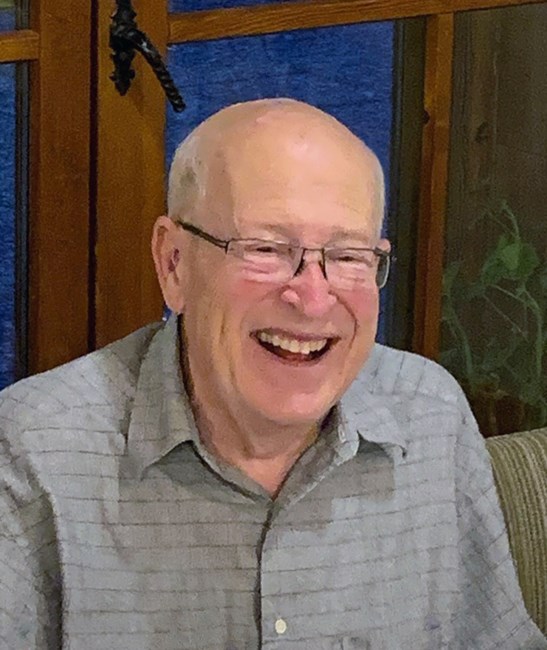
George Brody was a friend to everyone he met. He had an ease about him that attracted people to him and then, if there was a lull in the conversation, out would come. “Have you heard the one about…” He loved telling jokes. He had a huge collection of them, but he also liked to talk travel. George was a master planner. His research was exhaustive, and he managed to plan and execute fabulous trips to all corners of our wonderful world, “with more to come” he said each time. He was very handy to have on a trip since he spoke so many languages, not all fluently, but enough to get along. In addition to English, George also spoke fluent Hungarian, his native language, plus a smattering of Russian, Slovak, Italian, Portuguese and fluent Spanish, due to his living in Guatemala for eight years during his high school years. He maintained his lovely Hungarian/Spanish accent throughout his life.
Born in Slovakia (now Hungary), George was a child of the Holocaust, escaping imprisonment many times, along with his mother, sister, and grandmother. At the start of the war, the Nazi’s took George’s father to the Russian front never to be seen again. Towards the end of the war, a ghetto in Budapest, with no windows, no heat and little food, was their home, when it was finally liberated by Russian soldiers fighting house-to-house. George’s story was filmed by the Shoah Foundation and can be viewed in the Washington, D.C. Holocaust Museum.
In 1958 he graduated from Pratt Institute in Brooklyn, NY with a Bachelor of Chemical Engineering, followed by a Masters of Chemical Engineering from USC in 1966. Over the years George worked in the healthcare field for many well-known companies, including Alcon, his last job before retirement. He would proudly tell you he has always been a “project man”—the more difficult problem to solve the better. “Product development, George said, is a very challenging field. The greatest satisfaction for any engineer in this job is to see the fruits of his imagination crystallize into tangible, lifesaving products.”
His tennis game was just a reason to see friends, but cooking, plus shopping for ingredients, gave him joy. His forehand was just okay, but his paella dish is renowned among friends, not to mention his Hungarian chicken paprikash.
George’s goal was always to give back to society, which was fortunate for the organization Meals on Wheels. He delivered meals to shut-ins for them once a week for almost 35 years. George had a lot of empathy for his fellow man and he enjoyed talking to the clients about their lives. He also volunteered for The Salvation Army and Working Wardrobes.
Once retired in 2007, bridge became his relaxation. He spent many weekdays playing at a local club (where he was known for wearing his many t-shirts collected from places visited over the years), and during Covid, via computer with his numerous partners, many of whom had become good friends. He was very proud of his excellent standing in the Duplicate Bridge world.
George is survived by Johanna, his wife of 40 years, and in New York, sister Hedy (Jakob), niece Leah (Robert) and her sons Barry (Ayelet) and Ian. His California family loved and respected George for his intelligence, kindness and humor. He will be missed by so many. Rest in peace.
A graveside service for George will be held Wednesday, October 6, 2021 at 3:00 PM at Pacific View Memorial Park, 3500 Pacific View Drive, Corona Del Mar, California 92625.
Masks are required for everyone.
If you cannot attend, below is a link to a zoom viewing that will be on during the service.
Zoom of George's Funeral
Time: Oct 6, 2021 03:00 PM Pacific Time (US and Canada)
Join Zoom Meeting
https://us02web.zoom.us/j/84677604494?pwd=eU1YUnIxd0h0aDZPcjFLcmkvSWhGdz09
Meeting ID: 846 7760 4494
Passcode: 3xhj7W
Fond memories and expressions of sympathy may be shared at www.pacificviewcalifornia.com for the Brody family.
Show your support
Add a Memory
Share Obituary
Get Reminders
Services
SHARE OBITUARYSHARE
- GET REMINDERS
v.1.18.0