
OBITUARY
John Fred Stollsteimer
October 21, 1932 – June 29, 2025
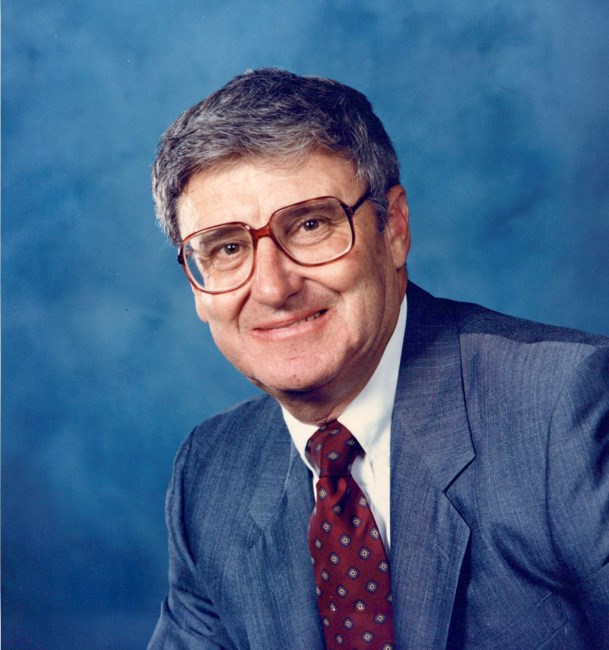
Born on October 21, 1932, in Ashley, Michigan, John was the son of Frederick and Lillian (McDonald) Stollsteimer. Raised in a farming community, he graduated from Merrill High School in 1949 before attending Michigan State University, where he earned a Bachelor’s degree in Agriculture and Applied Science in 1953. His exceptional scholastic record and dedication to agriculture earned him the Sears-Roebuck Foundation Scholarship. He was also inducted into Alpha Zeta, the honorary professional fraternity for students and professionals in agriculture and natural resources.
John went on to earn his Ph.D. in Agricultural Economics from the University of California, Berkeley in 1961. His dissertation, “Effect of Technical Change and Output Expansion on the Optimum Number, Size, and Location of Pear Marketing Facilities in a California Pear Producing Region,” earned him the Award of Merit from the American Farm Economic Association in 1962. Following his doctoral studies, he began his professional career with the United States Department of Agriculture in Berkeley before joining the faculty of North Carolina State College (now North Carolina State University) as an Assistant Professor of Agricultural Economics.
John also served honorably in the United States Army.
Throughout his academic tenure, John’s research focused on the economics of agricultural processing, particularly the optimal location and planning of facilities. His 1963 publication, “A Working Model for Plant Numbers and Locations,” became foundational in the field. He also conducted detailed studies of commodity chains, such as snap bean canning in the southern U.S., analyzing costs, logistics, and market demands. Working closely with colleagues, he produced influential studies that continue to be cited in agricultural economics.
His work laid the foundation for what became known as the “Stollsteimer Model,” a widely adopted framework for facility siting used not only in agriculture but also in industries such as wastewater treatment and manufacturing. His model introduced one of the earliest practical methods for cost optimization, incorporating transportation, raw materials, and production costs into systems planning.
After leaving academia, John transitioned to the private sector, serving as Chief Operating Officer and Group Vice President at Hunt-Wesson Foods in Fullerton, California. There, he applied his expertise in agricultural systems—particularly in tomato harvesting—to manage global-scale financial and logistical operations.
In 1965, John married Angela (Lombardi) Ferraro at St. John the Baptist Church in Costa Mesa, California. Together they made their home in Newport Beach, where they were devoted members of Our Lady Queen of Angels parish and the Newport Beach Yacht Club. John and Angela also shared a love of travel, visiting many different continents throughout their life together.
John lived a full and vibrant life beyond his professional achievements. He was a passionate sailor, golfer, tennis player, a devoted fan of college and professional football and basketball. A lifelong student, he delighted in gardening, reading, and keeping informed about finance, politics, and happenings around the world.
He was preceded in death by his parents; his brother, Robert; and his sisters, Jane Welling and Marian Kade. He is survived by his two stepsons, John Ferraro; his beloved grandchildren, Joseph and Christina Ferraro; and his son, Stanley. He and Angela shared 60 years of marriage before her passing on August 20, 2025.
Show your support
Add a Memory
Share Obituary
Get Reminders
Services
SHARE OBITUARYSHARE
- GET REMINDERS
v.1.18.0