
OBITUARY
Theresa Florence Napoli
January 15, 1933 – September 2, 2026
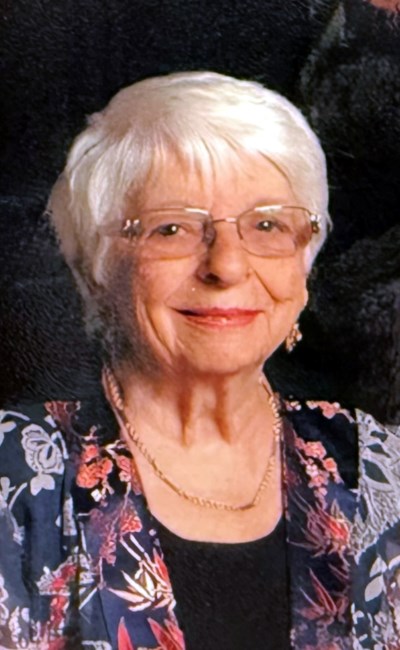
Born on January 15, 1933, at Fordham Hospital in The Bronx, New York, Theresa was the daughter of Anthony and Maria Salerno. An only child, she was never really alone. Her father was one of twelve siblings and her mother one of eight siblings, ensured there were countless aunts, uncles, cousins, friends and neighbors living nearby. Growing up in the aftermath of the Great Depression and during World War II, Terry learned early the values that would guide her entire life: be responsible, work hard, make the most of what you have, and look after one another.
Those years also shaped the woman she became. Terry was quiet and reserved, practical and disciplined, organized and intelligent. She did not seek to acquire possessions but experiences. Beneath that no-frills exterior was a woman of remarkable curiosity, compassion, determination and, at times, a surprisingly adventurous spirit.
She attended Olinville Junior High and Evander Childs High School before continuing her education at Hunter Bellevue. She completed her nursing studies at Metropolitan Hospital on Welfare Island, now Roosevelt Island, in the East River of New York City. It was there that she met Anthony Napoli, the love of her life and her partner for 75 years.
Anthony had accompanied a friend to visit a patient when he first laid eyes on Theresa. The rest, as they say, is history. The only thing standing between them and marriage was a five-year commitment Anthony had made to complete his BA and MA degrees at City College of New York. Evidently, Terry thought he was worth the wait.
They were married on Saturday, August 25, 1956, at the Church of the Immaculate Conception in The Bronx, followed by a reception that afternoon. They honeymooned in Bermuda before beginning their careers—Anthony in public education and Terry in health care. Together, they built a life centered on family, service, curiosity and love.
In 1960, Terry and Anthony purchased a home in Rockland County where they would raise their family. To make ends meet, Anthony taught students by day while Terry walked hospital floors at night. They became devoted parents to three daughters, Susan, Elizabeth and Catherine, and built a home where family was always at the center.
Terry believed deeply in family—not as an idea, but as something you showed up for. Sundays were for visiting grandparents and family dinners. Holidays and special occasions included both sides of the family. She made sure her daughters understood that family meant supporting one another in times of joy and sorrow. That lesson has remained one of her most enduring gifts.
As a mother, Terry was practical, steady and remarkably intentional. She wanted her daughters to experience the things she had not been able to experience growing up in New York City. She had never learned to ride a bicycle or drive a car because her parents considered those things too dangerous in the city. After she married, Anthony taught her to drive, and the examiner who conducted her driving test was apparently concerned enough to ask her to call him before she got on the road.
Terry took that experience in stride—and made sure her daughters would be better prepared for the world than she had been. She insisted they learn to ride bicycles, swim and have a sport for all seasons. She encouraged to develop an appreciation for music, art, dance and theater. She signed them up for Girl Scouts, and wanted them to discover what they were capable of. Chores were expected. There were no cash allowances. At sixteen, a job was encouraged. Babysitting, working in a department store and helping neighbors were all opportunities to learn responsibility and self-sufficiency.
Her philosophy about clothing perhaps best captured her practical approach to life: there were seven days in a week, three seasons in a year, and fortunately, the family had a washing machine—so 21 outfits were plenty.
But Terry's practicality never meant that she lacked warmth or generosity. She simply expressed love through what she did. She managed the family finances, planned vacations, prepared meals, kept the household running and made sure everyone had what they needed. When her daughters were challenged, she offered support without taking over. She did not pressure them about school or insist that they pursue a particular career. She was willing to invest in their education, whatever they chose to study and however long it took to reach their goals. Her expectations were simple: “Do your best” and “Don’t be afraid to ask for help.”
She also believed that her daughters were entitled to make their own lives. When it came to spouses, wedding plans and expenses, Terry was adamant: those were the girls’ decisions to make. She respected their independence because she had spent a lifetime teaching them to have it.
She followed her own mother's advice to “MYOB”—mind your own business. Terry was not judgmental, and she did not believe people needed to conform to someone else's expectations. She saw value in individuals and was comfortable allowing people to live their lives as they chose. When she offered advice, it was because she genuinely believed it might help—not because she felt entitled to tell someone else how to live.
That same combination of compassion, confidence and practicality made Terry an exceptional nurse. She was organized, observant and disciplined, with an extraordinary ability to recognize when something wasn't right. There were surgeons in the Bronx who would only operate with Terry by their side. Once, during a snowstorm, an ambulance was sent to her home to bring her to the hospital for emergency surgery in the middle of the night.
Her colleagues knew that she was also not afraid to stand up for what she believed was right. During a morning review of surgical assignments, she found a fellow nurse in tears because she had been assigned to a doctor known to be particularly difficult. Terry simply switched cases with her and reminded the doctor of the importance of teamwork in the operating room.
But perhaps Terry's greatest gift as a nurse was her ability to listen, observe and trust her instincts. She had a genuine compassion for people in need and an ability to put patients at ease.
Her intuition was remarkable. When Susan was three years old and experiencing abdominal pain, Anthony thought it would pass. Terry insisted they go to the emergency room in the middle of a snowstorm. Susan ultimately required emergency surgery.
Years later, Catherine slipped on the laundry room floor. Terry treated her leg as though it were broken but agreed to let their pediatrician examine her the following day. His response was, “Just keep doing what you're doing, Theresa. She'll be fine.” Terry remained unconvinced and took Catherine to the emergency room, where an X-ray confirmed a greenstick fracture.
Later, when Terry had transitioned into school nursing, a student was injured on the playground. After carefully examining the child and being unable to reach the parents, Terry believed the circumstances warranted immediate transportation to the emergency room. The doctors discovered a ruptured spleen, and the child's parents were forever grateful for her extraordinary effort.
Terry's strength and discipline gave her family a profound sense of stability. She was someone they could count on. She remembered every birthday with her own personalized duet of “Happy Birthday.” She attended educational and religious milestones, band and orchestra performances, theatrical productions, sporting competitions, science fairs and dance recitals. She showed up—not because she made a production of it, but because that was simply what you did when someone you loved mattered to you.
And while Terry was practical and routine-oriented, there was another side of her that those closest to her knew well: she was adventurous and curious about the world.
At thirteen, she asked her father if he would take her up in a small airplane. He arranged it. Years later, she asked Anthony about taking a helicopter ride over the Grand Canyon. Anthony declined, explaining that he could never raise three girls on his own if something happened to her. The exchange perfectly captured both of them—and something essential about Terry. She was curious, willing to try something new, and never afraid to imagine what might be around the next corner.
She wanted her children to experience the world, too. Terry did not believe in taking a vacation without her daughters. On their tenth wedding anniversary, she and Anthony took the girls on their first Pan Am flight to Bermuda, where Terry and Anthony had honeymooned.
In the summer of 1969, the family drove across the country towing a travel trailer. In the mid-1970s, they made their first trip to Italy. Next came the People’s Express $99 flight from Newark NJ to London then embarking on the Globus Gateway bus tour through Europe. All of this was made possible because Terry believed that life was meant to be experienced, not simply observed.
After Anthony retired in 1989, when all three daughters had graduated from college and begun their careers, the two of them finally had the opportunity to travel the world together. They explored Africa, Asia, Australia, The Americas and Europe, sharing the adventures they had spent their younger years working toward. Terry wasn’t afraid to ride on top of an Asian elephant or camels in the desert, hand feed a rhino on safari, enjoy the wide variety of birds and monkeys in Costa Rica, or the penguins, koalas and kangaroos in Australia. This is just a few of “Mother Nature’s best work”.
Winters were spent in Florida. They bought a condo in Boca so Anthony was able to spend time with his father. For Terry the best part was visiting her brother-in-law Sal and his wife Elsa, whom Terry considered a sister from another mother. Once the grandchildren arrived, they purchased a larger three-bedroom condo so there would be plenty of room to welcome them.
Those annual pilgrimages to Boca Raton became some of the grandchildren's most treasured memories. It didn't matter whether the day involved Gumbo Limbo, the beach or the pool, a drive-through African Safari or an afternoon at Boomers. There were trips to Disney World and the Kennedy Space Center and countless other outings their grandparents organized. Terry and Anthony created a world of experiences for their grandchildren, just as they had done for their daughters.
Terry also knew how to enjoy life's simple pleasures. She played cards and mahjong with friends, learned to knit and crochet from her Aunt Marge, loved Chinese food and had a particular fondness for shellfish. When a new restaurant in Rockland County advertised “all you can eat” lobster, everyone else had finished dessert while Terry was still happily eating lobster.
She supported Anthony's interests, too, including his desire to join the Coast Guard Auxiliary and his dream of owning a boat. Terry encouraged him to pursue the things that brought him joy – weekly golfing with friends from the neighborhood.
Terry and Anthony were different in many ways. Terry was an introvert; Anthony an extrovert. She was practical, preferred routine and stretching out of the sofa or bed. He was sentimental, flexible and on the move. She preferred quiet evenings; he enjoyed music, radio and television and was often willing to stay up for The Tonight Show with Johnny Carson.
Yet their differences were part of what made them such a strong team. She concentrated on the physical and practical; he on the social and emotional. Together, they brought different perspectives, strengths and wisdom to their family. As grandparents, they made an especially wonderful team.
Terry and Anthony were blessed with three sons-in-law, Robert Colonna, Timothy Elkins and James Rice. Their daughters' marriages transformed “Mom and Dad” into “Grandma and Grandpa,” and brought Alexandra, Ethan, Ian, Jessica and Jennifer into their lives. On February 1, 2026, “very many thanks” to Paul Grout, Allegra Rose made her debut, officially confirming what the family already knew: Terry and Anthony were great-grandparents.
Their grandchildren and now great-granddaughter are without a doubt, their greatest sources of their pride and joy.
Terry's legacy is not found in grand gestures. It is found in a lifetime of thoughtful ones: the birthday song, the emergency room visit, the carefully planned vacation, the education she helped make possible, an orderly home, the meal prepared, the bill paid, the performance attended, the problem solved, the person listened to, the family gathered together.
She taught her daughters to be responsible, independent and self-sufficient, while also teaching them that independence never meant standing alone. She taught them to look after family, respect others, do their best, ask for help when they needed it, and remain open to the world.
Terry was, in many ways, a no-frills woman. She wasn’t interested in accumulating possessions but creating memories. She knew exactly when something mattered—and when it did, she gave it everything she had.
Her family was at the heart of her life. She gave them stability, opportunity, adventure, wisdom and, above all, the certainty that she would be there when they needed her. Her love was rarely loud, but it was constant. It was woven into the life she built with Anthony, into the daughters they raised, the grandchildren they cherished and the great-granddaughter they were blessed to know.
Theresa “Terry” Napoli will be deeply missed by her family and friends. But the life she built with Anthony, and the values and memories she gave to those she loved, will continue through the generations.
Show your support
Add a Memory
Share Obituary
Get Reminders
Past Services
Visitation
Entombment
SHARE OBITUARYSHARE
- GET REMINDERS
v.1.18.0