
OBITUARY
Dorian Yvonne Byrd
November 6, 1947 – October 23, 2025
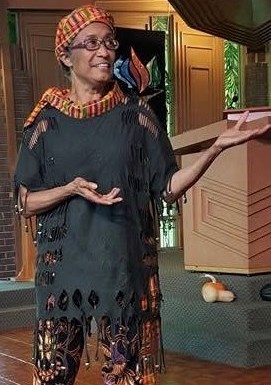
With grace, vision, and a radiant spirit, Dorian Williams Byrd touched generations as a dancer, choreographer, educator, and spiritual artist—bridging modern dance, African diasporic tradition, and faith—inspiring all who crossed her path. She passed away recently in Chicago, Illinois, at the age of 77, leaving behind a legacy rooted in beauty, service, and devotion.
Born in Pontiac, Michigan, and raised in Detroit, Byrd’s life unfolded along the shifting tides of Black artistic expression and cultural awakening. She discovered dance as a child, encouraged by her mother—a public school teacher—who took her to see Swan Lake and bought her first ballet slippers. Those moments of beauty, nurtured within a creative, middle-class household led by a pharmacist father and an educator mother devoted to her community, lit the path she would follow for the rest of her life.
After graduating from Detroit Central High School, Byrd studied at Wayne State University before being accepted to The Juilliard School in New York City—a rare accomplishment for a young Black woman in the late 1960s. In New York, she trained under masters of modern dance and became part of the city’s thriving Black Arts movement, performing with Dianne McIntyre’s Sounds in Motion and Elizabeth Keen’s company, and crossing paths with Alvin Ailey and Talley Beatty. Her choreography—rooted in modern expression but centered on spiritual and communal healing—reflected both her technical discipline and her moral depth.
In the 1970s, Byrd’s journey took a transformative turn when she joined the Seventh-day Adventist Church—a faith that would profoundly shape the next fifty years of her artistry and devotion. Determined to honor both her creative spirit and new spiritual commitments, she began interweaving worship and movement, pioneering the art of liturgical dance long before it was embraced in most sacred spaces. Through what she called “praise dance,” she invited others to “let the words be a witness,” fusing the holy and the physical in ways that transcended denominational expectations. Even when some questioned her path and regarded dance with skepticism, Dorian stood firm, convinced that expressing her faith through movement was a sacred offering. Unphased by opposition, she continued to dance—her joy, conviction, and witness inviting all to see that worship and art need never be separate.
She moved to Omaha, Nebraska, to direct Dance Theatre ’76, and later to Iowa, where she taught dance at Augustana College and founded the Imani Dancers—a company whose work celebrated the African diasporic voice through music, rhythm, and devotion. In the Midwest, Byrd became a quiet but transformative force: one of the few Black dance artists in the region, she made space for others to see themselves reflected in movement.
Her marriage to educator and fellow church leader Palmer Byrd was a partnership of shared conviction and purpose. Together, they raised their daughter, Briana, and adopted niece, Ashley. She made sure her daughters followed in her footsteps, sharing with them both her passion for the arts and her deep well of encouragement every step of the way. Dorian was their first dance teacher, inspiring Briana to embrace dance in her studies, and nurturing Ashley’s musical talents with unwavering support and pride. Her presence in their artistic journeys—whether guiding movements in the studio or applauding every performance—remained
constant, shaping their creative spirits and affirming their place in the vibrant tradition she embodied.
Byrd’s artistic spirit was inseparable from her faith and her sense of mission. “I couldn’t separate my spiritual life from my professional life,” she once said. “They were the same.” Her performances at community centers, churches, and colleges resonated with themes of creation, struggle, and grace—and her choreography was often interwoven with poetry she loved or wrote herself.
In later years, she turned increasingly to visual art and mentorship, serving as a docent at a local museum and reflecting on what it meant to age as an artist. “I’ll know I’m old when I don’t feel like doing anything anymore,” she said with a laugh. Yet, dancing was always her first love. She continued to perform, forming a dance group of women over 50, showing that dance has no age limit.
In 2023, Dorian was diagnosed with a rare, progressive, neurological condition that impacted her mobility and took her independence, yet despite a debilitating illness, her resilience, patience, and support of her family continued to inspire those around her. She and Palmer adventured to California to support their daughter’s graduate school journey. There, the family spent precious time together in the last year of her life.
To the end, Dorian saw her life through the twin lenses of artistry and faith. In her home were sketches of dancers, African fabrics, and stacks of journals chronicling a life of searching: for God, for beauty, and for meaning in movement.
She is survived by her devoted husband, Palmer Byrd II; their daughters, Briana and Ashley; siblings, Asbury (Esther) Williams Jr., Candace Williams, Gregory Williams, David Williams, and sister-in-law, Marva Williams. Grandchildren, Palmer and Jemison Jocelyn, extended family in Michigan, and generations of students and friends who learned from her the sacredness of art and the artistry of devotion. She is preceded in death by her parents, Asbury and Dorothy Williams, and brother, Joseph Williams.
Show your support
Add a Memory
Share Obituary
Get Reminders
Services
SHARE OBITUARYSHARE
- GET REMINDERS
v.1.18.0