
OBITUARY
Robert Firstman
February 8, 1923 – February 15, 2026
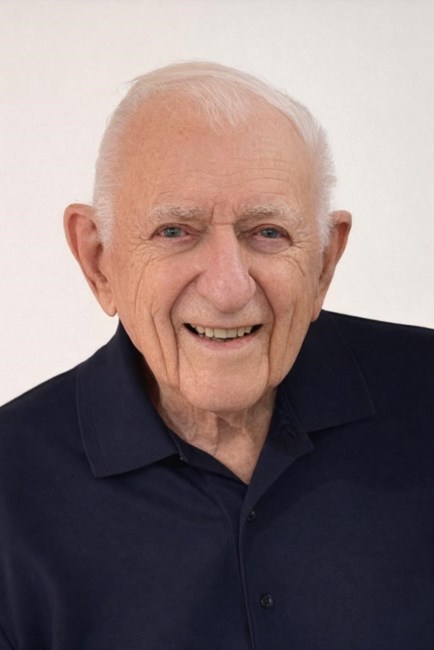
Born in 1923 in New York City to Russian immigrants, Mr. Firstman grew up in the Bronx and enlisted in the U.S. Army Air Force in 1942 while a 19-year-old music student at Brooklyn College. He trained as a Morse Code specialist with the 130th Army Airways Communications System.
In November 1943, Mr. Firstman was among more than 2,000 soldiers aboard the British troop transport ship HMT Rohna, bound for India, when it was struck by a German radio-controlled bomb in the Mediterranean, killing 1,015 troops. Mr. Firstman escaped the sinking ship, survived hours in the sea, and was rescued by the USS Pioneer. Mr. Firstman went on to serve in the China-Burma-India Theater for the remainder of the war. The tragedy remained classified for decades, and only in recent years has it become more widely known. This spring, the New York State Assembly is to honor Mr. Firstman as the last survivor of the tragedy.
After returning home from the war, Mr. Firstman completed his music degree at Brooklyn College, where he met his wife, Elaine. He pursued music as a jazz pianist and songwriter before a long career in the jewelry industry in Manhattan’s Diamond District. Mr. Firstman and his wife, married for 70 years, raised two children in Massapequa, Long Island, where they lived for more than five decades.
Following Elaine’s death in 2018, Mr. Firstman moved to Lake Worth, Florida. In 2023, at 100, he published his memoir, Give It to Lefty, preserving his memories for future generations.
He is survived by his two children, Meryl Schlossberg of Lake Worth, Fla., and Richard Firstman of New York City; four grandchildren and two greatgrandchildren.
Show your support
Add a Memory
Share Obituary
Get Reminders
Services
SHARE OBITUARYSHARE
- GET REMINDERS
v.1.18.0