OBITUARY
Mary Rose Stanton
February 19, 1932 – July 12, 2026
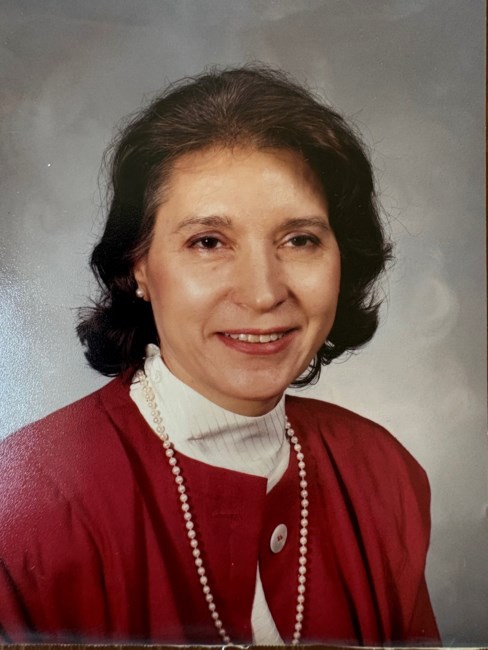
Mary R. Stanton passed away peacefully at home, surrounded by her family, on July 12, 2026. Born on February 19, 1932, in South Bend, Indiana, Mary Rose Zappia was a first-generation American whose Italian parents had recently immigrated from the Calabria region of Southern Italy. Her mother initially walked her to the local schools where she excelled.
She attended St. Joseph’s Academy for high school and then became the first person in her family to attend college. She graduated from St. Mary’s College in 1953 with a B.A. in English Literature. After graduating from St. Mary’s she and her close friend, Mary Jane Wahl, petitioned Notre Dame University to allow them to continue their academic studies at Notre Dame, and the University, after reviewing their academic performance at St. Mary’s, decided to allow them into their graduate night school program to become the first two lay-woman to obtain degrees from Notre Dame University. She graduated in 1956 with a master’s degree in English literature and used that degree to teach others until her 68th year.
It was at Notre Dame that she met and married Richard “Dick” Stanton. They enjoyed a 69-year love affair, which after several dates, and a marriage in 1957, produced five children, and friends everywhere they lived. In addition to raising her children -- Bill, Mike, Meg, Richard, and Rory -- she was a loving Granny to six grandchildren: Mary Rose, Andrew, Daniel, Eleanor, Erin, and Rachel. She loved all the family dogs, starting with Sean, who came shortly after Richard was born and before Rory.
In 1970, Mary and Dick moved the family to England and Ireland for 15 months. Dick had been awarded a Sloan Foundation fellowship, which brought them overseas for his scientific research. Mary enrolled all five children in school and fully immersed herself in the rich cultures of both England and Ireland as an expat. She fell in love again, this time with Ireland.
She initially taught grade school children in South Bend Indiana, while attending Notre Dame, and then continued teaching until she married Dick. They moved to Buffalo where he took a position as professor of Physical Chemistry at Canisius College. After her children were raised, she returned to teaching. This time it was Special Education at Sweet Home middle school from 1973 to 2000. Her students not only learned how to read and write but were also introduced to classics such as Steinbeck and Shakespeare. She wanted to raise the bar with her students by exposing them to more sophisticated literature than what would be expected. She cared about her students and colleagues greatly. Every morning, after her coffee, she stood at the front door of her classroom and greeted each student by name and a had a positive comment for each one that warmed the environment of her classroom. In 1984 she was honored by her school district with the Heart Award (in recognition of her tireless devotion to her students).
Mary had a wonderful life. She was a wife, mother, grandmother, had a full career and a pleasant retirement. She will be greatly missed by everyone that knew her and loved her. Family and friends may call at the DENGLER, ROBERTS, PERNA Funeral Home, 8630 Transit Road, East Amherst, Sunday July 19, from 3:00 pm to 6:00 pm. A Mass of Christian Burial will be offered at Saint Benedict Roman Catholic Church, 1317 Eggert Rd, Amherst, Monday, July 20, at 10:00 am.
Granny's Eulogy:
Friends, family, friends of friends and family of family, those who traveled and those who are local, and all who are with us today to celebrate the life of my grandmother, my Granny, Mary Stanton, welcome and thank you for being here.
For as long as I can remember, I have loved the way my grandmother decorated her Christmas tree. There was a carved, wooden Nativity in the front, an angel on top, and red lights woven among the pines. And perched on the branches sat a flock of timeless birds—birds of all shapes and plumages, usually in whites or soft colors that were bathed in the crimson lights. It was a display that reflected her own style and the way she lived her life, with grace and elegance.
Now, every Christmas, when I first walked through the door, my grandmother would, without fail, ask me whether I had spotted a very specific ornament on the tree; a pastel bluish-green hummingbird with soft seafoam green filaments protruding from its sides as wings. Though I have no recollection of it – I am told that at about 7 years old, I saw this hummingbird in the store and declared that we needed to get it for Granny’s Christmas tree. And apparently it also cost $30 – that was $30 1990’s-dollars – or probably a small business loan today; this is how I know this story is true. So get it we did, thank you mom. And every year this ornament received a prized location at the very front and center of tree. Even on the years when a tree was too much effort, the hummingbird was sure to be displayed for the holiday season. And on seeing it and being asked if I’d seen it, every time, I could feel my grandmother’s love for me.
I tell this story because I’ve been thinking about that feeling for a few weeks now. When I came home to see Granny in her last days, there was just one thing that I kept coming back to in my head that I needed her to hear: “You made me feel so loved.”
Now, that love was not in the slightest bit reserved to me. I am one of six grandchildren and five children—to say nothing of the cousins and adopted family who were part of her life, all of whom have at least a dozen stories of their own about how my grandmother made them feel so loved. And of course there was my grandfather too, for whom she had the greatest love of all.
But my Granny was not just a loving woman, she was an incredible woman. She was a first-generation American born to Italian immigrants in South Bend, IN. She was the first in her family to go to college. And, afterward, she earned a graduate degree in English – no simple feat in her day. This was in 1956, when a woman’s pathway to higher education was much narrower than a man’s, where it existed at all. She and a friend from college petitioned the University of Notre Dame to accept them into their graduate program – and they were, but, with the caveat that they could only attend evening classes. They became the first lay women to receive a degree from Notre Dame. And after schooling, she (and my grandfather) went on to raise five children – giving rise to one of my favorite quotes of hers: “A mother can do for five children what five children cannot do for one mother.”
These are some of her magnanimous qualities. But she was also as savvy as they come. She was not shy to advocate for herself. Sometimes it was a strategic request for an otherwise unadvertised discount or an earlier appointment date – and she usually got it. During the covid years she negotiated the whole family’s vaccine appointments because she was home and on the computer – and somehow I wound up getting a spot the first week I was eligible. One story in particular that I love, and which she recalled for me a few times as I was on my own job search, was that, when she decided to return to work after taking time to raise her children, she didn’t wait for something so trivial as a job advertisement. She just called up schools and asserted – bluffed really – that she heard they had an opening and that she was calling to inquire when she might come in to interview. And that is how she became a special education teacher at Sweet Home Middle School for almost 30 years.
And from that station she touched countless lives of students who were either overlooked and written off or just needed a little extra attention. And that it was special education did not mean my grandmother wouldn’t ask her students to read the classics of the Western literary canon. She knew the power of literature to open the mind and expand a person’s horizons – and she could recite passages off the cuff, from a poem she happened to hear once in college to the soliloquy of Lady MacBeth for whom “all the perfumes of Arabia” could not sweeten the smell of those villainous hands. Although one item stands as an exception: Melville’s Bartleby the Scrivener, whose catchphrase “I would prefer not to” apparently was repeated back to her long after the class was finished with the short story. Her dedication to her students reflected her genuine faith in the ability of education to cultivate better people and lay the groundwork for a better society.
And “faith” – that is another thing my grandmother exhibited. As the author of Hebrews tells us, faith is “a foundation of things hoped for, proof of things not seen.” Granny attended service regularly, kept a particular devotion to the Blessed Mother, and understood the awe and power of the sacraments It was a mature faith – a quiet confidence in God and heaven and the fundamental blessedness attached to life and being alive – but not immune to moments of doubt. She read the headlines each day as we do, but she never gave in to cynicism about the world. Instead, her faith allowed her to hold humility in this life in delicate balance with hope for the life that comes next.
Now – and I alluded to him before – no accounting of my grandmother’s life would be complete without mentioning my grandfather, Dr. Richard Edward Stanton. He had been the love of her life since they met at a dinner party at Notre Dame, which led to a first date at the opera, which lead to a 69-year marriage. From South Bend, they moved to Buffalo, NY, where Poppa took up a professorship at Canisius College. It also took them abroad for a year when he received a Sloan Foundation fellowship to study and teach in Ireland. Whereas Granny’s domain was literature, Poppa’s was science, theoretical chemistry to be specific. He is credited as the originator of the concept of “kinetic balance.” What that is . . . I cannot tell you; I can only tell you that I promised my grandmother that I’d tell you all about Poppa, the theoretical physicist who came up with “kinetic balance” during her eulogy.
My Granny loved my Poppa with the kind of love that transcends words. It was imbued in their very actions – like their morning coffee ritual where she’d ask how it was, “good I guess,” “you guess??”. In fact, I invite you all to find any photo of Dick and Mary – they are often unconsciously posed with my Poppa’s head turned inward to look at my smiling Granny, with a look of such admiration and joy that you can see a glimmer of the love they shared. Their love was a wellspring, that knew no end to its depths. And perhaps because of that, it was also a love that took a toll on the last years of her life. Losing a partner of almost 70 years weighed on her in mind, body, and spirit. Since his passing, pictures of my grandfather became a poor woman’s substitute for the void Poppa left; and as anyone in the family, or at Canterbury, or one of her doctors, or even a stranger striking up a conversation could attest, hundreds of pictures could not fill that void. We’ve seen them all, in duplicate and in triplicate. Though the grief was hard, it did give way to some moments of levity, like the frank admission, that was stated more than once: “our life was perfect before we had any children.” Granny, I am so glad this burden has passed, and I believe that you are with Poppa. Where, how, in what form – I cannot say. But I believe it. In every part of my being, I believe you are together again and for forever.
I could go on without end. And frankly, she deserves it, although she would absolutely deny that. There is so much I will miss about her. I will miss her famous meatballs and sauce – she told me once, after I’d tried making it myself, that she’d passed it down to me. She wasn’t known to give a disingenuous compliment, but I’m not sure I have it yet. I am also going to miss comparing Wordle scores and Spelling Bee results with her – she was often a “Genius” as you will not be surprised. And I’m going to miss receiving birthday cards that were always signed, “With Great Love.”
Every now and then, someone says or writes something that is just so imbued with capital-T truth that the veracity of those words is known by the way they vibrate within the fiber of your soul. For me, one of those writings is the well-known quote attributed to Maya Angelou, that “people will forget what you said, people will forget what you did, but people will never forget how you made them feel.”
Granny, you made me feel so loved; we all felt so loved. We love you too, we’ll miss you until the last of our days, until our love reunites us.
Thank you.
Show your support
Send Flowers
Add a Memory
Share Obituary
Get Reminders
Past Services
Visitation
A Mass of Christian Burial
Committal Service
- SEND FLOWERSSEND
FLOWERS SHARE OBITUARYSHARE
- GET REMINDERS
v.1.18.0