
OBITUARY
Harry Joseph Benedict
August 13, 1935 – December 2, 2025
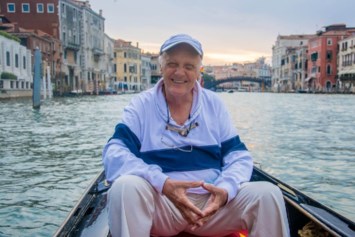
Harry J. Benedict, a distinguished mechanical engineer whose career spanned from the Apollo space mission to groundbreaking medical technology, passed away peacefully at his home in Fort Lauderdale on December 2, 2025, at the age of 90.
Harry was a native of Riverhead, New York, where he graduated as Valedictorian of Riverhead High School. He continued his academic success at Union College in Schenectady, New York, earning a Bachelor of Science degree in Mechanical Engineering.
His professional life began in 1957 at United Aircraft Corporation, where his early work focused on defense products. However, Harry’s trajectory changed dramatically with the launch of the space program. He became an integral part of the team designing and manufacturing the critical life support systems for the Lunar Excursion Module (LEM) and, most notably, the iconic space suit worn by the astronauts who walked on the moon.
Following the Apollo program’s conclusion, Harry transitioned his advanced engineering expertise to the medical field. He dedicated the balance of his career to leveraging technology to help humanity live a better, healthier life. This effort involved developing earth-based medical innovations, including pulmonary function, circulatory assist, and transcutaneous power delivery systems. He also participated in the early development of telemetry-based cardiac monitoring systems for hospitals and contributed to programs involving artificial hearts, artificial kidneys, and balloon pumps.
Harry went on to hold several key leadership roles, utilizing his technical and corporate acumen. In 1970, he served as Vice President of Technicon Corporation in Tarrytown, NY, directing Corporate Development for the NYSE manufacturer of clinical laboratory analysis systems and overseeing the acquisition of hospital information systems. Later, in 1982, he became the President and Chairman of the Board of Medical Systems Corp. on Long Island, where he directed all activities for the manufacturer of devices like electrocardiographs, spirometers, pulse oximeters, and microincubators.
Even at 90, Harry remained professionally engaged as a Partner of MEPS, LLC/Digitimer North America, LLC, where he managed the sales and support of specialized clinical products, including the Digitimer D185 MultiPulse Cortical Stimulators used extensively in transcranial electrical stimulation research as well as other important specialized products for medical research in areas like spinal cord injury, stroke, and kinesiology.
Harry was preceded in death by his beloved wife, Joyce W. Benedict, who passed away five years ago. He is survived by his loving daughter, Brooke, and her husband, Steven; his two cherished grandsons, James and Thomas; and his younger brother, Billy. Harry’s legacy is one of precision, dedication, and a relentless commitment to technological innovation that benefited both the heavens and the healthcare of mankind.
Show your support
Send Flowers
Add a Memory
Share Obituary
Get Reminders
Services
- SEND FLOWERSSEND
FLOWERS SHARE OBITUARYSHARE
- GET REMINDERS
v.1.18.0