
OBITUARY
Thomas Lynn Ryan
August 31, 1941 – January 21, 2026
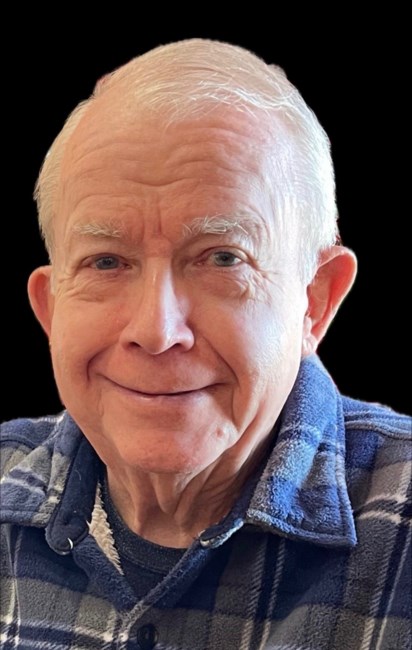
Age 84, of Fort Wayne, Indiana, passed away on January 21, 2026, at Lincolnshire Place in Fort Wayne, Indiana.
Thomas L. Ryan was born on August 31, 1941, in Kokomo, Indiana, to Robert and Cora Ryan. He graduated from Kokomo High School in 1959 and earned a Bachelor of Arts from Indiana University in 1963. He later earned a Doctor of Jurisprudence from Indiana University School of Law in 1968.
He believed strongly in service, justice, education, preservation, and a quiet faith, and he worked tirelessly to live these values in ways that improved his community — and the lives of those within it.
Inspired by his close friend Paul Stanley’s father, Howard County Circuit Court Judge Merton Stanley, Thomas L. Ryan pursued a career in law. He joined the firm of Wyss, Mochamer, Roby, Ryan, and Myers in 1969 and later served as a public defender for ten years beginning in 1973. In 1983, he was elected Circuit Court Judge of Allen County.
During his career, Judge Ryan was known for his integrity, fairness, leadership, and compassion. On the bench, he believed deeply that justice must be both principled and humane. In the mid-1980s, he permitted the use of emerging DNA evidence in a criminal case prosecuted by Stephen Sims, helping introduce scientific identification methods into Indiana trial courts at a time when such evidence was still new and rarely accepted. In Allen County Council v. Circuit Court (1990), his insistence on equitable pay and staffing for court employees was upheld by the Indiana Supreme Court, affirming that justice could not function without fairness inside its own walls.
Beyond the courtroom, Judge Ryan was deeply engaged in community reform. He founded the Alcohol Abuse Deterrent Program in 1989, when treatment was still controversial. In the late 1980s, he partnered with Rev. Adams in the One Church, One Offender initiative to reduce incarceration for nonviolent Black men long before equity became a national conversation. He co-led the Commission on the Social Status of Black Males with Senator Thomas Wyss, and he secured the first community corrections grant in Allen County, launching the Allen County Community Corrections program (i.e., home detention and
community service programs) — once described as “one of the most innovative in the country” (Zimmerman, Letter of Nomination for Sagamore of the Wabash, 2002). He also established the Allen County Courthouse Preservation Trust and led the historic restoration of the Allen County Courthouse.
Among his many honors were the Sagamore of the Wabash — Indiana’s highest civilian honor for distinguished service — and the Herbert Harley Award, a national recognition for outstanding contributions to improving the administration of justice. Judge Lorenzo Arredondo credited Ryan’s leadership and ppossible andn restoring the courthouse, noting that without him the project would not have been possible, and commended his promotion of alternative dispute resolution in family law cases.
Those who worked beside him remember his character as much as his intellect. From letters written to nominate him for the Sagamore of the Wabash award, several colleagues reflected on his character and career. Robert Gevers II wrote that he possessed “the ability to exercise mercy while handing out justice, and the ability to take a principled stand while retaining respect for our community.” Sheila Hudson called him “a true statesman.” Terry Yeiter described him as “one of the most forward-thinking members of the bench.” Eric Zimmerman described him as intelligent, creative, and a trailblazer, sharing the words that best defined him:
“Do not follow where the path may lead. Go instead where there is no path and leave a trail.”
When Judge Ryan was not blazing trails, he cherished time with his family and enjoyed listening to music, landscaping and gardening, traveling throughout the United States, Canada, England, and Mexico, woodworking, and finishing the renovation of his house, preserving historical monuments, and protecting nature — especially Cedar Creek, where his home overlooks its beauty.
He was known for singing to his children each morning:
“Good morning, good morning, good morning little babies, good morning, good morning to you!”
And ending the day with prayers, holding their hands and whispering along as they recited, “Now I lay me down to sleep….”
As his children grew older, he sang Bob Marley’s “Don’t Worry, Be Happy” on the drive to school, his voice offering comfort before the day began. He believed in “wishing upon a star” and taught them to trust that if you could dream something, you could make it real. He believed learning came through mistakes and lived experience, best discovered through hands-on, immersive moments. He valued hard work deeply, yet, believed that play and rest should always follow — often finding his greatest joy beneath the open sky, relaxing in the hot tub, laughing and talking with his children. This philosophy became the foundation of their lives and careers in workplace safety (Lara), learning sciences and curriculum studies (Kate), and military service (Jack).
Thomas L. Ryan married Cecelia H. Seibert on July 29, 1967, and together they shared 58 years of marriage. He was a devoted husband, father, and grandfather who cherished time spent with his family.
He is survived by his wife, Cecelia H. Ryan; his three children, Lara L. Ryan; Kathryn (Kate) L. Shively (David W. Shively); and John (Jack) M. Ryan (Sonya L. Ungermann); and his beloved grandchildren: Camryn Thomas Ryan, Samantha Rose Mary Shively, Alexander Paul Ryan, Olivia Cecelia Shively, and Isabella Addison Eve Ryan. He is also survived by his niece, Michelle (Ryan) Sinnard (Greg); his nephews, Kirk Eldridge (Judy) and Kevin Eldridge (Deborah); and his cousin, Elaine Ervington Woerner (Howard).
He was preceded in death by his father, Robert M. Ryan; his mother, Cora Hollingsworth Ryan; his brother, John P. Ryan (and former spouse, Susan Ryan); his sister, Roberta Eldridge (and husband, Russell); his nephew, Michael Ryan; and numerous members of his extended family.
He never sought recognition and rarely spoke of his accomplishments. He believed the work should speak for itself, and he would likely be embarrassed by this telling of his life. Yet we write it not to praise, but to preserve — to document the contributions and quiet leadership of a man who devoted himself to justice, service, and community. It is our hope that his life may stand as a record and a reminder, and that future judges, lawmakers, and law-enforcement officers might find in his example a model of principled leadership, compassion, service, and integrity.
A celebration of life will be held at a later date, as he wished to be surrounded by those who could laugh and be joyful, and did not wish to be mourned. Cremation will take place at D.O. McCombs, and his ashes will be placed in a tree pod and planted on his property overlooking Cedar Creek.
In lieu of flowers, the family is establishing a memorial fund for education related to the care for Dementia and Alzheimer’s patients. Please visit bit.ly/tlrfund for memorial donations in memory of our father.
He will be remembered for his loyalty, persistence, compassion, and humanity toward all. For his deep appreciation of art history, his passion for preserving the Allen County Courthouse, and for creating the endowment that will protect it for generations to come. He is, and will be, deeply missed by all who knew and loved him.
Show your support
Send Flowers
Add a Memory
Share Obituary
Get Reminders
DONATIONS
Community Care Fundin honor of Judge Thomas Ryan
Services
- SEND FLOWERSSEND
FLOWERS SHARE OBITUARYSHARE
- GET REMINDERS
v.1.18.0