OBITUARY
Shirley Mae Duncan
March 21, 1925 – February 15, 2025
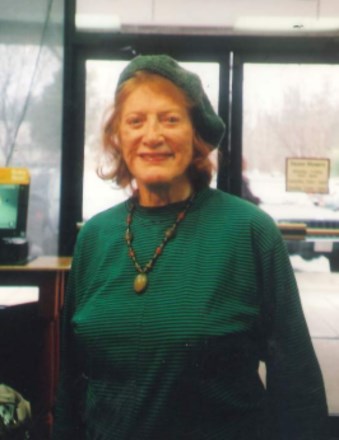
The “girl cyclists,” as they were dubbed by the smitten Australian press, seemed to embody the optimism of a generation just emerging from World War II and became a sensation as they pedaled around the country in the company of a dog.Ms. Duncan recounted their nearly three-year journey in a 1957 book, “Two Wheels to Adventure” — although, in truth, the trip was not limited to bi-wheel modes of transportation and at various points included rides on boats, lorries, camels and sea turtles, the latter during their time on the Great Barrier Reef.
The trip ignited in Ms. Duncan a wanderlust that she nourished despite the social mores of her time, which did not generally allow for solo female travelers. In the 1950s, when most of her contemporaries were ensconced in domestic life, she embarked on an overland trip from Paris to Singapore.By her account, she hitchhiked through the Soviet zone of Austria, was detained briefly on suspicions of Cold War espionage near the Greek-Bulgarian border, found comfortable accommodations on a houseboat in Kashmir and developed a lifelong fascination with Nepal.
When Ms. Duncan settled down — if she could be said to ever have done such a thing — it was in Washington, where she lived for more than half a century. Intrepid travelers knew her as the proprietor of High Adventure Tours, a travel company through which she led weeks-long trips to destinations around the world, with an emphasis on the Middle East.Ms. Duncan died Feb. 16 at a hospital in the District. She was 99 and had acute renal failure, among other ailments, said her second cousin Meredith Newman.
“Who’s interested in London, Paris or the Leaning Tower of Pisa?” Ms. Duncan had remarked to The Washington Post in 1968 in an off-the-cuff statement of her credo. “Everybody’s been there already.”Shirley Mae Duncan, the only daughter among three children, was born in Melbourne on March 21, 1925. Her father worked in the export business, and her mother, who managed the home, eventually divorced.If Ms. Duncan was influenced in some way during her childhood toward a life of travel, the people closest to her in her later years were not aware of it; her desire to see the world, they said, seemed to come from within her.She studied at the University of Melbourne before finding a job in a hospital laboratory whose windows overlooked Port Phillip Bay.
“From my laboratory on the fourth floor I could view a little section of the Bay, with its passing ships,” she wrote in her travelogue, “so I mixed daydreams with my chemicals, longing for the time when I should be sailing off to distant lands.”A high school friend, Wendy Law, shared her desire to travel. They “dispelled” their “surplus energies,” Ms. Duncan wrote, by hiking in the countryside and decided to try cycling when it dawned on them that wheels would carry them faster and farther than their legs could.
“Just think of all the extra places we could visit!” Ms. Duncan wrote.They first set their sights on a bicycle trip across Europe but were forced to concede that the continent — “all bombs and refugees and rationing” after World War II, Law later told the Australian newspaper the Age — would need to wait for later.As an alternative, and after trial rides including one around the island of Tasmania, the two young women decided to cycle across Australia.
Departing from Melbourne on Malvern Star bikes, they rode across New South Wales north to Queensland, west on to Darwin and then south to Adelaide. They made it to Perth, on the southwest coast, and traversed the vast Nullarbor Plain before returning to a heroine’s welcome in Melbourne. By then, they were well known across Australia, the subject of charming newsreels that kept the public apprised of their exploits.
On the road, they slept in sleeping bags beneath the stars, laundered their clothes in creeks and dried them on a makeshift clothesline that stretched from the handlebar of one bicycle to the handlebar of the other. The dog they adopted, Peter, became their cherished companion. Ms. Duncan, by some accounts, could count on a modest reserve of family wealth. She carried a checkbook, but she and Law “put themselves on honor,” as a reporter wrote during their travels in 1948, “not to use it except in emergency.”
They supported themselves during the trip doing odd jobs along the way: laboring in a cannery; working as housemaids and living mannequins; selling magazine subscriptions; making beds at a hotel on Mount Kosciuszko, mainland Australia’s highest mountain; and mustering cattle. They served as promoters for Peters Ice Cream, an Australian brand, and received, as compensation, a voucher for as much ice cream as they could eat during their travels. It proved a staple of their diet.heir trip was not without danger. At one stop, they were sleeping in a church hall when a nocturnal intruder grabbed Ms. Duncan by the throat. She credited the minister — and their dog, who alerted him — with rescuing her. On the advice of police, they acquired a revolver — but by Ms. Duncan’s account, they were “more afraid of it than anyone else.”Their return home, Ms. Duncan wrote in her book, “was not all joy and excitement.” For one, they were no longer entitled to free ice cream. They had to take turns living with Peter, the dog. Wendy was soon married, but “as for me,” Ms. Duncan wrote, “I didn’t feel ready to settle down so soon. After a short time at home I found myself engulfed in a wanderlust more powerful than before.”
She traveled to London, where she wrote the manuscript of her book, and ventured to Lapland — which lies within the Arctic Circle — Siberia, Morocco, Malta, Turkey, Yemen, Tibet, Japan, Tahiti and beyond. For years she earned a living lecturing about her travels to social clubs in Britain and the United States.She spent time in Laos, working for Reuters and for Thomas Dooley, a former Navy doctor widely known at the time as a medical missionary. During extensive travels in Africa, she freelanced for National Geographic Magazine and spent a week working with Albert Schweitzer, the Nobel Peace Prize laureate, at the hospital he established in Gabon.Ms. Duncan settled in the early 1960s in Washington, where she established her travel business. “She didn’t need to have a public relations or advertising department,” her financial adviser, Steve Ross, said in an interview. “It was all word of mouth.”In some ways, Ms. Duncan finally laid down roots. She became a lifelong member of the Society of Woman Geographers, which has its headquarters in Washington. She kept multiple apartments in the District; a single residence was not enough to hold all the artifacts she had collected during her trips.
But in other ways, she remained a wanderer. Even after decades in the United States, she elected not to apply for U.S. citizenship. “She obviously was never one to be pinned down for too long,” her lawyer, Craig Batchelor, remarked. “I always had the impression that she might keep moving.”
Ms. Duncan spent most of her life romantically unattached. “It’s more fun to go with somebody, that’s true,” she told The Post in 1968, referring to her travels. “But if I waited for the right companion, I’d never go anywhere.”By all accounts, she found the right companion some 25 years ago when she struck up a conversation with Bill Claire, a former employee of the Navy’s old Bureau of Ships, at a meeting of the Explorers Club in Washington.Ever a woman ahead of her time, Ms. Duncan asked for his phone number, he recalled, rang him the next day and insisted that they see each other again. They became a couple and remained together until her death, engaged to be wed but never officially married.
In an interview, Claire said that until Ms. Duncan’s final days, he held out hope of marrying her so that they could “move on with life together.” He was her only immediate survivor.Wendy Law — later Wendy Law Suart — also remained a world traveler and died in 2012 at 85. Four years before her death, she published her own account of her long-ago adventures on bicycle with Ms. Duncan, “With Bags and Swags: Around Australia in the Forties.” “We planned a glorious trip,” Ms. Duncan had written in her own book, “firm in the belief that, if one really wants to do something, all obstacles can be overcome — a faith which I never hope to lose.”
Show your support
Send Flowers
Add a Memory
Share Obituary
Get Reminders
Past Services
Funeral Service
- SEND FLOWERSSEND
FLOWERS SHARE OBITUARYSHARE
- GET REMINDERS
v.1.18.0