OBITUARY
Dr. Fouad Hilmy Fouad
November 18, 1951 – July 9, 2026
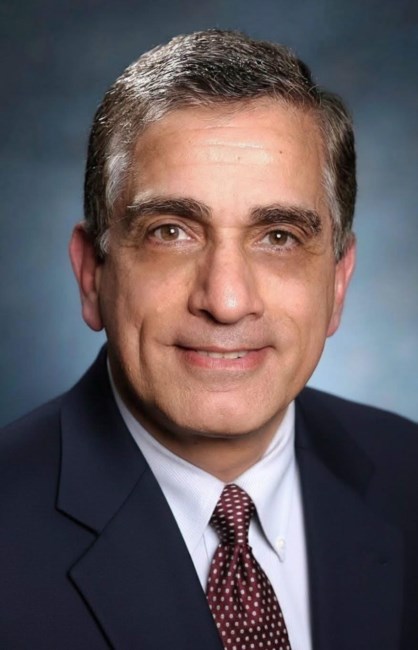
To know Fouad was to be loved by him. He was, above all else, a devoted husband, father, grandfather, and friend, a man whose kindness, generosity, and joy for life left a mark on everyone fortunate enough to know him. He gave freely of his time and energy, whether mentoring a young engineer, supporting a colleague, or simply showing up for the people he loved. He found genuine joy in helping others and was happiest when he could make someone else’s path a little easier. And he was endlessly silly, always teasing, playing, and making everyone around him laugh. That warmth and humor were as much a part of him as any of his extraordinary professional accomplishments.
Born on November 18, 1951, in Alexandria, Egypt, to Hilmy Fouad Beshara and Soraya Nashed Beshara, Fouad came to the United States in 1975 to pursue graduate studies. He earned his bachelor’s degree in civil engineering from Alexandria University in Egypt in 1973, his master’s degree in civil engineering from the University of Texas in 1978, and his doctorate in civil engineering from Texas A&M University in 1981.
What was meant to be a temporary stop in Birmingham became a 40-year career at the University of Alabama at Birmingham. He joined the UAB School of Engineering faculty in 1981, advanced to full professor, and served as chair of the Department of Civil, Construction, and Environmental Engineering for 25 years beginning in 1996 until his retirement in 2021.
His 40 years of teaching structural engineering at UAB played a significant role in developing the State’s engineering workforce. He taught and mentored hundreds of individuals who went on to work in the engineering industry, and he was an innovator, creating courses for new materials and emerging design techniques and ultimately creating three fully online engineering master’s programs that continue to develop Alabama’s engineering workforce.
Beyond the classroom, Fouad’s research left a lasting mark on infrastructure across the country. He developed centrifugally cast prestressed concrete poles for electric transmission and distribution structures, earning seven patents for that work, a product used extensively by Alabama Power, the Southern Company, and utility companies nationwide. His research with the Alabama Department of Transportation produced a novel prefabricated precast bridge system and fatigue design standards for overhead sign structures, resulting in safer highways across the state. He also developed the American Association of State Highway and Transportation Officials Standard Specifications for Structural Supports for Highway Signs, Luminaries, and Traffic Signals, the first such standards to include structural fatigue requirements and advanced materials provisions, ultimately adopted by all 50 states. His work also contributed to AASHTO specifications, ASTM standards, and the broader acceptance of advanced concrete technologies in infrastructure and building construction.
A devoted member of the American Concrete Institute (ACI), Fouad was elected a Fellow of ACI (FACI) in 1998 in recognition of his outstanding contributions to the concrete profession. He served as Past Chair of ACI Committee 523, Cellular Concrete, and Chair of ACI Subcommittee 523-A, Autoclaved Aerated Concrete, playing a pivotal role in advancing the understanding, standardization, and implementation of innovative concrete materials worldwide.
Following retirement from UAB, Fouad served as chief scientist and director of research and development at Valmont Industries, Inc. He also remained deeply committed to community health, continuing to lead the Built Environment team for UAB’s Grand Challenge initiative “Live HealthSmart Alabama,” working to improve the quality of life of Alabama residents through changes to the built environment.
Among his many honors, Fouad was named a PCI Fellow by the Precast/Prestressed Concrete Institute in 2026, and in February 2025, he was inducted into the Alabama Engineering Hall of Fame. He also received the ASTM Munkelt Distinguished Leadership Award in 2022, the 2009 Engineer of the Year Award from the Engineering Council of Birmingham, and the 2007 Engineer of the Year Award from the Alabama Society of Professional Engineers.
Fouad will be remembered not only for his exceptional professional achievements, but also for his integrity, his humility, and the lives he touched throughout his career. His generosity, his humor, and the profound impact he had on everyone fortunate enough to know him will never be forgotten.
He is survived by his beloved wife, Mona Azab Fouad; his daughters, Nancy Fouad Carey (Tyler) of Mountain Brook, Alabama, and Mary Otulana (Shegun) of Homewood, Alabama; his grandchildren, Graham and Soraya Carey, and Nora, Kate, Alexandria, and Roman Otulana; his nephew Sherif Estafan (Mariam) and his niece Shereen Estafan (Wael Shaker); and his brother-in-law Magdy Naguib Azab (Vivian). He was preceded in death by his parents, Hilmy Fouad Beshara and Soraya Nashed Beshara, and his sister, Soheir Maher Youssef.
A visitation will be held at Independent Presbyterian Church in Birmingham on Friday, July 17, 2026, at 10:00 a.m., followed by a funeral service at 11:00 a.m.
In lieu of flowers, donations can be made to Independent Presbyterian Church Foundation.
Services are under the direction of Ridout's Valley Chapel (205-879-3401) in Homewood.
Show your support
Add a Memory
Share Obituary
Get Reminders
Past Services
Visitation
Funeral Service
SHARE OBITUARYSHARE
- GET REMINDERS
v.1.18.0