
OBITUARY
Anthony Joseph McGarvey Sr.
December 14, 1942 – September 19, 2026
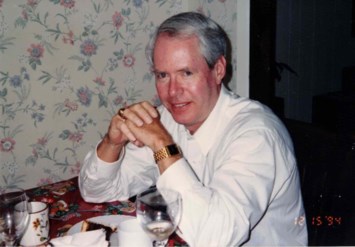
Mac was born on December 14, 1942, to Anthony and Frances McGarvey in Brooklyn, New York during the early years of World War II. His earliest memory was the launching of the USS Oriskany on October 14, 1945, at the Brooklyn Navy Yard where his father worked as a ship fitter. Other memories of the war years included the small victory garden in the tiny back yard of their house on Gerritson Avenue, the old Chevy that was put up on blocks in the garage due to shortages of rubber and gasoline and the buckets of sand in the garage to fight fires in the event of German air attack.
In 1949 his parents gave him the gift of a lifetime by moving the family to Texas. He grew up in the Oak Cliff section of Dallas with the freedom that a boy these days could only dream of. The freedom to roam the streets and neighborhoods of Oak Cliff with his buddies from dawn to dusk without adult supervision. The freedom to hop on the trolley as a ten-year-old and head to the YMCA in downtown Dallas to spend the day there swimming in the indoor pool and playing baseball on the fenced roof. The freedom to make his own choices and to feed the adventurous spirit that would guide his life.
In 1955 his parents gave him another wonderful gift when they moved the family to Irving, Texas because it was there that he would meet the beautiful Mary Jo Hastings when they were both sixteen. It was on a sultry summer night in 1959 when they sat on the steps of the little Catholic Church across the street from her house where they talked for hours and began the conversation that would last for the rest of their lives. In 1961 they would be married in that same church - a teenage marriage that some said would never last.
Mac was educated at parochial schools and at Dallas Jesuit High School. He credited his Jesuit education with giving him an equal love of literature and philosophy as well as of math and science. He chose math and science and received his BS in Industrial Engineering from Texas A&M University. Later he would earn an MS in Systems Management at the University of Southern California.
While at A&M Mac was an enthusiastic member of the Corps of Cadets and joined the US Air Force upon graduation. His first job in the Air Force was as an aircraft maintenance officer, but he soon became eager to fly the fighters he oversaw at Nellis Air Force Base, and he applied to pilot training at his first opportunity. In 1968 Mac and his family moved to Laredo AFB where he joined pilot training class 69-06.
Assignments after pilot training were allotted according to class standing and Mac worked hard to be high enough in the class to get the fighter assignment he dreamed of. He finished third in his class but there were no fighter aircraft offered, so he chose what he considered the next best thing; an aircraft that was all pilot-in-command time and that carried guns and rockets – the OV-10. After six months of training, Mac spent the next year in Vietnam. He flew more than 240 combat missions earning 12 Air Medals and 2 Distinguished Flying Crosses.
He first provided close air support to elements of the 1st Brigade of the 25th Infantry Division and then was a member of the initial cadre of pilots that supported the Cambodian government in their fight against the North Vietnamese Army that had taken over their country. This battle, and Mac’s part in it, is recounted in the book “The Rustics - A Top Secret Air War in Cambodia”.
With no fighter assignments available after Vietnam, Mac once again chose the next best thing – an assignment as an instructor pilot in the supersonic T-38. For the next four and a half years, Mac taught students in the advanced portion of flying training both as an instructor and a flight commander.
At the end of this assignment it appeared that a non-flying job was in his future. Early in his career Mac had been told that the mission of the United States Air Force was “to fly and to fight” and he had totally bought into that so he began to look for a flying assignment that was strictly volunteer so that he could avoid the vagaries of an Air Force assignment system. He chose the U-2.
For the next four years he flew high altitude reconnaissance missions all over the world in the aircraft that some called the Dragon Lady and that the newspapers usually called “The infamous U-2 spy plane”. The U-2 has been referred to as the hardest airplane in the world to fly and flying this famous airplane has been described as like trying to roller skate on an ice rink. Mac spent his last year in the program as an Instructor Pilot in the two-seat version and had sharp memories of careening all over the runway as new pilots tried to learn how to corral” The Beast”.
In 1979 Mac decided that he and his family had endured enough hardships and family separations and he resigned from the Air Force to try and make his way in civilian life. He joined Hydraquip Corporation, a small industrial distributor headquartered in Houston, Texas. He achieved success first as an outside salesman, then as general sales manager and then was appointed president in 1989 – a position that he would hold for the next 18 years.
In the 28 years that Mac was with Hydraquip the company grew to be one of the largest privately owned distributorships of its kind in the country. He was proud
of what had been accomplished but he was most proud that Hydraquip had become 100% employee owned through an Employee Stock Ownership Plan. Through the enthusiastic participation of employee/owners, the company was able to turn a profit, year after year, without ever laying off an employee in all the 25 years that he had been in management. A remarkable feat in the oil and gas boom and bust economy, a feat that he credited to an employee/owner culture that was willing to sacrifice together in the hard times to prosper together in the good times.
In 2007 Mac retired as president of the company and he and Mary Jo were able to spend full time doing all the things that they loved. First came family. They treasured the fact that all their children, grandchildren and great grandchildren lived within a 20-minute drive and they were able to see their children, grandchildren and great grandchildren on a regular basis. They were able to take their great grandchildren on many adventures and were able to bond with them. Then came travel around the world with family and friends; sailing their 36-foot sailboat “Irish Eyes” on Galveston Bay; and spending time at their Galveston Island beach house. The beach house was a good investment because family would often gather there. The same was true with the sailboat. Mac and Mary Jo would also spend time at these places by themselves, enjoying their time with each other.
Mac fought a courageous battle against lung cancer, the last two months in home hospice care. His family was able to spend many hours talking, telling stories, and reading aloud. He passed away on September 19th with his family by his side. Mac always said, “family is everything”. He was preceded in death by in parents Anthony and Frances (Fran) McGarvey and his sister Kathleen (Kay) Reames. He is survived by his wife of 64 years Mary Jo, brothers Dan McGarvey and his wife Sheree and John McGarvey and his wife Mary Kay, sons Anthony (Andy) McGarvey, and Matthew (Matt) McGarvey, daughter Kelly Fleming, son-in-law Bill Fleming, four grandchildren and 5 great grandchildren.
A Celebration of Life will be held at American Heritage Funeral Home, 10710 Veterans Memorial Drive, Houston, TX 77038, on October 8, 2026, from 11:30 am to 12:30 pm. A Committal Service will follow at Houston National Cemetery, 10410 Veterans Memorial Dr, Houston, TX 77038, on October 8, 2026, from 12:45 pm to 1:30 pm. Reception to follow at American Heritage Funeral Home from 1:00 PM - 3:00 PM.
Show your support
Send Flowers
Add a Memory
Share Obituary
Get Reminders
Past Services
Celebration of Life
Committal Service
Reception
- SEND FLOWERSSEND
FLOWERS SHARE OBITUARYSHARE
- GET REMINDERS
v.1.18.0