
OBITUARY
Christian Lyman Kuether
December 14, 1941 – August 16, 2024
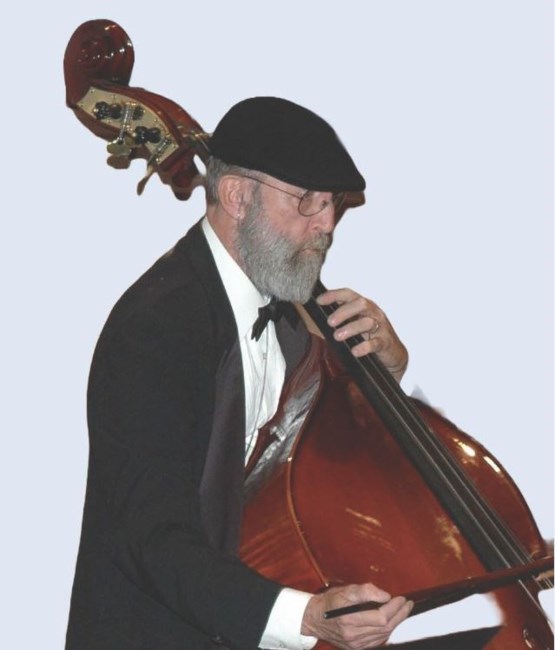
Christian Lyman Kuether (Chris) was an individual endowed with excellent talents, both musical and scientific. As the first child born to Carl Albert Kuether, a biochemist, and Edith Lyman Kuether, a concert violinist, he showed an early aptitude for music and boundless curiosity. Music and science guided his education and his passions.
Identified as “gifted,” Chris was enrolled in accelerated classes throughout his elementary, middle and high school years. He graduated from Shortridge High School, Indianapolis, Indiana, in 1962 where, as a French Hornist, he was a member of the orchestra, concert bands and marching bands. He also played the string bass in teen social clubs with two other musicians, singing the songs of the Kingston Trio.
Chris had a gift for inventing, for seeing how to build something better, for fixing things and for anticipating needs - he was always curious. During his senior year, Chris won the Science Fair First Prize. Using an oscilloscope he had built, he documented and digitized/synthesized music. Discerning his aptitudes during his senior year, Chris was awarded an appointment to the United States Naval Academy in Annapolis, Maryland, and was offered a full scholarship in engineering to Wesleyan University, Middletown, Connecticut.
Following his freshman year at Wesleyan, Chris followed his musical desires, transferring to Indiana University as a music major, to study French Horn with Phillip Farkas and to pursue music composition. He was awarded a Bachelor of Arts from Indiana University.
Shortly thereafter, Chris joined the Ophthalmology Department faculty of Baylor College of Medicine, and moved his family to Houston, Texas. One of his many projects was Project Orbis, begun in the late 1960s. Chris was instrumental in planning and designing the “Flying Eye Hospital,” an ophthalmic hospital and teaching facility on board a DC-10. He was also instrumental in designing and building out a full-size Project Orbis city bus to provide eye care to remote, rural communities.
His career developed, leading him to the University of Houston, where Chris joined the staff in the Ophthalmology Department. At that time there were no graduate or research programs. To establish these programs, a certain amount of technical support was required. He was made responsible for instituting an A/V capability, machine shop, electronics laboratory, and handling maintenance of all the clinic equipment.
In 1971, Chris was inducted into the American Academy of Optometry as a non-clinician educator. He maintained this fellowship throughout his career. Chris retired from the University of Houston in 2019, after over 50 years of dedicated service.
Much of Chris’ off-campus energy was devoted to The Houston Civic Symphony. He played principal Horn there for several decades. He also played either horn or string bass with the Jazz Medics, the Fab 40, Houston Bar Association’s Night Court, and the annual New Year’s Day Brandenberg Festivals.
Chris was predeceased by his parents and his son, Carl Adams Kuether. He is survived by his wife, Susan Russell Kuether, his daughters Marta Mayer (George) of Tepoztian Morelos, Mexico, and Virginia Vernor of Houston, and his sister, Elizabeth Kuether Piner (Harry) of Guilford, Connecticut. Chris is also survived by numerous nieces, nephews, and grandchildren. He loved them all.
In lieu of flowers, the family suggests that in Chris’ memory, donations may be made to The Houston Civic Symphony, Post Office Box 770032, Houston, Texas 77215, or Civicsymphony.org
Show your support
Add a Memory
Share Obituary
Get Reminders
Services
SHARE OBITUARYSHARE
- GET REMINDERS
v.1.18.0