
OBITUARY
James Benjamin "Jim" Walker
May 15, 1922 – April 9, 2013
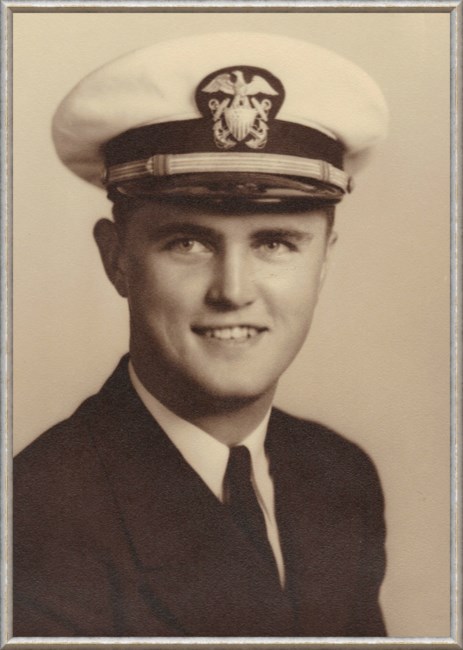
James Benjamin "Jim" Walker died on Tuesday, the 9th of April 2013, at the age of 90. He was born on the 15th of May 1922, in Dallas where his grandfather Doran figured prominently in the development of the city. In fact, the Doran farm later became the site of the State Fair of Texas. After graduating from Highland Park High School in Dallas, Jim received his B.S. in Chemical Engineering in 1943 from Rice Institute (later becoming Rice University). He was the outstanding senior in his class in chemical engineering and was awarded membership in Phi Beta Kappa, Tau Beta Pi, Sigma Xi, and Phi Lambda Upsilon. Several years after graduating, Jim was proud to have heard from the Chairman of Trustees that the President of Rice had told him that Jim had the highest grades at Rice since its founding in 1912. After graduating, he chose to enlist in the U.S. Navy and was sent to Princeton and MIT to attend Radar Officer Training. He served during World War II as the Radar and CIC Officer on the U.S.S. Suisun in the Pacific areas of Babelthaupe, Saipan, Okinawa, and Tokyo Bay, where the Suisun was sent in before the Japanese surrender for possible use by Admiral Nimitz. After the war concluded, he served on the U.S.S. Mackinac until June 1946. He donated a plaque in commemoration of the U.S.S. Suisun to the National Museum of the Pacific War in Fredericksburg, Texas.
After the war, Jim enrolled at the University of Texas at Austin. He received an M.A. in Physical Chemistry and a Ph.D. in Biochemistry with minors in Physics and Physiology. He also became a member of Phi Delta Theta fraternity. After a postdoctorate at the University of Wisconsin, he joined the Biochemistry Department at Baylor College of Medicine in 1956. In 1964, he moved to Rice University as Professor of Biochemistry in the Biology Department and subsequently was a founding member of the Biochemistry Department in 1972. In 1970, the University of Texas Medical School in Houston was established, and he was asked as a visiting professor to teach the first biochemistry course. In 1992, Rice University appointed him Emeritus Professor. The James B. Walker Award for Outstanding Seniors in Biochemistry was established in his honor.
Jim enjoyed conveying his love of the life sciences to the many students he taught, and through the years he heard back from many of these students about the positive influence he had on their professional pursuits. However, his real passion was his research. His doctoral dissertation work was the characterization and distribution of an enzyme in one of the major metabolic cycles. Concurrently, he discovered some of the inorganic micro-nutrients of algae. His subsequent work on the mechanism of enzyme action led to studies on antibiotic biosynthesis. These included the discovery and characterization of enzymes involved in the biosynthesis of antibiotics such as streptomycin, gentamicin, spectinomycin, and neomycin, which are produced by actinomycetes. Actinomycetes bacteria are the most biosynthetically versatile of known organisms, producing a large percentage of the world's antibiotics. The elucidation of the pathway of the streptidine moiety of streptomycin was one of the earliest discovered. Jim was the first at Rice to discover an enzyme, and by 1971, he had discovered 0.5% of all enzymes officially recognized by the International Enzyme Commission. Another area of interest involved the enzymes of creatine biosynthesis, their mechanisms, regulation, and tissue distribution. This led to the development of several dietary strategies for manipulating metabolic processes in vertebrates. These studies on creatine led to the discovery of the first example of end-product repression in a biosynthetic pathway of intact animals. Related studies concerned the physiological effects of the introduction of novel reservoirs of high energy phosphate into heart, brain, muscle, and tumor cells. One compound administered, cyclocreatine, delayed the onset of rigor mortis and counteracted effects of certain hormones. Jim continued his research well into his retirement years, performing all the experiments for his last published paper at the ripe old age of 80!
Outside of his professional pursuits, Jim always maintained his passion for his hometown of Dallas which led to his fervent support for the Dallas Cowboys. In his youth, he enjoyed spending many summers working at Camp Mystic in Hunt, Texas which was founded by his aunt and later owned by his first cousin and family. This helped develop his strong fondness for the Texas Hill Country where many family vacations were spent at the Lazy Lane Ranch in Hunt, Texas which was owned by his cousin Alice Hanszen. The Hanszen name is familiar with the Rice Community as Hanszen college is named for her husband Harry Hanszen. This love of the outdoors subsequently led him to buy a plot of land north of Houston where he enjoyed taking his dogs and relaxing. He enjoyed supporting Rice University athletics by attending many football, basketball, and baseball games. He developed a fondness for meerkats and contributed to the Houston Zoo for the meerkat exhibit which he frequently visited. You will also find many bricks at the zoo entrance with names of friends and family for whom he donated on their behalf. The pride he exhibited in his family members was often very evident as he loved to brag about his grandson being a marine, the athletic and academic accomplishments of his children, and the apparent lack of aging and high energy level of his wife.
Jim is survived by his wife of 56 years, Margaret; his daughter, Julie; his sons, James and Johnny; and his grandsons, Sage and Matthew.
Friends are cordially invited to gather with the family and share remembrances of Jim during a reception from five o'clock in the afternoon until eight o'clock in the evening on Monday, the 15th of April, in the grand foyer of Geo. H. Lewis & Sons, 1010 Bering Drive in Houston.
Show your support
Send Flowers
Add a Memory
Share Obituary
Get Reminders
Services
- SEND FLOWERSSEND
FLOWERS SHARE OBITUARYSHARE
- GET REMINDERS
v.1.18.0