
OBITUARY
Richard Alfred Tapia
March 25, 1938 – May 22, 2026
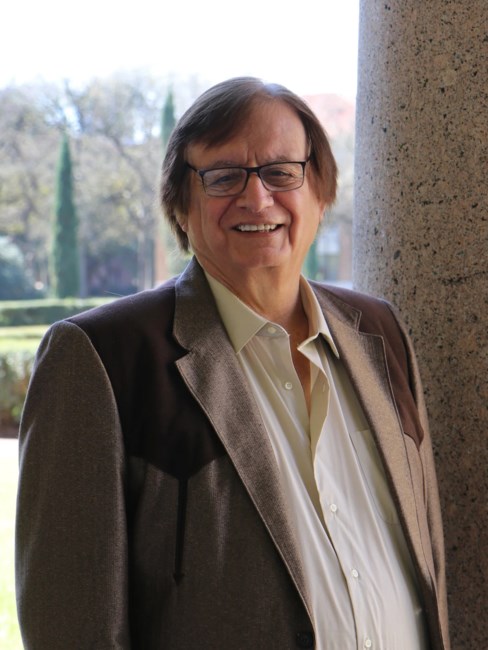
An internationally renowned mathematician, educator, and mentor, Dr. Tapia was celebrated for his pioneering contributions to numerical optimization and for his lifelong commitment to expanding opportunities for underrepresented students in science, technology, engineering, and mathematics. In 2011, President Barack Obama awarded him the National Medal of Science, citing his “pioneering and fundamental contributions in optimization theory and numerical analysis” and his “dedication and sustained efforts in fostering diversity and excellence in mathematics and science education.”
Richard was born on Friday the 25th of March 1938, in Santa Monica, California, to Amado Bernal Tapia and Maria Magdalena Angulo Tapia. One of five children, he graduated from the original Nathaniel Narbonne High School in Lomita, California, in 1956 alongside his twin brother, Robert Amado Tapia.
After working briefly in an automobile muffler factory, Richard became the first member of his family to attend college when he enrolled at Los Angeles Harbor College in Wilmington, California. He earned an associate degree in 1958 and then continued his studies at the University of California, Los Angeles, where he received a bachelor’s degree in 1961, a master’s degree in 1966, and a doctorate in mathematics in 1967.
Richard began teaching while still a graduate student at UCLA. In 1968, he joined the University of Wisconsin–Madison’s Mathematics Research Center as an assistant professor. Two years later, he became one of Rice University’s first faculty members of color when he joined the university as an assistant professor of mathematical sciences.
Over more than five decades at Rice, Richard established himself as one of the world’s leading scholars in numerical optimization. He authored or coauthored more than 100 research papers, supervised more than 30 doctoral students, and helped shape generations of mathematicians, engineers, and scientists. Many of the students he mentored were women and students from historically underrepresented backgrounds. He also authored three books, including his 2022 memoir, Losing the Precious Few: How America Fails to Educate Its Minorities in Science and Engineering.
His leadership extended throughout the mathematical sciences community. He served as editor of SIAM Journal on Numerical Analysis (1978–1991), the Journal of Optimization Theory and Applications (1981–1996), and SIAM Journal on Optimization (1990–1991).
Richard believed deeply that talent exists everywhere and opportunity does not. In 1972, he founded the Rice Association of Mexican American Students (RAMAS). He was also a founding member of the Society for the Advancement of Chicanos and Native Americans in Science (SACNAS), whose inaugural meeting in 1973 brought together young Chicano and Native scientists from across the country.
At Rice, he later founded the Tapia Center, which became a hub for outreach and educational programs, including the Tapia STEM Camps for talented students in grades 8 through 12. What began as a small initiative serving approximately 40 students in 2015 grew to more than 1,200 participants by 2025. He also directed the National Science Foundation–supported Alliance for Graduate Education and the Professoriate for more than a decade and founded Rice’s Graduate Education for Minorities, Empowering Leadership Alliance, and President’s Lecture Series of Diverse Scholars programs.
His impact on the scientific community is reflected in two major conferences that bear his name. The Tapia Celebration of Diversity in Computing, sponsored by ACM and organized by the Coalition to Diversify Computing, has become the premier gathering dedicated to broadening participation in computing. The Blackwell–Tapia Mathematics Conference serves a similar role in the mathematical sciences.
Richard broke numerous barriers throughout his career. In 1992, he became the first U.S.-born Hispanic elected to the National Academy of Engineering. He was also the first mathematician to be named a University Professor at Rice University and only the sixth person in the institution’s history to receive that distinction at the time. In 1994, he became the inaugural recipient of the Computing Research Association’s A. Nico Habermann Award.
Just weeks before his death, the Harris County Commissioners Court voted unanimously to rename the Sam Houston Tollway Ship Channel Bridge in his honor.
His service to the nation and the scientific profession was extensive. He served on the National Science Board from 1996 to 2002 and chaired the National Research Council’s Board on Higher Education and the Workforce from 2001 to 2004. He also served on the Board of Trustees of the Society for Industrial and Applied Mathematics (SIAM) from 1989 to 1992.
Among his many honors were the National Science Foundation’s inaugural Presidential Award for Excellence in Science, Mathematics, and Engineering Mentoring (1996), the American Association for the Advancement of Science (AAAS) Lifetime Mentor Award (1998), the SIAM Distinguished Service to the Profession Award (2004), the American Mathematical Society Distinguished Public Service Award (2004), the National Medal of Science (2011), the National Science Board’s Vannevar Bush Award (2014), the AAAS Public Engagement with Science Award (2016), and election as a Fellow of the American Mathematical Society (2021). He also received eight honorary doctorates.
Outside the classroom and research laboratory, Richard’s lifelong passion was automobiles. He and his twin brother began drag racing at age 15 and remained enthusiasts throughout their lives. Richard restored classic cars and exhibited a custom 1970 Chevrolet Chevelle that earned first-in-class honors at both Houston AutoRama and the San Antonio Auto & Truck Show. He combined his love of mathematics and racing in a popular lecture, “Math at Top Speed: Exploring and Breaking Myths in the Drag Racing Folklore,” which he delivered for decades at universities and mathematics outreach events.
Richard was preceded in death by his daughter, Circee Lynn Tapia, in 1982; his sister, Ana, in 2009; his twin brother, Robert, in 2020; and his beloved wife of 63 years, Jean Rodriguez Tapia, in 2022.
He is survived by his son, Richard “Rich” Amado Tapia; his daughter, Rebecca “Becky” Anna Tapia; his sister, Rebecca Amelia Tapia; and his brother, Steven Paul Tapia.
Richard Tapia transformed the fields of mathematics, engineering, and computing not only through his scholarship, but through the thousands of lives he touched as a teacher, mentor, advocate, and friend. His legacy lives on in the generations of students and scholars who followed the paths he helped create.
A memorial service is to be conducted at five o’clock in the afternoon on Saturday, the 8th of August 2026, in the Jasek Chapel of Geo. H. Lewis & Sons, 1010 Bering Drive in Houston.
Show your support
Add a Memory
Share Obituary
Get Reminders
Past Services
A Memorial Service
SHARE OBITUARYSHARE
- GET REMINDERS
v.1.18.0