
OBITUARY
Dr. Theresa A. (Mengert) Byrne
July 25, 1961 – April 27, 2026
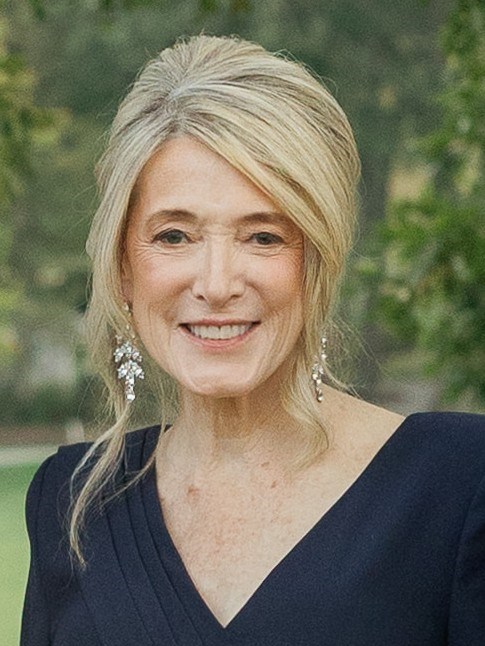
Theresa was born on the 25th of July 1961, in Spokane, Washington, the fourth of seven children of Richard and Nancy Mengert. She was raised in a home where Catholic faith was the air the family breathed, and she carried that faith — without compromise, without exception — every day of her life. To her siblings, she was “Twoey,” a name born when the youngest of them, Michael, could not yet say “Theresa,” and which followed her affectionately through six decades.
Theresa was educated in the Catholic schools of Spokane and graduated from Gonzaga Preparatory School. As a girl, she was an accomplished competitive figure skater, training through her high school years with hopes of one day competing at the Olympic level. The discipline, precision, and drive that the ice demanded never left her, and they were the same qualities she would later bring to the laboratory, the home, and to every cause she ever took up on behalf of someone she loved.
Theresa graduated from Washington State University with a Bachelor of Science in Biochemistry and went on to earn her doctorate from Boston University, where, as a graduate student, she met Dr. John Byrne, a senior at Boston University School of Medicine. They were married on the 10th of September 1988, at St. Thomas More Catholic Church in Spokane, beginning a partnership that would carry them across the country — through Boston, Chicago, Nashville, back to Boston, and finally to Houston — and span thirty-seven years.
Theresa built a distinguished academic career as an Instructor in Surgery at Harvard Medical School, working within the Laboratories for Surgical Metabolism and Nutrition at Brigham and Women’s Hospital under the mentorship of Dr. Douglas W. Wilmore, the Frank Sawyer Professor of Surgery at Harvard Medical School. She concurrently served as Director at the Nutritional Restart Center in Hopkinton, Massachusetts. Her foundational research transformed the treatment of Short Bowel Syndrome — a condition in which patients have lost so much of their small intestine that they cannot absorb nutrition through food and instead must rely on Total Parenteral Nutrition (TPN), an intravenous infusion delivered through a central line for many hours each day. Working alongside Dr. Wilmore and a team of distinguished collaborators, Theresa co-architected a now-classic protocol — a combination of growth hormone, glutamine, and a carefully designed diet — that for the first time allowed many of these patients to be safely weaned from TPN and to resume eating real food. Her landmark 1995 paper in the Annals of Surgery and her 2005 randomized controlled trial in the same journal — the rigorous, blinded confirmation of the open-label findings she had first reported a decade earlier — remain foundational references in the field of intestinal rehabilitation, cited by clinicians around the world more than three decades after her first publication. The Nutritional Restart Center she helped run cared for nearly 400 patients with Short Bowel Syndrome, and her published protocol — known to clinicians today as the “Byrne protocol” — helped pave the way for the modern generation of therapies in the field, including the FDA-approved drug teduglutide. Her work helped countless individuals regain enteral autonomy and the simple, profound dignity of eating a meal again.
But for Theresa, the laboratory was never the center of her life. Her family was. She was the most devoted mother her four sons could have asked for. She and John raised Christopher, Matthew, John Joseph, and Andrew, and put them above herself in ways large, small, and constant. When her son Matthew, a Type 1 diabetic, was young, she would wake up multiple times throughout the night, every night, for years, to check his blood sugar, give him sugar when he was low, and administer insulin when his sugar was high. She quite literally saved his life, more nights than anyone will ever count. She drove her boys to school, to the golf course, to practice, to friends’ houses; she helped with the homework; she made the dinner; and she was a perfectionist of the most beautiful kind. She would never turn in a piece of work without checking it a dozen times, and she would never let her boys turn one in without asking whether they had done the same. She could not fathom why anyone — and certainly not one of her sons — would choose to skip an extra-credit assignment when one was sitting there for the taking, asking things like, “Who, in their right mind, would pass up free extra credit?” What mattered to her was never the grade or the result itself, but whether someone had given it their genuine all and brought their whole selves to the work in front of them.
This same approach was evident in Theresa’s deep love and compassion for the less fortunate. She saw every human being as a gift from God, made in His image, and she refused to look at anyone differently because of their circumstances or the experiences life had handed them. She gave so generously to those she met on the street, to the point that her boys grew up knowing the homeless of their neighborhoods by name. She brought meals to those who had none on Thanksgiving; she helped elderly friends navigate health insurance when no one else would; she served alongside her sons at homeless shelters and parishes in every city the family ever called home. She had a particular tenderness for the small, the overlooked, and the voiceless — and a corresponding fierceness when those she loved were treated unfairly. When her brother was given a grim cancer diagnosis that her own clinical expertise told her could not be right, she moved across the country and stayed at his side for months, advocating for the care he deserved. When her sons faced medical disabilities, she fought, tirelessly and without rest, to make sure they had every resource the world owed them. Nothing in her life provoked her more than seeing someone she loved — or anyone, really — dismissed, neglected, or treated as anything less than a child of God.
Theresa’s deepest joy was simple and constant: when all four of her sons were home, fed, and gathered around her. She loved nothing more than settling in with her boys after dinner to watch a suspenseful series — especially when that series was 24 — and she would find in those evenings a particular kind of peace that only the presence of her family could give her. The family moved frequently over the years, and there was no single place she could point to and call “home.” But home, for Theresa, was never really a place. It was wherever her boys were gathered together — the fireplace on, Dairy Queen Blizzards in hand, the next episode of 24 queued up, and every one of her sons within arm’s reach.
The holidays were Theresa’s chance to do what she did best: to celebrate Christ, to gather her family, and to give. Christmas mornings brought presents from “Santa” arranged with the kind of thoughtful care she poured into everything for her boys. Easter brought a tradition all her own — a basket hidden somewhere in the house for each of her sons, and a hunt they took on together, the hiding spots growing more creative every year — in the dryer one year, underneath the car in the garage another, somewhere new and harder each spring. She lived for the moments when her family was gathered, the candles lit, Christ at the center, and the five men she loved most in the world at her side. The memories she made for her family on those mornings — Christmas after Christmas, Easter after Easter — will be carried by her husband, her sons, and their families for the rest of their lives.
She was a woman of relentless drive who never left anything on the table, in her science or in her home. She moved across the country, more than once, to support her family and the life she and John were building together — transitions that were not always easy, but that she shouldered with the same quiet resolve she brought to everything she did.
Theresa was happiest when she was in Spokane, Washington, where she grew up. She loved returning home to be with her siblings and their families, and especially to the family lake house at Newman Lake on the Washington-Idaho border — a quiet, tree-ringed lake without cell service, where the days slowed and the family gathered. It was her favorite place on earth.
Above all, Theresa was a woman of profound and unshakable Catholic faith. She prayed with her sons in the car on the way to school in the morning and at their bedside every night — one Our Father, one Hail Mary, and one Glory Be — without fail. Her trust in the Lord was complete. She drew tremendous strength from her relationships with priests across the country and the Dominican Sisters in Nashville, who walked alongside her for years and remained close to the very end. In her final weeks, when her voice had grown faint and her body weary, she met her illness with grace, with peace, and with the quiet certainty of a soul that knew where it was going. One afternoon, near the end, her son Matthew was at her bedside praying the Rosary with her. He paused after the first decade to glance at his phone, and his mother whispered, faintly but clearly, “There’s more.” She prayed her way to His Kingdom.
Theresa was preceded in death by her parents, Richard and Nancy Mengert. She is survived by her beloved husband of thirty-seven years, Dr. John Byrne; her four sons, Christopher Byrne (and his fiancée, Arabella), Matthew Byrne (and his wife, Faith), John Joseph “JJ” Byrne, and Andrew Byrne; and her first grandchild, Charles, who is expected to arrive in late May. She is survived as well by her six siblings and their families: Mary Sullivan (and her husband, Jim) and their son Michael Sean (and his wife, Rachel); James “Jimmy” Mengert; Daniel “Danny” Mengert; Matthew “Matt” Mengert; Mark Mengert (and his wife, Christy) and their children Luke, Abby, Greg, Michele, Emily, and Paul; and Michael “Mike” Mengert. She is mourned, too, by countless friends, colleagues, patients, and members of the religious communities she so loved.
A memorial service to celebrate Theresa’s life is to be conducted at eleven o’clock in the morning on Friday, the 8th of May, in the Jasek Chapel of Geo. H. Lewis & Sons, 1010 Bering Drive in Houston.
Immediately following, all are invited to greet the family during a reception in the adjacent grand foyer.
A Mass of Christian Burial is to be offered at eleven o’clock in the morning on Friday, the 12th of June 2026, at St. Thomas More Catholic Church, 505 West St. Thomas More Way in Spokane.
Immediately following, all are invited to greet the family during a reception in the church dining room.
An entombment will follow at three o’clock in the afternoon, at Holy Cross Cemetery Mausoleum, 7200 North Wall Street in Spokane.
In lieu of customary remembrances, memorial contributions in Theresa’s memory may be directed to Eagle’s Nest International Orphanage in Solola, Guatemala (the home from which Theresa and John welcomed two of their sons, JJ and Andrew) by selecting the link below under ‘Donations’.
We invite you to share fond memories and words of comfort and condolence with Theresa's family by selecting the ‘Add a Memory’ icon below under the ‘Show your Support’ section.
Eternal rest grant unto her, O Lord, and let perpetual light shine upon her.
May her soul, and the souls of all the faithful departed,
through the mercy of God, rest in peace.
Amen.
Show your support
Add a Memory
Share Obituary
Get Reminders
DONATIONS
Services
SHARE OBITUARYSHARE
- GET REMINDERS
v.1.18.0