
OBITUARY
Hildegard Martin-Furminger
February 22, 1927 – June 7, 2024
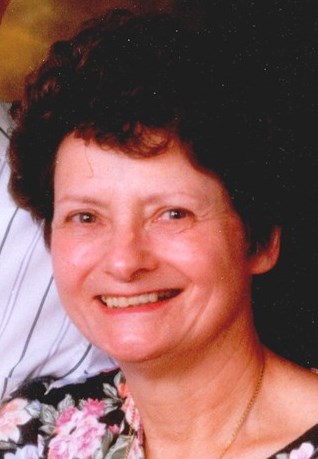
Hilde was born to Kurt Herman Riemer and Luzie Emma Raschke, February 22, 1927 in Breslau, Germany (now Wroclaw, Poland). Hilde grew up in Silesia (Oberschlesien) with her brother Hans Joachim Riemer who passed away in 2014.
She completed high school in Karlsbad, Germany. She then completed some college in Leipzig, with a strong emphasis in English and Russian languages. In 1946, Hilde also completed courses in business correspondence, shorthand and typing in both languages. During that time work was scarce and times were extremely hard. Hilde was employed at the end of WWII, at the Cost Accounting office at the American Army Air Corps headquarters in Wiesbaden, Germany. She became the secretary to Sgt. Robert Edward Martin, Sr. and he saw much promise in her. Hilde was married to Robert "Bob" Martin, Sr. on September 1, 1949 in Wiesbaden, Germany and again on September 3, 1949, at the base chapel in a church in Fuerstenfeldbruck, Germany. The first marriage was to make Hilde 'stateless' and then she was able to get married by the Americans in a church the second time. In October 1949, they were transferred to Long Island, New York and were stationed at Mitchel Air Force Base.
Hilde later worked as an office manager in the accounting department for Cencor, Inc. and as the head of the computer department for La Petite Academy at their corporate office in Kansas City, MO. She also enjoyed teaching adult German classes in the evening at Raytown High School for over 10 years. She retired in 1993 and married her second husband George Furminger.
Hilde loved to travel and did that often, all over the world. She also loved her pool in the backyard and swam from the first part of May until the end of October, rain or shine!
Hilde was preceded in death by her first husband Bob Martin (1994) and her second husband George Furminger (1999), sons Robert Martin, Jr. (1991) and Jack Martin (2008) (Patricia). Hilde is survived by her daughters Marianne Botz, Debbie Crane (David), and Barbara Foley, sons Roger Martin (Debbie), and Fred Furminger (Dee). She is also survived by grandchildren Christina (Larry), Deana (Kristi), Nicole (Justin), Richard (Courtney), Lucy, Brandon (Valerie), Justin (Liz), Aaron (Katie), Shaine (Jenni), Geordon, as well as 14 beautiful great-grandchildren. Hilde also leaves behind her nephew Gerhardt Riemer (Bettina).
A MEMORY WRITTEN BY HILDEGARD MARTIN-FURMINGER
My experiences towards the end and after World War II 1945.
During my childhood I led a very comfortable and sheltered life. I have one brother who was 11 years old at that time. I was 17 one month shy of 18. My parents were well off. The war didn't really affect us much up to this point. The large wholesale firm in Upper Silesia (Oberschlesien) supplied us with a lot of our daily needs such as butter, flour, sugar, coffee, canned goods etc. So we really didn't need much except for meat. We had rations for that like everybody else. The enemy planes didn't bother us, they couldn't reach that far at that time.
But then as the war on the Eastern front was not successful anymore, the troops were coming closer and closer. On the 21st of January 1945 we were faced with a mandatory evacuation by midnight that day. This hit everybody worse than a bomb. What to do now, what to take and what not? Time was short, we could only take what we were able to carry or wear. We packed some valuables and money, also clothing. We wore 3 layers of clothes and a heavy coat, hats, boots, gloves etc.. It was bitter cold that day,-25 degrees C, which is about -13 F.
The banks were all closed so no money could be withdrawn. Looking back at it now, it would have been mass confusion if thousands of people had stormed the banks.
Streetcars ran free of charge anywhere you wanted to go. My father stationed at the headquarters in Breslau came to help. He and I bundled up some bedding and addressed it to go to the people, we were planning to stay with, in Karlsbad. Then energetic as he was, he and I crammed into a streetcar to the main railroad depot. It was a real trick to get on. The lines at the baggage counter were extremely long. After waiting for probably 1 hour my father had enough of it. He threw the bundles over the people's heads, and would you believe, they landed right on the scale.- sheer luck. Since we didn't have to pay, we left. Needless to say the bedding never arrived at its destination.
One thing we never thought of was to take pictures out of the photo albums. These are the only things that cannot be replaced ever, how foolish. Time was just too short to think clearly. Now it was time to part, my Dad had to stay behind to defend the city. So we, my mother, my brother, our maid Berta, and I started out to the railroad station. What we saw was utter chaos. Trains ran one after another, people pushing and shoving to get on a train. Some trains were already full. A few people fell off the platform onto the tracks and were run over by the trains. If you envision one of these nice modern comfortable trains, think again, these trains were very old commuter trains. Trains were coming from war zones, so most didn't have any windows, they were shot out. Just think how cold it was.
We finally got on a train, no idea where it would take us, out of Breslau, that's all we knew. We had a couple of seats, so we could take turns sitting down. A few times the train would stop, why we didn't know. Did notice that we were getting out of Silesia. Then there was a longer stop, it was Dresden in Saxoni. That seemed like a good place to try and change trains to go to Karlsbad in the Sudetenland. A little wooden cart helped us pull our suitcases to another platform.
I think my mother found it abandoned on the station. Now the search for a train that would go Southwest closer to our destination. Why Karlsbad you may wonder, well we had friends there, and also had stored some clothing and household items there as a precaution in case of a bomb attack on Breslau. After changing trains one more time further south we finally arrived in Karlsbad. That evening we heard on the radio that there had been a major bomb attack on Dresden only 2 hours after we left. The city was pretty well flattened and the railroad/station badly damaged. Thousands of people were killed that day. If that wasn't luck, I don't know. We could have been in that disaster.
Our friends gave us 2 rooms and a small kitchen. Now we were refugees just like the people that used to come to Breslau from the bombed cities in the West. We had to apply for food rations, bedding, linen, dishes etc. I went back to school to finish my last year of high school. After graduating I went to work at the Municipal Office for refugees and displaced persons. It was still war and some bombs fell on the city, but not causing any major damage. I remember one attack in particular. A bomb hit across the street from our building. The pressure was so great that it threw us from one wall of the basement across to the other wall. That shook us pretty well and we went home early that day. Life was getting to be a real struggle, I didn't sleep very well.
Bread was not rationed, but in great demand, so we had to stand in line at the bakery to get a loaf. And when they ran out you had to try again the following day. One day a fighter plane swooped down and shot at us along the line with machine guns. Scared, you better believe it, some people were wounded. I think the pilot must have been lost. Shortly after that I fainted one day at home. I had a nervous breakdown just before my 18th birthday. Had to say in bed several days.
In the meantime the Americans had reached the Westside of Karlsbad and the Russians the East. Who was going to march in and occupy the city, that was the question and concern of the next few weeks. Our mayor tried to negotiate with the Americans to come in and occupy the City, but they had to wait for their orders. In the end the Russians marched in. What a disaster!! We had to vacate our rooms for the Russian officers. The rough looking fighting troops spread out all over, wanted the women to cook, clean vegetables and sew on buttons for them. At one point they noticed water in the toilet, so they thought they could wash their potatoes there. How primitive can you get? Seeing the chain of the old type toilet, they gave it a try. What a surprise! the potatoes disappeared. Rather humorous! Soon nightfall set in and the soldiers were looking for women and especially young girls. The women were walking around holding hands, so one couldn't be separated from the others. We 2 girls had been hiding in the basement and were supposed to crawl through a hole in the fence to the hospital next door. So one of the men went outside to talk to the guard that was patrolling the house to try and divert his attention from the back of the house, so he wouldn't catch us girls. He succeeded and we got safely to the hospital. You probably wonder what the deal was about that hospital. Well, the Russians fully respected a hospital and would not go near it to cause any trouble. Once in the hospital we tried to help out a bit like nurse's aids and we stayed there until we left Chechoslovakia, now called Cheska Republika.
The war had now ended, the 8th of May 1945. So the fighting troops left to be replaced by the occupation force. In the rush of leaving the troops had forgotten a whole sack of butter, which the women in the house grabbed quickly. They had good use for it. My father being in the Military was still somewhere in Germany, we didn't know where, but he knew where we were. We were really worried. Then one evening, dressed like a hobo, limping on a stick, he came walking down the street. Oh was my mother happy, she immediately hid him in the basement. He had left his uniform with his sister. They burned everything, and he borrowed some old clothes and started south. He encountered a few guards at some bridges, but they let him go, the poor crippled old man.
The Russians were always looking for able men to send them somewhere to work. One day my father wanted a breath of fresh air and went, against everyone's warning, in the backyard, only to be grabbed by some Russian and lined up for transport. We knew one of the male nurses in the hospital, he once was an orderly to my Dad. He also had an eye on me, not mutual however. When he saw what was happening, he went to that group on the street claiming that one man, my father, was needed to give blood for surgery of a seriously ill Russian, and he was the correct blood type. My father stayed in the hospital for a long time after that.
It was time to get out of Chechoslavakia, the Checks were very hateful towards the Germans. So they didn't make it easy for us. First we had to get a travel permit. Then bandaging my father's leg (he was wounded) we got permission to leave Kalsbad on a military hospital train. It was crowded, soldiers were laying on benches and even the floor. We and many others were also sitting on the floor or standing in the aisles. We had most of our baggage, had to leave some behind. The train stopped frequently, nothing to eat or drink. But we finally made it back to Germany. I don't remember where we got off.-Now where do we go from here?
We were in the Russian occupied zone, close to Zwickau I think. We found a small hotel for the night. Then my father tried to get food stamps, so we could buy food, but he was told, he had to show a residence permit in order to get food stamps. He tried to get such a permit, but had to have a job to get that. So we lived from the land for awhile, went from farmer to farmer asking for some cottage cheese, or milk or potatoes. We also went into the woods to pick berries and mushrooms. Berta was still with us and she knew her mushrooms.
Always moving along, some place else every day, we reached Werdau, again my father tried to get a job. He had to show a resident permit in order to get a job. -Catch 22.- Found a family at last that would rent us 2 rooms for a week.
My Dad and I walked for 2 miles one way to a bakery that would sell bread, one loaf per person. We did that many times. My Dad finally got sick from this strange diet, we were eating. He had to see a doctor and stay in bed for some time.
Met a nice teacher one day that had understanding for our problem. So he took the time to teach me how to type. Thought, it would help me find a job.
My Mom had not heard anything from her sister. She was supposed to live in Hecklingen south of Magdeburg. My parents decided to travel there and try and find her. The rest of us stayed behind. I think we were still in Werdau, but not sure. When my folks came back, the news was very grim. My mother was devastated, seems her sister had hung herself 2 days before they arrived. She evidently couldn't cope with life anymore, not knowing where everybody was. Her husband had been killed in Silesia. My aunt Hilde left behind a little boy, 10 1/2 years old. The local authorities were just going to put him in an orphanage, but my mother agreed to take him and raise him. Of course she needed a place to stay in order to be able to do this. Sad but true. So they gave her a residence permit and food stamps, and we all moved to Hecklingen. This wasn't a fancy apartment, just an attic apartment, but it was a roof over our heads. My Dad took a train to the next town to find a job. I don't remember what he did. I was an able young person, so I had to work. There was a large factory in Hecklingen, making canned goods etc. That's where most people in the town were working. I had to go there and peel onions 8 hours a day. Some fun, my hands were raw and hurting when I came home every day. My mother bathed, creamed and bandaged them daily. I hated every minute of every day, and that went on till early spring. Now I had a chance to go to College, Yippee! anything to get out of that factory!
However our money was running out. Chemistry is what I had wanted to study, but that was too expensive. We discussed many options, so my parents talked me into studying languages. That study was shorter as well. So I travelled to Leipzig, a big university town and enrolled in English at the foreign language school. The Russians even gave us double coupons for the hard mental work we had to do. It was very intense but also a fun course. You had to have a good prior knowledge of English, so had to pass an entrance exam. According to your score you were then placed in different classes "A,B,C or D". I was in the "B", I think. We had very good teachers, 2 stood out above all, a fun loving lady from Chicago that taught us plenty of slang in the conversational class, and a very stiff professor from Oxford. She taught us history and social studies. Her class followed the conversational class with the American lady. Oh, how mad she would get when we did not use proper English. Soon we did it on purpose, we didn't like her. Looking back I feel sorry for her now, she tried so hard.
We also learned business correspondence, shorthand and typing. I lived in a dorm, our headmaster was Russian and only tolerated us. Oh well, we were busy studying, memorizing vocabulary half the night sometimes. To top it all we had to watch the cooks. They stole from our rations and shorted us on sugar and butter, they stole it for themselves. Got that straightened out.
In the meantime my Dad had found a good job at a bank in Bernburg, and the family moved to Bernburg into a nice apartment. Back in Germany, before he was married, he used to be vice president of a bank there.
Berta now went off on her own.
By now I had finished my English course, and before we had a chance to look for a job, the Russians had other ideas. They needed Russian interpreters. So they told the school that all English students now had to study Russian. After all they permitted us to take English. So back to studying again! This course also required a prior knowledge of Russian which most of us didn't have. So I went home, got a private tutor and started in on the Russian language. For starters I had to learn a completely new alphabet. I wasn't sure I would be able to cope with this. I wasn't thrilled about it either, but started the course in the fall of 1946. It was interesting but hard work. We ate spoke etc. Russian all day long. If you remember the mistress of the dorm, and I stayed in the same dorm, was Russian. So Russian was the only language spoken. We learned typing and shorthand in Russian as well. As soon as we finished the course, jobs were already assigned to every graduate. I stayed in Leipzig and had to work for a Russian trade agency. There was another more experienced interpreter at the agency, that was a big help. I was a bit scared of making mistakes, and also of the Russian boss, especially when we had to go out of town. The other interpreter and I got quite friendly and went out a lot. In the meantime my boss was getting too friendly, so I was glad when the agency was transferred to Berlin. I saw a chance to get out of the Russian occupied zone. At that time the borders between the sectors in Berlin were still open. I don't remember where I got off the train, but I left, went home to Bernburg, told my parents I was going to cross over to the English occupied zone. Many people did this every day. I also knew that the Russians would be looking for me. My father would not let me go by myself. I had an aunt, his sister, living in Osnabrueck. That was our destination. It was nice to see my brother,13, and my cousin,12. They were having a good time, went to the local high school and pulled many a prank. My father did a bit of research, to find the best place to cross. People at the order were very helpful. So one night several of us started out with a guide pointing us to the right spot, Helmstedt was the destination. We could ride just so far, then in the dark we crawled along ditches, through ditches, had to watch for the patrol to go by, then crawled under barbwire and through more ditches till we had reached the English zone.. It was very scary, no one spoke a word. Kept walking to a train station, got a ticket to Osnabrueck. My aunt took us right in. We were safe, wow. Then she gave me some English occupation money, so I could get around. My Dad went back home, scary, scary! The first English soldiers I encountered, I could hardly understand. Wonder where they were from. Don't know what they were speaking, I started to worry. Decided to go to the English Headquarters in Heidelberg to apply for a job, interpreting and or office, all I wanted was a job.
They gave me a typing test, and seemed very interested in hiring me, everybody was very nice. But, I had to have a housing permit, or they couldn't hire me. The housing office couldn't allow me to stay, if I didn't have a job. Nobody would give an inch, or try to pull any strings. After trying several agencies, I gave up, I was running short of money, so Had to go back to my aunt. That was my first trip to Heidelberg, I liked it very much.
My next trip was to Wiesbaden, the American headquarters. I didn't spend much time at my aunt's, Although she would have liked me to. Arriving in Wiesbaden they also tested me. At first the same thing happened there. But the Americans were a little more flexible. Some of the office personnel understood my dilemma and made an emergency case out of it, some knowledge I had, that they couldn't find locally. So the German authorities gave me a housing permit. Now I was hired. The new cost accounting office needed help, it was starting to grow. The next day I went there to start. I didn't get a friendly welcome. An elderly man was sitting at a desk, and the sergeant in charge was not very happy. He had told the front office, he wanted only male employees. So for a day or 2 he wouldn't give me anything to do. Mr. Graeb sitting across from me gave me some of his work. After Sgt. Martin figured out that I was able to do the job very nicely, he broke down, and gave me several assignments. A young German fellow that I had met in a restaurant, came to pick me up after work, and we would talk and eat together. Just nice company.
Soon Bob Martin asked me to go to dinner with him, I turned him down. He suggested I get rid of the German fellow.
Now it was getting close to Christmas, my first Christmas away from home. Mr. Graeb, a real nice man, asked me if I would like to come to his house for dinner the 2nd holiday. I thought that was very
nice, thanked him for the invitation and accepted. He lived in Mainz across the river. So the day before the holidays I asked him for directions. At that time he told me that he had also invited Sgt. Martin for dinner, and wondered if I would mind? It was his house, so who am I to object. Sgt. Martin had been to his house before, he knew where he lived, had a jeep and would pick me up to take me. I was beginning to smell a rat, but I agreed. All went fine, we had a very nice dinner, afternoon and evening. What I didn't know was that all this had been pre arranged by Bob Martin, because I wouldn't go out with him. We had a very nice time. On the way back he first dropped off the other airman, that was with us. He acted very gentleman like, but I wouldn't let him in the apartment where I had a room. After that we would often go out to dinner, or the Club, or a movie. I really took a liking to the man, I fell in love.
It was now 1948 and in the summer he was sent back to the States. In March of 1949 he returned to Germany, and was stationed in Fuerstenfeldbruck by Muenchen (Munich). At that point I quit my
job in Wiesbaden and moved to Fuerstenfeldbruck. (My parents didn't like it very much). They and my brother were now living in Wiesbaden. While still in Wiesbaden, I paid for my brother's books, so he could continue to go to the gymnasium, also tried to help them out where I could. Many times I had food stamps left, but no money to buy the goods.
I have to insert something to explain how my folks wound up in Wiesbaden:
In about March of 1948 my father came to visit me. He decided to leave Bernburg because somebody at the bank accused him of stealing a typewriter. He had no way to prove otherwise. It was then that Bob found employment for him on Base in the fire department, and was able to obtain a legal permit for him to move to Wiesbaden. Soon after that my Dad was able to find a place for my Mom and brother to stay. They had to sell or leave all their belongings that they had gathered, and make their way across the border. I'm not sure how they accomplished all that, I only know that my brother made more than one trip. He was 15 years old then. My cousin had been picked up by his father who wanted to raise him. Although not too happy my Mom had to let him go.
In September that year 1949 we got married on the first and 3rd of the month. Normally that should be done on one day, but the Base Chapel was not available on the first, and we couldn't change the date with the German "Standesamt" (marriage license bureau). The first marriage was to make me stateless, and then I was able to get married by the Americans in a church. You should have seen the stack of paperwork that had accumulated in trying to obtain permission to get married. They checked everything. I was clean, cleared of every political wrong doing. Our wedding was simple just a civil ceremony. There was not enough money for a big church wedding. My Mom and Dad had to borrow money to be able to travel to Fuerstenfeldbruck. My landlady and my Mom made some special treats for snacking. We ate at the Club and they had made a big wedding cake for us. So friends and family had a good time. On our honeymoon we went to Berchtesgaden where we stayed in the Hotel overlooking the "Koenigssee". Everything was so nice, only it rained almost the whole time, we were there. Oh, well, walking in the rain.....
We had hoped to stay in Germany for a few months, but he got orders to return the end of October. He had to attend a court date about the well being of his 2 small boys by a previous marriage.
The crossing by boat was very rough, the cabins very small and separate from our husbands, a troop ship, not a good experience. I was sick a lot. We finally landed in New York, saw the Statue of Liberty. There I was in the USA. When we were walking around that evening and going into some stores, would you believe what I bought? A giant lollipop. I didn't care what people thought. We hadn't had any sweets in Germany for so long.
They transported us to Long Island where we were stationed at Mitchel Air Force Base by Hempstead.
Show your support
Add a Memory
Share Obituary
Get Reminders
Services
SHARE OBITUARYSHARE
- GET REMINDERS
v.1.18.0