
OBITUARY
John Thomas Duncan
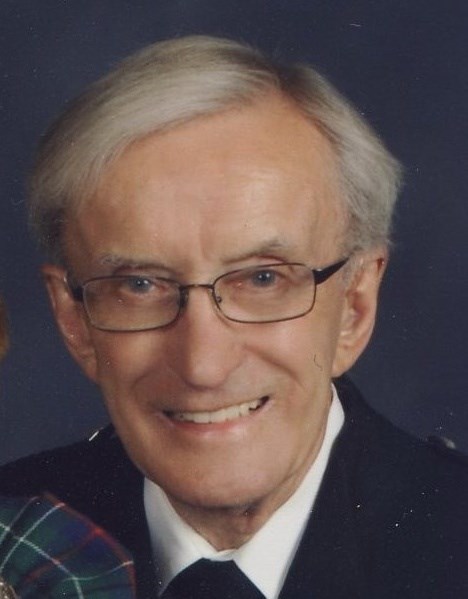
`
We grew up during the Great Depression and were sixteen when World War II ended. There was a big teacher shortage at this time, so after we graduated from Missouri Western State University we signed contracts to teach in Cosby, Missouri.
We were twenty years old and had been married over a year. We moved to Cosby, a small rural community, where we taught all the kids in town. I taught the lower four grades and John taught the upper four grades.
The old wood frame building had a center entry hall which was lined with books and served as a cloakroom. During the winter months, four-buckle overshoes were in a row on the wooden floor under the coats. A classroom was located on each side of the hall, furnished with desks of various sizes plus a recitation bench for classes.
Each morning we pumped water from the well into a metal bucket and it sat on a shelf in the cloakroom. Anyone who was thirst could sip from the dipper. The shelf also included a wash pan and a bar of soap in case anyone wished to wash hands. Outhouses, one for boys and one for girls, were about thirty feet south of the building. We swept them out after school. We also cleaned and swept the classrooms. All this for $1,200 a year, each. However, we didn’t have to mow the grass around the school yard. When it got too long, someone from Cosby brought their sheep over to eat the grass.
We rang the big bell on top of the school at 9am each morning followed by the Pledge of Allegiance and God Bless America. Each student came with his own school supplies, a new #2 pencil and a big Chief Tablet. There was no telephone, no audio-visual equipment, no record player or copying machine, just chalk and a slate blackboard. The county bookmobile did stop by school once a month and each student could check out two books.
We taught reading, writing, grammar, spelling, phonics, arithmetic, geography, science, music and d agriculture (yes, agriculture, and we were “City Kids”). At recess we played softball, tag, hide-and-seek, jump rope, marbles, jacks, and built snowmen. When the weather was too bad to go outside we would have singing games or a spelling bee indoors. The school floor furnace had a large iron grate where the wet mittens could dry.
We had special programs: A Halloween pie supper, Christmas tree with popcorn and paper chains, homemade Valentines, 8th grade graduation and plays with crepe paper costumes. We did have an old piano. I wasn’t good, but I could play chords for school musical programs.
The students all walked to school there were no school buses around and the dirt roads turned into mud in bad weather. One morning it was below zero and our old 1937 Ford wouldn’t start. We had to walk the two miles to school. We were late! The kids were all present…they had rung the bell at 9am and had “started school” without us.
All the students carried “lunch buckets” There was no cafeteria, hot plate or microwave. Popular lunch bucket sandwiches were peanut butter and jelly, bologna, or fried egg. The girls and I always wore dress or blouses and skirts, as was the norm. Many of the boys wore bibbed overalls. Discipline wasn’t a problem. In 1949 most kids actually behaved in school.
Our experience in the rural school gave us practice for life in being independent, creative, frugal, flexible, responsible, resourceful, self-reliant and appreciative of whatever is available.
We’ve come a long way, baby!
Carol Duncan
* * * * * * * * * *
JOHN THOMAS DUNCAN
John Thomas Duncan, 81, of Kansas City, Missouri, died on Friday, May 21, 2010 at St. Luke’s Hospital. Funeral services will be at 5:00 p.m. on Tuesday, May 25, 2010 at Country Club Christian Church. Burial will be in Mt. Auburn Cemetery, St. Joseph, Missouri on Wednesday, May 26. Visitation will be at the church from 4-5 p.m. Tuesday, preceding the funeral.
John was born on January 2, 1929 in St. Joseph, MO to John E. and Lavita (Linder) Duncan, who preceded him in death. John attended Central High School in St. Joseph, MO and taught in the St. Joseph Schools before moving to Kansas City. He was a graduate of Missouri Western State University, Northwest Missouri State University and received his Master’s degree from Central Missouri State University. He married Carol Chilcote May, 1948. He worked for the Kansas City Missouri School District for 50 years, retiring in 1990. He then became the school district historian. He taught or was principal at Woodland, Greenwood, Faxon, Border Star and West Junior High, where he taught special education. He also taught at Avila College and the University of Rhode Island. John’s a member of Country Club Christian Church. John’s community and related school activities include helping found the Ethnic Enrichment Commission and Festival, he was their chairman and was the Scottish representative, a member of the St. Andrew Society, an active member of Sons of Revolution-Kansas City chapter, Phi Delta Kappa, Kansas Teachers Retirement System Board and Kansas City Teachers Retirement Association, he was on the Mayor’s Prayer Breakfast Committee, St. Joseph Masonic Lodge for 50 years, the Pony Express Historical Society and a board of the Guadalupe Center for 30 years and taught English as a Second Language class.
John’s survivors include his wife of 62years, Carol, of the home; son, Jan Thomas Duncan of Roeland Park, KS; daughter, Annette Corona and husband Michael of Prairie Village, KS; two chosen daughters, Martha Cortes and Graciela Martinez, both of Mexico City, Mexico; four grandchildren, Michele, James, Thomas and Isaac.
Show your support
Add a Memory
Share Obituary
Get Reminders
Services
SHARE OBITUARYSHARE
- GET REMINDERS
v.1.18.0