OBITUARY
Charles Troy Blay
August 30, 1944 – August 2, 2026
August 30, 1944 – August 2, 2026
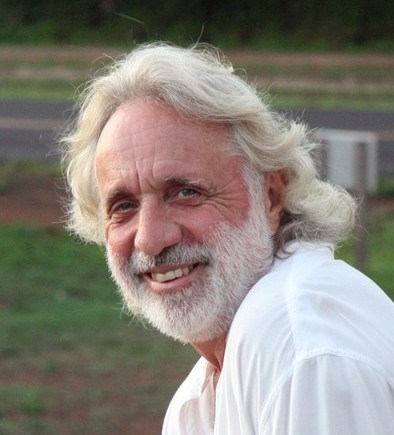
Charles Troy Blay, Ph.D., died August 2, 2026, at his home in Poipu, Kauai, Hawaii. He lived a long, full life of 81 years. For years, he went by Charles Troy Siemers and Charles Troy Siemers-Blay. Those close to him called him “Chuck.”
He is survived by his wife, Jana J. Blay, who lives in Poipu, Hawaii; son, Troy James Siemers and daughter-in-law, Emily Sproul Siemers, of Staunton, Virginia; son, Robert “Rob” Joseph Siemers and partner, Sallyann Hammond of Kapaa, Hawaii; brothers, James “Jim” Harold Siemers and wife, Diane, of Lodi, California, and John Robert “Bob” Siemers and wife, D’Ova, of Kirkland, Washington; grandsons Calvin Troy, Wesley Janes, and Augustus Robert Siemers, all of Virginia; beloved brothers-in-law, Rev. David Digby and Meg Knoll-Digby, Ames, Iowa; Rev. Steve Digby and Gwen Digby, Kyle, Texas; and many nieces and nephews. Chuck was preceded in death by his parents, John W. and Betty J. Siemers, and his former wife, Nancy J. Wilson Siemers, mother of his sons Troy and Rob.
If you choose, donations may be sent to the Michael J. Fox Foundation for Parkinson’s research at: https://give.michaeljfox.org/
Chuck was born August 30, 1944, in Lodi, California, to John W. and Betty J. Siemers, raised in Washington State, and graduated with the Battle Ground High School Class of 1962. He distinguished himself both academically and athletically and was remembered by his classmates as Prom King and “Most Likely to Succeed.” He went on to fulfill that prediction at a remarkably grand scale. Chuck earned a Bachelor of Science degree in Geology from Oregon State University in 1966, followed by a Master of Arts degree in Geology in 1968, and a Ph.D. in Geology in 1971 from Indiana University. He was a member of Sigma Phi Epsilon fraternity.
Chuck devoted his life to his family and to the study of the Earth. He is best remembered as a loving husband, father, and grandfather. His peers knew him as an expert geologist, naturalist, and author. As an educator, Chuck worked to teach people how the Earth works and how to view the landscape with a keen eye.
During his decades-long career, Chuck excelled as a sedimentary geologist in academic research and oil and gas exploration, not only domestically but also abroad in Indonesia and China. He shared his training and field experience in career-development workshops for professionals and in classroom courses with students at Indiana University, the University of New Mexico, the University of Wyoming, and later as an Affiliate Professor at the University of Hawai‘i at Manoa. Chuck authored or co-authored more than 100 scientific publications as papers, book chapters, and industry research reports, lectures and workshops, and received professional recognition and honors for his work.
Chuck collaborated with his son, Robert “Rob” Siemers, an accomplished artist, geographer, and cartographer, and co-authored multiple editions of Kauai’s Geologic History: A Simplified Overview. Chuck brought the geologist’s eye; Rob helped give visual form to the island they studied together.
On the Hawaiian Islands, especially Kauai, the internationally traveled scientist found a landscape that would occupy his life and become his laboratory, classroom, and home. Chuck’s first experience on Kauai was during a visit in the late 1970s. It wasn’t until 1986, when he walked and explored the entire coast of the island and cataloged his observations, that he realized how he could use the island’s rich geologic and geographic character to convey the relationships between Earth processes and humans. This became the signature thread woven into his presentations to state and county agencies, the military, and other environmental and educational groups.
Chuck was never content to merely know something; he wanted to passionately show and explain to you what he learned. To support this work, he established The Edge of Kauai Investigations (TEOK) in the mid-1990s. Drawing on his study of the geologic, oceanographic, biologic, and cultural aspects of Kauai and other Hawaiian Islands, he gave lectures and short field courses and captivated participants on Kauai Nature Tours, one of TEOK’s programs. Chuck especially enjoyed explaining the ecological character of reef communities, volcanic events that built the Hawaiian Islands, and beach sand: the rocks from which geologic processes create it, the seashells and other minerals that compose it, and why sand is abundant on certain beaches and eroded on others, among a host of other topics. He was most emphatic about wanting listeners to learn how to read a landscape and discern a little of Earth history from rocks. In one publication, Chuck wrote, “There are so many interesting things to learn about here in Hawaii.” For Chuck, there was always something else to learn.
His professional life’s accomplishments are innumerable, and no curriculum vitae could contain the whole man. He was an athlete and scholar before he became a scientist; a professor who became an international consultant; a researcher who became an island educator; an author, explorer, husband, father and grandfather whose curiosity continued long after many people would have considered their life’s work complete. He spent his life doing much of the same thing: looking closely, asking questions, following the evidence, and showing the rest of us what we might have overlooked.
Rest in peace, our beloved Chuck.
Show your support
Add a Memory
Share Obituary
Get Reminders
Services
SHARE OBITUARYSHARE
- GET REMINDERS
v.1.18.0