OBITUARY
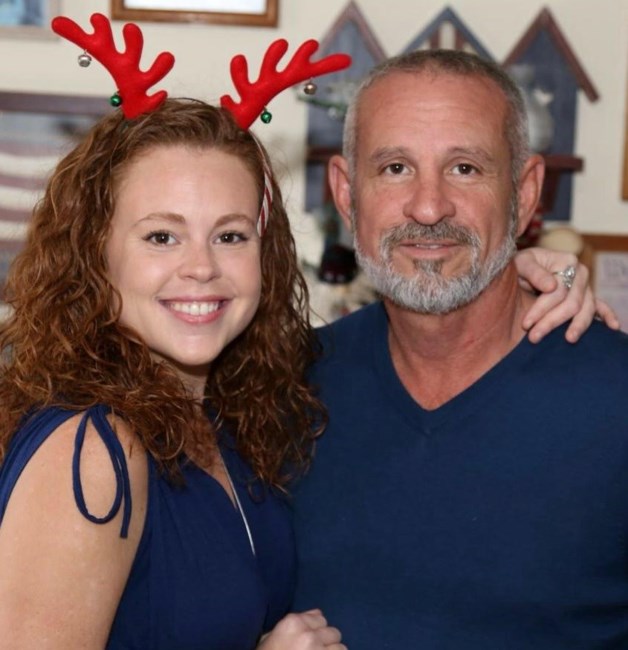
George Francis Ankner
November 4, 1960 – September 15, 2026
Sunday, October 25, 2026
Memory Eternal.
Forty days have passed since the newly reposed servant of God George fell asleep in the Lord. As we mark the fortieth day, the Church gathers to pray for him, as she has prayed for her departed children for centuries.
Some readers are Orthodox Christians who know this day well. Others may be family, friends, or neighbors who have never attended an Orthodox service and may wonder why, more than a month after a funeral, candles are lit again, a bowl of sweetened wheat is set before an icon, and the priest sings for George by name. This is written for both, and tries to explain simply the hope that stands behind every Orthodox memorial. That hope rests on this: Jesus Christ truly died and truly rose, and "he that believeth in me, though he were dead, yet shall he live" (John 11:25).
Grief is not a failure of faith. At the tomb of His friend Lazarus, "Jesus wept" (John 11:35). One contemporary Orthodox priest puts it plainly: "If Jesus can cry, it is okay for us to cry."1 Christians do weep, but St. Paul tells us we do not sorrow "even as others which have no hope" (1 Thess 4:13). The fortieth day is a day when sorrow and hope stand side by side, and the Church teaches us to hold both.
The Scriptural Pattern of Forty Days
In the Bible, forty days repeatedly marks a season of trial, cleansing, and preparation, after which God acts and something new begins.
The Flood. "I will cause it to rain upon the earth forty days and forty nights" (Gen 7:4); "And the rain was upon the earth forty days and forty nights" (Gen 7:12). St. Peter sees in the Flood an image of Baptism (1 Pet 3:20-21): the old world passes away and a cleansed creation emerges.
Moses on Sinai. "Moses was in the mount forty days and forty nights" (Ex 24:18). On his return to the mountain, "he was there with the LORD forty days and forty nights; he did neither eat bread, nor drink water. And he wrote upon the tables the words of the covenant" (Ex 34:28).
Elijah. Strengthened by food from an angel, the prophet "went in the strength of that meat forty days and forty nights unto Horeb the mount of God" (1 Kings 19:8).
Nineveh. Jonah cried, "Yet forty days, and Nineveh shall be overthrown" (Jonah 3:4). The city repented, "and God saw their works, that they turned from their evil way," and He spared them (Jonah 3:10). Forty days is a season of repentance and mercy.
Christ in the wilderness. "When he had fasted forty days and forty nights, he was afterward an hungred" (Matt 4:2). The Church imitates this fast each year in Great Lent.
The Ascension. After His Resurrection, Christ "shewed himself alive after his passion by many infallible proofs, being seen of them forty days, and speaking of the things pertaining to the kingdom of God" (Acts 1:3). Then "he was taken up; and a cloud received him out of their sight" (Acts 1:9). The Church keeps the feast of the Ascension on the fortieth day of the Paschal season (counting Pascha itself as the first day).
This last example is especially dear on a fortieth-day memorial. The risen Christ ascended in His glorified human body, opening the way for us. When the Church prayed for George on the fortieth day, she prayed in the light of that Ascension, entrusting him to the Lord who went before us to "prepare a place" (John 14:2).
The Witness of the Church's Tradition
The Apostolic Constitutions
The custom of commemorating the departed on particular days is very old. The Apostolic Constitutions, a collection of church order generally dated by scholars to the late fourth century (around AD 380, probably in Syria), gives this instruction:
Let the third day of the departed be celebrated with psalms, and lessons, and prayers, on account of Him who arose within the space of three days; and let the ninth day be celebrated in remembrance of the living, and of the departed; and the fortieth day according to the ancient pattern: for so did the people lament Moses, and the anniversary day in memory of him. And let alms be given to the poor out of his goods for a memorial of him.2
Two details stand out. First, the editors of the standard English translation note that the Syriac version and a Greek marginal reading have "the thirtieth" day instead of "the fortieth"; this fits the reference to Moses, for whom "the children of Israel wept ... thirty days" (Deut 34:8).3 The Church's living practice, however, settled on the third, ninth, and fortieth days. Second, the commemoration is not only prayer: it includes psalms, Scripture readings, and alms for the poor. Prayer and charity go together, as they still do today.
The same book preserves an ancient prayer for a departed believer, asking God to "place him in the bosom of the patriarchs, and prophets, and apostles, and of all those that have pleased Thee from the beginning of the world, where there is no grief, sorrow, nor lamentation."4
The Teaching Attributed to St. Macarius of Alexandria
Many Orthodox writings explain the third, ninth, and fortieth days by a text known as the angel's revelation to St. Macarius of Alexandria, a Desert Father of the fourth century. In it, an angel tells the saint that during the first two days after death the soul remains near the earth; on the third day it is brought to worship God; for the following six days it is shown the dwellings of the saints, and on the ninth day worships God again; it is then shown the places of torment; and on the fortieth day it worships God once more, and its place until the Last Judgment is appointed. The text concludes that the Church therefore does well to pray on these days.5
This teaching should be received with care. Its attribution to St. Macarius himself is uncertain, and scholars generally do not count it among his authentic works.6 It has long been read with love and expresses a real pastoral truth: the days immediately after death are a time when the Church surrounds the departed with especially fervent prayer. But it is a pious tradition, not a dogma of the Church. Its details are not articles of faith, and no one should be troubled if they cannot picture the journey of a soul in this way. What the Church does teach with certainty is simpler and greater: the departed are alive in God, "for all live unto him" (Luke 20:38); they remain members of the one Body of Christ; and our prayer and love for them are not in vain.
The same caution applies to the "toll-houses," an image of the soul's passage after death found in some Orthodox writings. Respected Orthodox teachers differ on how literally to take it, and the Church has never defined the matter dogmatically. Speculation about the soul's path matters far less than trust in the mercy of Christ, who "hath abolished death, and hath brought life and immortality to light through the gospel" (2 Tim 1:10).
Why We Pray for the Departed
To a guest, prayer for the dead may be the most unfamiliar part of an Orthodox memorial. Why pray for someone who has died?
Love Does Not End at the Grave
The simplest answer is love. Death separates the soul from the body, but it does not separate the departed from God or from the Church. Christ teaches that God "is not a God of the dead, but of the living" (Luke 20:38). St. Paul writes, "whether we live therefore, or die, we are the Lord's" (Rom 14:8). The Church on earth and the Church beyond the grave are one family in Christ. Christians pray for one another in this life; we have no reason to stop when one of the faithful falls asleep in the Lord. A nineteenth-century Russian work on the departed calls such prayer "a work of devotion and a work of mercy."7
The Witness of Scripture
The Orthodox Church reads the Old Testament in the Greek Septuagint, whose canon includes the books of the Maccabees. After a battle, Judas Maccabeus sent an offering to Jerusalem for his fallen soldiers,
doing therein very well and honestly, in that he was mindful of the resurrection: For if he had not hoped that they that were slain should have risen again, it had been superfluous and vain to pray for the dead. ... Whereupon he made a reconciliation for the dead, that they might be delivered from sin. (2 Macc 12:43-45)
We pray for the departed precisely because we believe they will rise.
The Witness of St. John Chrysostom
St. John Chrysostom (d. 407), Archbishop of Constantinople, preached often on this. In a homily on 1 Corinthians 15 he urges the grieving to help the departed person "as far as possible, not by tears, but by prayers and supplications and alms and offerings." He points to the Divine Liturgy itself:
Not in vain doth he that standeth by the altar cry out when the tremendous mysteries are celebrated, "For all that have fallen asleep in Christ, and for those who perform commemorations in their behalf." For if there were no commemorations for them, these things would not have been spoken.8
He continues: "Let us not then be weary in giving aid to the departed, both by offering on their behalf and obtaining prayers for them," for "in truth one body are we all."9 In a homily on Philippians he says again: "Not in vain did the Apostles order that remembrance should be made of the dead in the dreadful Mysteries. They know that great gain resulteth to them, great benefit." He also names the means: "By praying and entreating others to make prayers for them, by continually giving to the poor on their behalf."10
Such prayer is not a bargain with God. It is trust that the God who loves mankind hears His people, for "the effectual fervent prayer of a righteous man availeth much" (James 5:16).
"Memory Eternal"
Every Orthodox memorial ends with the hymn "Memory Eternal," sung three times (in Slavonic, Vechnaya pamyat). It is not only a wish that we will remember George, but a prayer that God will remember him, for to be remembered by God is to live. It echoes the thief on the cross: "Lord, remember me when thou comest into thy kingdom" (Luke 23:42).
5. The Hope of the Resurrection
Everything the Church does on the fortieth day rests on one fact: Jesus Christ is risen from the dead. Without the Resurrection, a memorial would be only a sad remembrance; with it, the memorial becomes an act of hope.
St. Paul writes, "But now is Christ risen from the dead, and become the firstfruits of them that slept" (1 Cor 15:20). The firstfruits are the beginning of a harvest. Christ's Resurrection is the first sheaf, and the rest of the harvest will follow. St. Paul uses the image of a seed: "that which thou sowest is not quickened, except it die ... but bare grain, it may chance of wheat ... But God giveth it a body as it hath pleased him" (1 Cor 15:36-38). And at the end: "Death is swallowed up in victory. O death, where is thy sting? O grave, where is thy victory?" (1 Cor 15:54-55).
To the Thessalonians, worried about believers who had died, St. Paul writes: "For if we believe that Jesus died and rose again, even so them also which sleep in Jesus will God bring with him. ... and so shall we ever be with the Lord. Wherefore comfort one another with these words" (1 Thess 4:14, 17-18). This is why Orthodox Christians speak of the departed as having "fallen asleep": sleep is followed by waking.
Christ Himself said at the grave of Lazarus: "I am the resurrection, and the life: he that believeth in me, though he were dead, yet shall he live: And whosoever liveth and believeth in me shall never die. Believest thou this?" (John 11:25-26).
In Baptism the Christian is already joined to Christ's death and Resurrection: "if we have been planted together in the likeness of his death, we shall be also in the likeness of his resurrection" (Rom 6:5), for "Christ being raised from the dead dieth no more; death hath no more dominion over him" (Rom 6:9).
The whole of this faith is summed up in the hymn Orthodox Christians sing again and again at Pascha (Easter), and at many memorials as well:
Christ is risen from the dead, trampling down death by death, and upon those in the tombs bestowing life!11
Christ did not avoid death; He entered it and destroyed its power from within. This is the hope in which we commend George to God.
What We Do on the Fortieth Day
Customs vary among jurisdictions, ethnic traditions, and parishes, and families should always ask their parish priest what is done locally. Often the memorial is served on the Sunday or Liturgy day nearest the fortieth day. The following practices are widespread.12
The Divine Liturgy. The most important prayer for the departed is the Divine Liturgy, the Eucharist. Before the public service begins, in the preparation of the bread and wine (called the proskomedia or prothesis), the priest removes small particles of bread for the living and the departed, naming each person, and places them on the diskos beside the Lamb, the bread that will become the Body of Christ. At the end of the Liturgy these particles are placed into the chalice. The departed are also remembered in the litanies of the Liturgy.13 Family members may give the priest George's baptismal name for commemoration, and may bring prosphora (offering bread) according to parish custom.
The memorial service (Panikhida). After the Liturgy, or at another time, a memorial service is sung, known as the Panikhida or Parastasis (Slavic usage), the Pomen (Serbian), or the Mnemosyno (Greek). A shorter form is called the Trisagion or Litiya for the dead.14 The service includes psalms, hymns of repose, a litany naming the departed, and the prayer "O God of spirits and of all flesh," and it ends with "Memory Eternal." Father Phillip severed a Panikhida for George after Liturgy today; before the same Altar and Icons where Geroge worshiped.
Koliva. For the memorial, the family often prepares koliva (also spelled kollyva; in Slavic usage, kutia), boiled wheat sweetened with honey or sugar and often decorated with a cross. It is blessed during the service and shared afterward. The wheat recalls the Lord's words: "Except a corn of wheat fall into the ground and die, it abideth alone: but if it die, it bringeth forth much fruit" (John 12:24), and St. Paul's image of the sown grain (1 Cor 15:36-38). The sweetness speaks of the joy of the life to come.15 To eat the koliva together is to confess, without words, that the body laid in the ground is a seed awaiting the resurrection.
Prayer at home. The faithful remember the departed in their daily prayers, especially the evening prayers, often lighting a candle before their icons. A short prayer said with love is never small.
Almsgiving. From the Apostolic Constitutions to St. John Chrysostom, the Church has joined prayer for the departed with gifts to the poor. Families often make a donation to a charity, to the parish, or directly to someone in need, in the name of the departed. The Lord said, "Inasmuch as ye have done it unto one of the least of these my brethren, ye have done it unto me" (Matt 25:40).
Visiting the grave. Many families visit the grave on or near the fortieth day, sometimes asking the priest to serve a short Litiya there.
A meal of remembrance. In many traditions, the family and friends share a meal after the memorial. The Church has long expected such meals to be sober and gracious.16 Around the table the grieving are reminded that they are not alone. As the foreword to one Orthodox book on grief observes, "Grieving is a personal experience as well as a communal experience within the Church."17
The fortieth day is not an end. The Church keeps praying for the departed on the anniversary, on the Saturdays of Souls, and at every Liturgy. Grief does not end on a schedule, and neither does love.
An Invitation: "Come and See"
Nothing in Orthodox prayers asks us to pretend that death is not real or not painful; Scripture calls it "the last enemy" (1 Cor 15:26). But the Church does not leave us there. She points us to a Person, Jesus Christ, who wept at the grave of His friend, who died on the Cross, and who rose on the third day. Everything seen at an Orthodox memorial (the candles, the incense, the wheat, the hymns) is a way of saying: Christ is risen, and therefore death does not have the last word.
When Philip first told his friend Nathanael about Jesus, Nathanael was skeptical: "Can there any good thing come out of Nazareth?" Philip did not argue. He simply said, "Come and see" (John 1:46). The Orthodox Church offers the same invitation. Metropolitan Kallistos (Ware) once wrote, "No one can be a Christian at second hand."18 The faith is a life to be entered and a Lord to be met.
You would be warmly welcome at the Divine Liturgy at any Orthodox parish, usually served on Sunday mornings. You do not need to know what to do. You may stand or sit at the back, listen, watch, and pray as you are able. (Holy Communion is received by Orthodox Christians who have prepared for it. Where parish custom allows, guests are welcome to come forward at the end of the service for a blessing and a piece of blessed bread, called antidoron; the priest will gladly explain what is done in that parish.) Afterward, the priest would be glad to speak with you, to answer questions, or simply to listen.
To find a parish near you, the Orthodox Church in America provides a parish directory at oca.org/parishes. The Greek Orthodox (goarch.org) and Antiochian (antiochian.org) archdioceses have similar directories.
"Come unto me, all ye that labour and are heavy laden, and I will give you rest" (Matt 11:28). That promise is for the grieving, the doubting, and the searching. It is for you.
A Closing Prayer
This prayer is offered in the Orthodox memorial and funeral services and in the daily prayers of the faithful.19
O God of spirits and of all flesh, Who hast trampled down death and overthrown the Devil, and given life to Thy world, do Thou, the same Lord, give rest to the soul of Thy departed servant George in a place of brightness, a place of refreshment, a place of repose, where all sickness, sighing, and sorrow have fled away. Pardon every transgression which he has committed, whether by word or deed or thought. For Thou art a good God and lovest mankind; because there is no man who lives yet does not sin, for Thou only art without sin, Thy righteousness is to all eternity, and Thy word is truth.
For Thou art the Resurrection, the Life, and the Repose of Thy servant George who has fallen asleep, O Christ our God, and unto Thee we ascribe glory, together with Thy Father, who is from everlasting, and Thine all-holy, good, and life-creating Spirit, now and ever unto ages of ages. Amen.
Grant, O Lord, rest eternal to the newly reposed servant of God George, and make his memory to be eternal. Memory Eternal!
Notes
1. Stavros N. Akrotirianakis, Painless, Blameless & Peaceful: Orthodox Christian Reflections on Death, Dying, and Eternal Life (Chesterton, IN: Ancient Faith Publishing, 2025), "Don't Grieve Like the Others," Kindle p. 237. (Kindle page numbers in these notes are as displayed in Kindle Cloud Reader and may differ from print editions.)
2. Constitutions of the Holy Apostles (hereafter Apostolic Constitutions) VIII.42, in Ante-Nicene Fathers (ANF), ed. A. Roberts, J. Donaldson, and A. C. Coxe, vol. 7 (Buffalo: Christian Literature Publishing Co., 1886), 498 (checked against ccel.org/ccel/schaff/anf07).
3. ANF 7:498, editors' note to VIII.42 ("The Syriac and a Greek marginal reading give 'the thirtieth.'"), with a cross-reference to Deut 34:8.
4. Apostolic Constitutions VIII.41, ANF 7:498.
5. Paraphrased (not quoted) from the English text in Orthodox Christian Information Center, "The Requiem Office for the Dead (Panikhidi)" (orthodoxinfo.com/death/pannikhida), which reproduces Isabel F. Hapgood, Service Book of the Holy Orthodox-Catholic Apostolic Church (Englewood, NJ), 612-13; compared with the Russian text at alfa.pravmir.ru/library/readbook/3591.
6. Sermo de exitu animae justorum et peccatorum, in Migne, Patrologia Graeca 34, cols. 385-392, as cited in Pravoslavnaya Entsiklopediya, s.v. "Makariy Aleksandriyskiy" (pravenc.ru/text/2561434.html), which judges the work "in all likelihood" not his, no ancient writer reporting any writings by him (see Clavis Patrum Graecorum 2400-2403).
7. Monk Mitrophan, How Our Departed Ones Live: The Experience of the Orthodox Church, trans. Archpriest John R. Shaw (Jordanville, NY: Holy Trinity Publications, 2015; Russian original 1897), Part III, sec. 3, Kindle p. 111.
8. St. John Chrysostom, Homilies on First Corinthians, Homily 41, sec. 8, in Nicene and Post-Nicene Fathers, First Series (NPNF1), ed. P. Schaff, vol. 12 (Buffalo: Christian Literature Publishing Co., 1889), 253. Checked against the CCEL edition (ccel.org/ccel/schaff/npnf112).
9. Ibid., 254.
10. St. John Chrysostom, Homilies on Philippians, Homily 3, NPNF1 13:197. Checked against the CCEL edition (ccel.org/ccel/schaff/npnf113).
11. Troparion of Pascha, as translated by the Orthodox Church in America (oca.org/saints/troparia/2026/04/12).
12. Orthodox Church in America, "Prayers for the Departed," Questions & Answers (oca.org/questions/deathfunerals/prayers-for-the-departed).
13. Orthodox Church in America, The Orthodox Faith, vol. 2, "The Divine Liturgy: Prothesis" (oca.org/orthodoxy/the-orthodox-faith/worship/the-divine-liturgy/prothesis); and n. 12.
14. Orthodox Church in America, "Terminology: Services / Absolution / Cremation," Questions & Answers (oca.org/questions/teaching/terminology-services-absolution-cremation).
15. Greek Orthodox Archdiocese of America, Department of Religious Education, "Kollyva" (goarch.org/documents/32058/12709588/Kollyva); and Patricia Manuse, "Orthodox Church: A Pathway through Mourning" (goarch.org/-/orthodox-church-a-pathway-through-mourning).
16. Apostolic Constitutions VIII.44 tells clergy invited to memorial meals to "feast with good order, and the fear of God, as disposed to intercede for those that are departed"; ANF 7:498.
17. Sarah Byrne-Martelli, Memory Eternal: Living with Grief as Orthodox Christians, with a foreword by Bishop John (Abdalah) (Chesterton, IN: Ancient Faith Publishing, 2022), Kindle p. 6.
18. Kallistos Ware (Metropolitan Kallistos of Diokleia from 2007; Bishop of Diokleia when this edition appeared), The Orthodox Way, rev. ed. (Crestwood, NY: St Vladimir's Seminary Press, 1995), Prologue, Kindle p. 5.
19. Orthodox Church in America, "For the Departed," Common Prayers (oca.org/orthodoxy/prayers/for-the-departed); text © The Orthodox Church in America, used with attribution. Adapted from the plural ("Thy departed servants") to the singular, with George's name; the page's "Thou are" is given as "Thou art." The OCA text closely follows Isabel F. Hapgood, Service Book of the Holy Orthodox-Catholic Apostolic (Greco-Russian) Church (Boston: Houghton Mifflin, 1906).
Show your support
Send Flowers
Add a Memory
Share Obituary
Get Reminders
Past Services
Gathering of Family & Friends
Funeral Service
- SEND FLOWERSSEND
FLOWERS SHARE OBITUARYSHARE
- GET REMINDERS
v.1.18.1