OBITUARY
Melody Ruvidich
September 28, 1937 – June 27, 2026
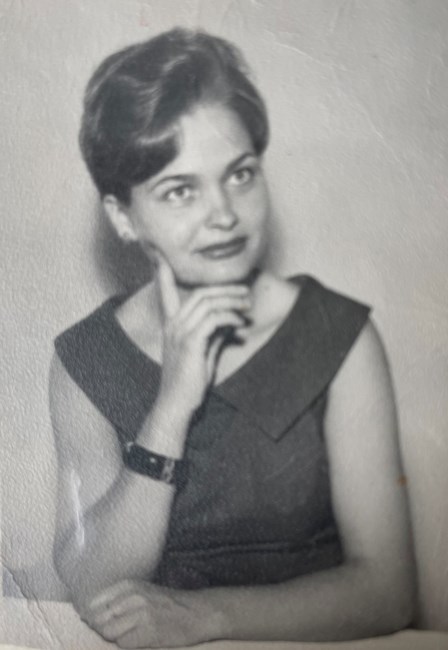
Melody spent her younger years in Pančevo, Yugoslavia. Her father, Toma, was a noted local barkeep and entrepreneur, and Melody grew up above the family bar with her father and her stepmother, Olga.
When she was eighteen years old, Melody had the chance to join her birth mother, Leposava (Helen), who had immigrated to the United States. Melody courageously left her family and home in search of better opportunity, which she found in America, first in Brooklyn, New York, then in Chicago, Illinois. It was in Chicago that she met her husband, Dragoslav (Drag) Ruvidich, with whom she had three children (Natalia, Ned, and Stevan). The family relocated to Pinellas County, Florida, in 1969, where Melody lived ever since.
Melody was known for her incredible work ethic. Over her lifetime, she worked as a hairdresser, a waitress/hostess, and an entrepreneur. Residents of Pinellas County may remember her as a waitress/hostess at Venus Restaurant, where Melody was known for her warm hospitality and sharp memory for names, faces, and orders. It was not uncommon for guests to be offered a table in another section, only to say, “No, thanks; I’ll wait until Melody is free.” Melody was also a dedicated entrepreneur. Starting from her marriage to Drag, and continuing until the final years of her life, Melody carefully saved money in order to build a real-estate portfolio in Pinellas County. She was a detail-oriented businesswoman who was unafraid to negotiate, with a keen eye for numbers and value.
Most of all, Melody will be remembered as a gifted cook and hostess. Guests frequently stopped by for a cup of coffee, which Melody prepared in the traditional Balkan method, on the stove top. Fortunate guests were invited to stay for Melody’s famous home cooking. Her signature dishes included sarma (Balkan cabbage rolls), ribs, and baklava. She believed in preparing excellent food, preferably in large quantities, and enjoyed feeding the people she loved. Perhaps the most common phrase in her lexicon was, “Eat, eat!” Guests who entered Melody’s home were deemed “too skinny,” and she took it as a personal mission to remediate this.
Melody loved her family above everything else. She never ceased being grateful for the opportunity to raise her family in safety and prosperity and frequently reminded her children and grandchildren how fortunate they were. She loved spending time with her family, preferably at the dinner table. She is remembered as an attentive and caring wife, mother, grandmother, great-grandmother, sister, and aunt, who loved spoiling her relatives with food and gifts.
Melody was preceded in death by her husband, Drag; her brother, Mike; and her daughter, Natalia. She is survived by her sister, Tomi; her children, Ned (Jill) and Stevan; her grandchildren, Andrew (Ashley), Kathryn (Scott), Emily, and Allison; two great-grandchildren, Thaddeus and Jay; as well as many nieces, nephews, and dear friends.
A funeral service will take place later this year.
In lieu of flowers, donations may be made to Suncoast Hospice in Palm Harbor, Florida.
Arrangements are entrusted to Serenity Funeral Home & Serenity Gardens Memorial Park in Largo, Florida (727-562-2080).
She will be missed. If you would like to celebrate Melody’s life, the family invites you to spend time with your loved ones and have a peanut butter cookie (her favorite) in Melody’s honor. The culinarily adventurous may wish to recreate Melody’s signature dish, sarma (translated here by her granddaughter, Allison, as Melody was an instinctive cook who did not bother with measurements):
Ingredients
1-2 heads of cabbage
Two pounds of a fatty ground meat blend. I typically use one pound of a fatty ground beef and one pound of ground pork. You can also add some smoked meat like bacon to make it even more flavorful.
A cup of uncooked white rice.
One diced white onion.
Enough chicken stock to fill your pot once it’s full of sarma.
Some jarred tomato sauce.
Around four cloves of minced garlic.
Seasoning. I usually use smoked paprika, dill, pepper, and Vegeta. Vegeta is a Croatian spice blend made up of dried vegetables, MSG, and salt.
A large oven-safe pot. I use a Dutch oven.
Recipe
Start the recipe the night before you plan on eating your sarma. Boil your whole head of cabbage in a pot until it’s soft, then peel the leaves off without breaking them.
Cut the spines off the cabbage leaves with a small, V-shaped cut, leaving as much of the leaf as you can. Make sure to save a few full cabbage leaves to line the top and bottom of the pot.
Mix the ground meat, onion, and white rice. Season liberally.
Wrap the filling with cabbage. I do this by plopping some filling on the cabbage leaf, rolling it until it’s oblong, and then poking either end down into the roll, so you’re left with a little cabbage burrito.
Line the bottom of your pot with the cabbage leaves you saved. Stack the sarma in large to small. Once they’re all in, lay the very last of the cabbage leaves over top.
Refrigerate your sarma overnight.
The next morning, pour the chicken stock over the sarma until it’s mostly covered. Then pour a layer of the tomato sauce over the top.
Although my Baba cooks sarma on the stove top, I find it much easier to cook in the oven. Balkan recipes only have one temperature and one time— “hot,” and “until it’s done”— but I’ve had luck with 350 degrees Fahrenheit for three hours.
Serve with šopska salata (tomato, cucumber, and feta salad), a charcuterie plate, and cornbread.
Show your support
Add a Memory
Share Obituary
Get Reminders
SHARE OBITUARYSHARE
- GET REMINDERS
v.1.18.1