
OBITUARY
Delmar Adolph Motycka
June 12, 1929 – October 4, 2024
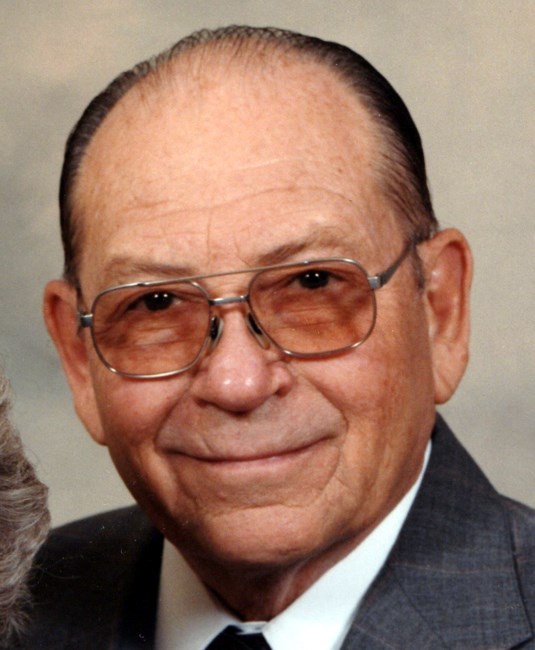
When he was born on the farm 95 years ago, Delmar Adolph Motycka was the pride of his parents. Born the only son of Adolph and Dorothea (Scholtzhauer) Motycka, his life was almost a miracle when he was diagnosed with Pelonic Stenosis at 5 weeks old and had but hours to live. With the help of a surgeon who had performed the operation twice before, unsuccessfully, Delmar went on to live another 95 years.
Delmar’s early life was influenced by the events of the age as well. Being born mere months before the start of the Great Depression, the economic hardships and the droughts of the 1930’s shaped his views and bent his young body to help his family survive. From the age of 4 he was assigned chores on the farm, learning that life is helping the ones you love and who love you. As he grew to manhood this love and responsibilities would shape him and his aspirations.
His scholastic achievements began in primary school where he skipped the 8th grade by passing all the high school entrance exams by the 7th grade. The one-room school experience provided a learning space that accelerated a quick wit like Delmar. Graduating high school with a Regent’s Scholarship, he attended UNL but his interests lay in things that had fascinated him since his visit to the Black Hills when he as 10 years-old; rocks and minerals. His interest led him to the New Mexico School of Mines and finally graduation from the South Dakota School of Mines as a mining engineer.
As a mining engineer, Delmar started his first employment in Bolivia the following month after his graduation. He had worked internships at several mines during the summer months of his undergraduate years but this was a job with responsibilities and challenges. After two days training he was on his own to do the assigned tasks and generate the required reports for the mine general manager. The work was challenged by political unrest, and after a year at the mine a revolutionary army entered Bolivia from Argentina and took control of the mine, and the mining engineers. He and the other foreign-born engineers were held at the mine and required to work on their behalf. This situation finally ended after a few months and he and the other ‘gringos’ were allowed to leave.
After returning to the United States and taking a brief vacation in Maine, he signed on with another mining company and flew to Peru. Delmar found the work in Peru to be uninteresting and less-than satisfying so after a year’s time he resigned from the company. While unemployed in Peru he made several trips into the Andes to evaluate gold mine claims, and once went hungry for 3 days when the group he was with ran out of food. A day-and-a-half hike out of the Andes to the road and a bumpy ride in the bed of a truck took him back to Lima and a hard-earned meal and bed.
With the unrest in South America and realizing that the mining industry was diminishing, Delmar returned to the U.S. by ship. With money in his pocket he bought an Olds Super 88 and proceeded to both seek employment and enjoy life. Within a half-year Delmar had accepted a position with the Nebraska Department of Roads as an entry-level highway construction engineer. Here he learned the ropes on building highways and bridges from the old sage engineers and the work-crews. Walking many a mile of new road, and performing all the engineering tasks for several projects he attained his Professional Engineer certification that would qualify him for promotion.
A year or so after starting his employment with the Roads Department, Delmar was introduced to the woman who would become the love of his life, Darlene Schneider. Their loving partnership lasted some 68 years and celebrated the birth of three children, daughters Elaine and Joann and son Wayne.
Delmar’s career at the Roads Department was fraught with change, as policy and politics would abolish and form new divisions within that he would be charged with leading. He derived great pride in his efforts on behalf of communities and the less-populated counties in the state needing assistance in building or repairing highways and bridges that their citizens relied upon. Upon his retirement from the Roads Department his efforts on their behalf were recognized and deeply appreciated by those he served.
Delmar, like his father, enjoyed fishing and hunting, and was a consummate adventurer in many respects. He would often take the family on long weekend trips to local lakes for a two-night stay with the goals of fishing and family togetherness. Rarely was the fishing good, but the family time was cherished by all. He took the family on many longer vacation journeys as well. With his 4-door sedan crammed full of camping gear replete with car-top carrier, the family traveled to the Grand Canyon, the Black Hills, the Colorado Rockies and most memorably Arches National Monument where the family spent the night stranded on the top of a sandstone mesa because the way down couldn’t be found in the twilight of evening. His travels were non-stop even into retirement as he and Darlene would travel the U.S., first by tent and later a motorhome. They would visit nearly all the lower-48 states, along with a trip to Barrow Alaska to stand above the arctic circle and a trip to Hawaii.
Delmar’s found the natural world was always a source of fascinating topics to study. Delmar took up the hobby of astronomy before retiring from the Roads, and dearly enjoyed looking at galaxies and deep-sky objects. His curiosity about the universe was insatiable, avidly reading on the findings of others into the nature of all things. He imbued his children with this love and wonder of nature and shared it with others.
Delmar embarked on his last adventure October 4, 2024 to the life that awaited him beyond this life.
Show your support
Add a Memory
Share Obituary
Get Reminders
PALLBEARERS
Ace HankePallbearer
Dennis SharpPallbearer
Matthew NatarajanPallbearer
Dennis O'MeliaPallbearer
Wayne MotyckaPallbearer
Elaine Motycka SharpPallbearer
Services
SHARE OBITUARYSHARE
- GET REMINDERS
v.1.18.0