
OBITUARY
Sixto Jose Garcia
November 8, 1942 – August 22, 2026
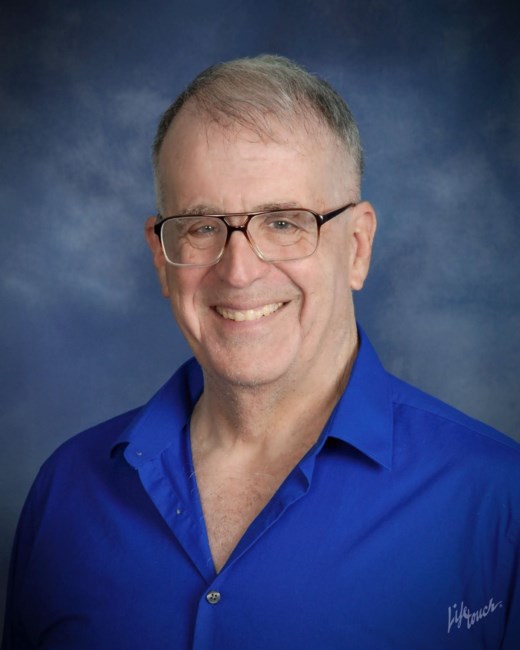
He was a loving father and husband, committed teacher to his legions of students, devoted Catholic, brilliant academic, and zealous fan of the Notre Dame Fighting Irish. He is survived by his wife, Elena Muller Garcia, and his children Teresa, Tomas, and Cardiff.
Sixto was born on November 8, 1942, in Havana, Cuba, to Maria Teresa Sanchez Martinez and Sixto Jose Garcia Ferrer, who were known affectionately to their family as “Cuca” and “Tito.”
He began his lifelong dedication to academic excellence at an early age, graduating with honors from Colegio de La Salle in Havana. When he was 18, the upheavals of the Castro regime in Cuba scattered the family to different countries, sending Sixto and his brother Alberto to Venezuela and his youngest brothers Jose and Juan to the United States, while Cuca and Tito were forced to stay behind in Cuba.
After the family reunited in Miami in 1962, Sixto worked long hours in a Food Fair for nearly half a decade, suspending his academic pursuits to support his parents and brothers. He later reflected on this period of his life with immense pride, gratified that his younger brothers were able to continue their own studies uninterrupted because of his sacrifice.
Working full time and studying at night, Sixto eventually graduated from the University of Miami and, in 1986, earned his Ph.D. in Systematic and Philosophical Theology from the University of Notre Dame.
Sixto and Elena then moved to Boynton Beach, where he began teaching and pursuing research as a theologian at Saint Vincent de Paul Seminary. He remained a teacher and scholar at the seminary for nearly the rest of his life.
Colleagues meeting Sixto for the first time were dazzled by his ability to cite even the most obscure historical and theological sources from memory, connecting them in novel ways to arrive at unexpected conclusions. His baritone voice operated exclusively at the loudest volume setting, drowning out all competing sounds, and his fellow teachers at the seminary would sometimes pause their own classes one classroom over to listen to his lectures.
His students described him as a compassionate teacher who demanded their best effort. In later years, after they had become priests, alums of his courses often concluded their masses by publicly thanking him when they saw him in the audience — and playfully noting that his presence made them nervous, as if they were back in his class and their homilies were subject to his red pen.
Sixto’s research was widely published and appeared as standalone chapters in more than a dozen books. He made major contributions to journals of the Catholic Theological Society of America such as the Journal of Hispanic and Latino Theology, and he served as president of the Academy of Catholic Hispanic Theologians from 1999–2000.
Sixto’s articles, “We are a People: Initiatives in Hispanic American Theology” and “Frontiers of Hispanic Theology in the United States,” were credited by his peers as significant advancements in forming a distinct Hispanic theological identity. He was often a guest lecturer at Harvard Divinity School, the University of California, Berkeley, and other venues.
Perhaps the only thing Sixto loved as much as his family and his work was Notre Dame football. He especially liked the rivalry between his two alma maters. It wasn’t enough for Notre Dame to defeat the University of Miami in the traditional Catholics vs Convicts matchups. Sixto also needed people to know that the Hurricanes were “oppressive, hedonistic, plutocratic pagans.” Tere, Tom, and Cardiff enjoyed teasing him about his goofy, intellectualized humor and his preferred daily uniform: thick sneakers and a collared shirt or guayabera with three pens and three highlighters stuffed into the shirt pocket.
Like his three brothers, Sixto loved to be in nature. His favorite hobbies were photography and bird-watching at the Green Cay Wetlands and the Loxahatchee National Wildlife Refuge, where he and Elena walked almost every single week. He also loved refreshing his fluency in foreign languages and could speak English, Spanish, French, and German. And if reading deeply in Latin and Ancient Greek had not been a requirement of his profession, it would still have been his idea of a fun afternoon.
Sixto’s children often joked that his erudition carried with it a serious book acquisition problem, with ceiling-high towers of hardbacks clogging the hallways and making it impossible for Elena to walk from the kitchen to the living room without toppling them over. Even in those rare instances when Elena convinced him to give a book away, two would magically appear to replace it. He never quite kicked the habit.
Services are as follows:
Visitation will be held at Caballero Rivero Westchester, 8200 Bird Road, Miami, FL 33155, on August 28, 2026, from 5:00 pm to 10:00 pm.
A Funeral Service will take place at Centro de Espiritualidad Ignaciana, Casa Manresa Miami, 12190 SW 56th Street, Miami, FL 33175, US, on August 29, 2026, beginning at 10:30 am.
May he be remembered with honor, and may his memory remain a lasting blessing.
Show your support
Send Flowers
Add a Memory
Share Obituary
Get Reminders
Past Services
Visitation
Funeral Service
- SEND FLOWERSSEND
FLOWERS SHARE OBITUARYSHARE
- GET REMINDERS
v.1.18.0