
OBITUARY
Robert Morrison Warren
December 19, 1931 – October 12, 2026
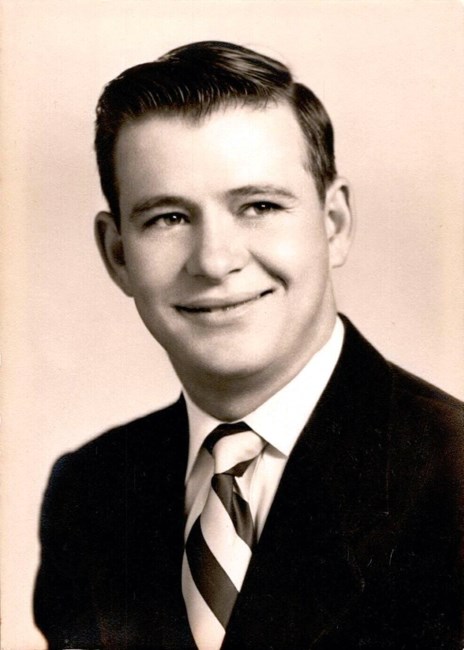
Bob Warren was a good person who lived a good, long life. His Christian faith was one source of this goodness, and he adhered to the idea that judgement was not his. He was a New Testament Christian, who believed that the template for one’s priorities existed there in the manner in which Jesus lived. Bob liked the idea of the meek inheriting the earth. And as for Heaven, he figured the entrance requirements might not be that stringent, that a merciful God would likely go easy on a guy down on his luck, regardless of unforgiven sins. Nevertheless, although he adhered to what might be called a liberal version of Christianity, he took his church attendance seriously. Wherever he and his family lived, he joined a church and enthusiastically participated in the life of it. For instance, volunteering to teach a Sunday school class was easy for him. Also, Bob knew the Bible, could quote passages therein, and discuss in detail their meanings.
As for that good, long life, Robert Morrison Warren’s journey began in Portsmouth, VA on December 19, 1931 and ended on October 12, 2026. Bob and his family resided in the Prentiss Park area. He often said he was reminded of his old neighborhood every time he watched the movie “A Christmas Story.” He described a friend that had a tenacious rat terrier that loved vacant lots and abandoned houses due to the rodents that lived there, adding that he and his buddies liked to watch the little dog do his work. He spoke of playing lots of baseball here and that the person who introduced him to the sport and was essentially his first coach was a girl. This is also the period of Bob’s life in which he became a devoted New York Yankees fan. He would venture from time to time over to Norfolk to watch the Norfolk Tars, a minor league team affiliated with the Yankees. And this was also the period in Bob’s life in which he became acquainted with the ferry that travelled between Portsmouth and Norfolk. A couple that lived next door to his family became quite enamored of him, and the husband would occasionally take Bob for ferry rides. The story goes that this man would go back and forth with him on this trip as long as Bob wanted and that each time the direction of travel changed he and the neighbor had to move to the front of the ferry as per Bob’s wishes.
When Bob was 12, his family moved to a 75 acre peanut farm a few miles outside of Murfreesboro, NC, the area where his father and mother were originally from. At first, he wasn’t happy about this relocation, but later grew to like the country. According to Bob, hogs got a bad rap. He always defended them, explaining that they actually kept themselves very clean and that they were really smart. Bob came to love mules also. He opined that they were much smarter than horses. He often shared tales of plowing with mules and how they would turn stubborn going away from the barn and speed up heading towards it. On a hot, sunny day, if you’re smart, you try to get in the shade. Bob also started hunting during this period of his life. On many occasions, he explained why squirrel hunting got much easier during peanut harvesting time. The peanut vines would be pulled out of the ground and stacked around tall wooden poles to allow the peanuts to dry. All that Bob had to do was grab his 22 rifle, take a short walk across the peanut field, position himself there at the edge of the woods, and wait for every squirrel in the neighborhood to come running.
Bob attended high school in Murfreesboro. He was a pretty big man on campus there, albeit a small campus. He was popular and was a good athlete. Bob was the quarterback of the football team and was a good baseball player too. (He played on an Air Force baseball team in California that played semi-pro teams and was once scouted by the Boston Red Sox.) But he freely admitted that his status here was due mainly to the fact that he was the class clown. To illustrate this, Bob liked to tell a story whose main character was the district school superintendent and whose main prop was a chalk-filled blackboard eraser. It went like this… The principal taught a history class, which Bob was in. The principal left the classroom to escort the superintendent to his car after his scheduled visit. Back in the classroom, Bob and another student started throwing erasers at each other. Bob threw an eraser through an open window when the other student who was in front of that window ducked. And because the principal and the superintendent just happened to be walking under that window on their way to the parking lot, the chalky side of that eraser hit the front of the superintendent’s dark suit coat, leaving a white mark approximately 2.5 x 6 inches there at the crime scene. The punishment here was Bob having to move the coal pile from where it was dumped upon delivery to where it was stored. It’s likely that, whenever he told this story, Bob included that he moved lots of coal during his high school days. Nevertheless, know too that Bob thought a great deal of his principal and that he knew his attempts to get him straight were done only because he cared about him.
He graduated from high school in 1950 and enrolled at the University of North Carolina that fall. Bob completed a year of study there and then decided to enlist in the Air Force in 1951. He was eventually stationed in Tokyo as support staff for a bomber wing. Then a short time later the Korean War began, which meant that Bob became a veteran of two wars, World War II and the Korean War, the former because the United States still occupied Japan during part of his posting there. However, Bob, never one to shy away from self-deprecation, said very little about his service and being a veteran. He believed that a real vet was someone who’d actually been in combat, not a member of the Chair Force, Bob’s term for his military duties. Yet, he often credited his military service for providing him with a measure of discipline that he may not have acquired otherwise.
Bob was discharged from the Air Force in May of 1955. And then on July 1 of this year, he married Barbara Whitley, his high school sweetheart. They were married for over 71 years. Bob continued his studies at UNC for two years from this point. In 1959, he was employed by the Virginia Employment Commission at its Suffolk, VA office and later worked at the VEC’s Portsmouth office. Then in 1967, Bob was transferred to the VEC’s Covington branch, where he was the office manager until 1979. At this point, he took a position at the VEC’s headquarters in Richmond as the Rural Services Manager. His main responsibility here was to oversee the seasonal migrant labor program utilized by farmers and fruit growers around the state. He worked in this capacity for the VEC until his retirement in 1989.
As for hobbies, Bob enjoyed bird hunting, dove and quail in southeastern Virginia and northeastern North Carolina, and grouse in western Virginia. He was also into crossword puzzles and an avid reader, preferring biographies and histories, particularly any book that covered World War II. But the hobby that was his favorite was humor. His head was full of funny stories, which he would willingly share, with little prompting. On the other hand, he also wanted to hear your funny stories. Of course, this meant that yours became his. His favorite comedian was Jonathan Winters, and his favorite film comedy was probably “It’s A Mad Mad Mad World,” which happened to feature Mr. Winters and a whole bunch of other people that Bob thought were extremely funny as well.
Understand too that Bob shared HIS humor in ways other than story telling. It’s accurate to state that most things he encountered in the world were potential comedy material. Consider commercials. He loved to humorously critique them. Imagine Bob’s watching TV and a General Motors commercial appears on the screen. It’s pushing the idea that owning a particular Buick sedan will magically transform one’s life. Bob would likely have said something like this: “Really, so if I buy that car, I won’t have to work for a living anymore and I’ll suddenly look like Paul Newman. I don’t believe it!” The other memorable way that Bob got his humor out there concerned the fact that he was a walking repository of funny lines that covered a variety of topics. For example, this was his verbal take as per the curative powers of chicken soup whenever the subject came up: “If you eat chicken soup when you’re well, it will make you sick so that it can make you well again.”
Bob was predeceased by his parents William and Lucy Warren and also four siblings: Virginia Butterton, Willford Warren, Lois Ridge, and Jean Houghton. He is survived by his wife Barbara, their two sons, Steven(Diane) and Woody, and a sister, Carol Holland(Jim). Bob is also survived by two grandchildren, Christopher Warren(Elizabeth) and Dana Warren, and also two great grandchildren, Charlotte Warren and Madeleine Warren. Additional survivors include twelve nieces and nephews.
It’s best to end Bob’s story here with another story, an anecdote he told many times about his father, a man pretty far down the social ladder who knew what was right when it came to how you treated others, especially those beneath you on that ladder. So go back to that aforementioned peanut farm. His father sharecropped, which meant that he got help from another person with his crop and that when it was sold a share of the profits went to that person. On this occasion, the helper was a Black man who worked with several other White farmers in the area. Bob’s dad procured the profits for his peanuts and summoned the man. He paid him his share as promised and on time. Subsequently, the man began crying, and Bob’s father naturally asked why. The man explained that Mr. Warren was the only farmer that paid him on time and added that some of the other farmers never paid him.
This was the depth of moral character that Bob wanted to display. It took him a little time to figure it all out, but he eventually did. His world view was that we all, especially him, needed to do more for those at the bottom. He could be trusted if he was your friend. And as for his family, he tried his best to always place their interests and well-being before his own. If his granddaughter, Dana, were tasked with evaluating his performance while on this earth, she’d look at him and say, “Bob, you did a good job.” This line, there’s a story behind it, but it won’t be told. For it’s time to end the bigger story here, Bob’s. It’s a tough truth, but stories, even the really good ones, can’t go on forever. And it’s so difficult to accept this hard fact and to not wish that they could.
At the time of his death, Bob was a member of Huguenot Road Baptist Church, 10525 W. Huguenot Rd North Chesterfield, VA 23235, where a Celebration of Life service will be held on December 19, 2026, at 2:00pm.
Show your support
Add a Memory
Share Obituary
Get Reminders
SHARE OBITUARYSHARE
- GET REMINDERS
v.1.18.1