OBITUARY
Edeltraud Gudrun Singer Lawrence
July 11, 1934 – October 20, 2026
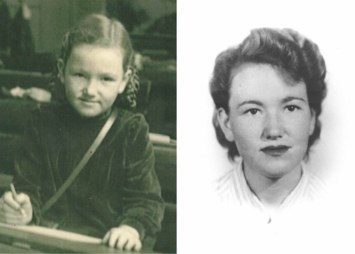
Edeltraud Gudrun Singer was born on July 11, 1934, in Berlin, Germany, to Charlotte and Hans Singer. She grew up during World War II where she experienced many hardships that shaped who she was as a person and mother. Four years after the war, Oma Singer secured passage to emigrate to the United States in search of a better life with her siblings, Gunther, Harold, and Heidi.
They arrived in New York on Long Island in 1949. Mom found work as a nanny for a corporate executive of the Coca-Cola company where she worked for approximately two years. Her wages were to help pay back Walter Haake (family member on the Singer side) for his purchase of her passage on the ship that brought her to the US.
She eventually made her way to Utah to join the Saints in 1951/1953. Three years later she married. She had 10 wonderful and dynamic children: Karen, Jeanie, Christine, David, Robert, Mark, Jeff, Launa, Emily, and Rebecca.
She raised her family on freshly squeezed carrot juice, wheatgrass juice, canning of fruits and juices, fruit leather, salsa, Concord grape juice, and last but not least… Swedish bitters. No white bread, pizza, or junk food was to be found—however, there was always a bushel of apples in the cold storage and ice cream in the freezer, which Mom adamantly loved.
Mom had wonderful determination, and a perseverance and plain German stubbornness that would become part of her legacy. She taught us, without even realizing it, how to overcome the obstacles life throws at us.
Mom loved us. And while she may have had trouble saying it earlier on in her life, the words “I love you” came readily to us all toward the end of her life. In the interim, she expressed her love through actions if not words. She helped us all in many ways. She would walk ten miles through a snowstorm to make sure we had what we needed, and was there to lend a helping hand when needed.
Mom endured, she figured things out, and she kept going.
When I think back on my childhood, I remember some individual hardships, and I know you do too. We experienced hardships collectively as a family. However, let us learn from those hardships, move on, and remember the good moments. I remember a childhood full of adventures, traditions, alternative remedies, and moments that, looking back, were uniquely and unmistakably Mom.
Some of my fondest memories growing up in the older Mapleton house were a horse watering trough repurposed as a swimming pool, sleepovers on the trampoline, and playing hot lava on the tan cushions of the big couch in the family room above the garage. We could turn an ordinary living room into a gymnastics adventure because Mom let us vault over the couch. I remember opening presents on December 24. I remember helping her pick fruit to can and make fruit leather. I remember all my friends wanting to come to my house for school lunch break because there was sure to be something healthy and delicious to eat. Those simple moments became memories that have stayed with me.
Then there was the time I broke my arm.
Mom, being Mom, wrapped it in Swedish bitters instead of taking me to the doctor. She believed in the power of herbal remedies, and apparently, a broken arm was just another opportunity to test the healing properties of plants.
Thankfully, my siblings came to the rescue and convinced her that perhaps this particular injury required the services of an actual medical professional. So, eventually, I got my arm set by a doctor.
The herbs may not have healed my broken bone, but Mom’s belief in natural healing never wavered.
In Mom’s world, if you had a cold, you didn’t need to lie around feeling sorry for yourself. You needed to get moving. And by moving, I don’t mean walking around the house. I mean running around the outside of the house. Rain, snow, or shine.
Apparently, germs couldn’t survive a few laps around the perimeter of the house with some fresh air in your lungs.
Our childhood was full of those kinds of memories. In the summer, Mom was always ready with watermelon and her homemade lemonade. And we could count on our monthly subscription to the Schwan’s frozen food truck, which meant push-up pops and Drumsticks. Some things just make a childhood feel like childhood.
Mom also had a way of making sure nobody left our house empty-handed. If neighborhood kids or our friends came over, she’d offer them an orange, an apple, homemade fruit leather, or a jar of homemade salsa.
She was always trying to nourish us, to keep our bodies healthy and growing strong. Food wasn’t just food to Mom. It was another way to take care of people.
Later, we moved to Mom’s favorite house, the one she built with her beloved greenhouse that she designed. She put the finishing touches on it by planting her prized linden trees, whose leaves she harvested to make tea. That tea became another one of her gifts to us, something we could all benefit from long after those trees were planted.
Mom knew the benefits of practically every herb, spice, plant, and natural remedy. There was always a pot of herbal tea or Postum ready to go. I remember growing up with a cup of Postum on cold winter days—most “American” kids wouldn’t touch the beverage; it was bitter and definitely not hot chocolate.
She was a naturopath at heart, long before natural wellness became trendy. Mom was doing it before it was cool.
And I think we all still have Mom’s voice somewhere in the back of our minds, reminding us to drink our shot of green grass juice and keep a 20-pound bag of carrots on hand.
Because, according to Mom, it is simply good manners to offer your guests a glass of freshly made carrot juice when they come to your home.
Most people offer coffee, water, or maybe a soda. Not Mom.
Mom offered you carrot juice. And if you turned it down, well, that was between you and your health—and likely you were just a spoiled American that didn’t know better.
We may laugh about it now, but underneath all those remedies, all that healthy food, and all those unconventional ideas was something important. Mom was showing us how much she loved us.
She was trying to find a way to make things better. She believed there was something we could do, something we could try, some way to keep going.
That was her nature. She didn’t always have the answers, and she certainly didn’t always get it right. But she believed in trying. She believed in doing. And she believed that you didn’t just sit around waiting for life to get better. You got up and did something about it.
And that brings me to what I believe is one of the most important lessons Mom’s life has left us.
No one chooses to endure hardship. We wish for lives where plans unfold seamlessly, where nothing goes wrong, where challenges never push us past our breaking points. But life rarely grants such ease. Instead, it presents us with trials that demand something from us—something deeper, truer, and often transformative. And while these trials are not what we would have chosen, they are what we are given. My mother was transformed by hardship, rising from a timid girl into a strong mother and grandmother.
Mom's life was not easy and she didn’t pass through life unscathed; nor did she shield us entirely from her storms, but she gave us something far greater: an example of what it means to endure. She showed us what hard work looks like. She showed us what it means to stand for your beliefs, to defend fiercely, to love with both tenderness and relentlessness.
I am in awe of my mother—not for her perfection, but for her persistence. She rose, she fought, and she stood for us. She taught us not to give up and left a legacy of courage, endurance, and love. I hope that with her passing, we can honor her by healing, by finding peace, and by cherishing the lessons she gave us. We are not broken; we are simply healing. And through that healing, we carry forward her strength, her love, and her light.
A Visitation will be held at Wasatch Lawn Mortuary, 3401 S. Highland Drive, Millcreek, UT 84106, US, on October 30, 2026, from 1:00 pm to 1:45 pm.
A Graveside Service will follow at Wasatch Lawn Memorial Park at 2:00 pm.
Show your support
Add a Memory
Share Obituary
Get Reminders
Services
Visitation
Share
Service
Graveside Service
Share
Service
SHARE OBITUARYSHARE
- GET REMINDERS
v.1.18.0