OBITUARY
Vivian Henley Fults Middleton
January 13, 1931 – June 8, 2025
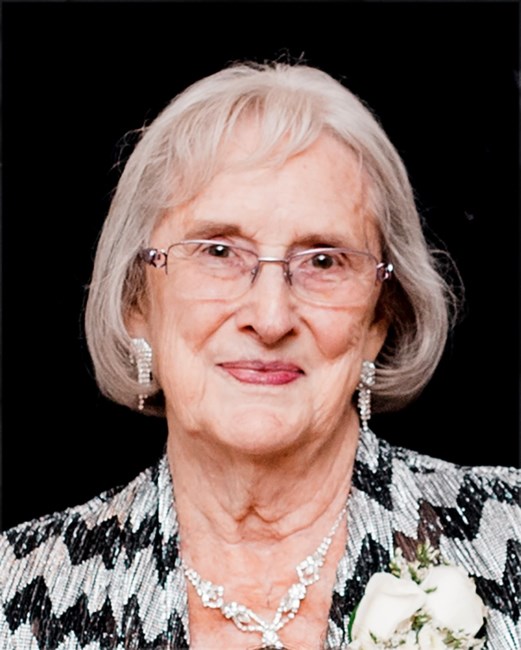
Vivian was born and raised in the Valley Home farm community in Grundy County, Tennessee. She was the fifth of eight children born to Horace A. and Alma Brashear Henley. She married her high school sweetheart, Clay M. Fults, in 1950. They had and raised three children together in Nashville, and enjoyed a loving marriage until Clay’s passing in 1989. Vivian went on to marry W. Gary Middleton in 1993 and cared for him until his passing in 2017.
Vivian was a devoted grandmother to seven grandsons. She enjoyed traveling and visited 49 states (all but Hawaii). She loved family, birds, and jigsaw puzzles. She was known for her graciousness, practicality, sense of humor, and dominance in dominoes.
Vivian is survived by her children Gail Barlar (Paul), Karen Kaler (Eric), John Fults (Hope); her grandsons Will Barlar (Courtney), Charlie Kaler (Lisa), Sam Kaler (Lizzy), Chase Barlar (Mary Kathleen), Clay Fults (Gus), and Jake Barlar; great-grandchildren Ophelia Kaler, Clay Barlar, Eliza Barlar, Kit Kaler, and Madeleine Barlar; and many adored nieces and nephews.
She was predeceased by her parents; husbands; siblings Anna White Roper, Helena Smith, Burwell Henley, Elouise Goodman, Horace Henley, Bill Henley, and Don Henley; grandson Mason Fults; and great-grandson Noah Barlar.
Vivian loved growing flowers, particularly iris, the Tennessee state flower. In lieu of flowers, the family suggests you plant iris in your own garden in her memory.
Vivian wrote the following story of her life for her grandsons in 2005.
–––
Once upon a time in Pelham Valley, Tennessee, a young man named Horace Aubrey Henley and a young lady named Alma Catherine Brashear met and fell in love and got married. Alma gave up her school teaching job and became a farmer’s wife.
Being farmers, it was an asset to have lots of children to help with all the work. So the process started. First there was Anna White Henley, second came Mary Helena, third was John Burwell, fourth was Dora Elouise, fifth was Vivian June, sixth was Horace Upton, seventh was William Everett, eighth was James Donald. Due to the fact that Mama was older, Don had disabilities [Down Syndrome]. Mama and Daddy always called me the baby girl. I did not mind and now I realize that they needed some boys.
Don died in his thirties of heart failure. Helena, Burwell, Elouise, Bill, and I all have heart problems. On May 1, 2003, I had a pacemaker put in. I asked the doctor if I died if the pacemaker would keep on beating. He laughed and said that when you die you are dead. My heart beats 33 beats a minute and the pacemaker does the rest.
I was born during the depression years. Since Daddy was a farmer he always had a job. We lived in a small house. At age nine months I was sitting on the floor and saw a neighbor. I got up and walked to the door and said, “Hi Sally.” So was the beginning of my walking and talking. I can still remember that.
In 1933-34, Mama and Daddy built a big new house. I can still remember moving into the new house. I was three years old, and I always climbed on things. The flooring wasn’t down in the front room, so I was climbing from joist to joist until someone found me and they were afraid I would be hurt. Before that, at the other house, I used to climb on top of one of the outbuildings and sit and look off at everything. I did that almost every day one summer until someone found me, and they scared me so bad I couldn’t get down by myself. Mama was sick, and Aunt Eula took me home with her for a few days. I do remember being on the roof, but I don’t remember being at her house.
I’m sure Mama and Daddy were probably concerned about money during the depression, but living on a farm we always had all the food we could eat. Daddy raised and sold hay, corn, potatoes, wheat and other things. He was a good planner and made a good living for eight children. Daddy had a fertilizer dealership for many years. Mama always made most of our dresses, and she had at least five new dresses for us at the beginning of the school year. At Christmas time she usually had a couple more dresses for us. The boys also had at least five new shirts and pants for the beginning of school.
I can remember a few dresses I had but my favorite was a Christmas dress of red chintz material. It was shiny and had a small print on it. Even the boys told me how pretty it was and everybody wanted to feel the material because they had never seen that material before. I have always loved shiny things like sequins, glitter, and icicles on Christmas trees. I would be pleased with a Christmas tree with only lights and icicles. At Christmas time, we got our cedar tree a day or two before Christmas and went shopping a lot of times on Christmas Eve, came home and wrapped gifts that night.
It was no problem to have plenty of food when you raised hogs and beef cattle. There was also a big garden, and all the females helped work the garden and raised the vegetables and fruit. We had a big orchard, and we all helped gather food for Daddy to take to sell. He also raised cantaloupes, watermelons, and strawberries. Gathering the strawberries was a problem for me because I couldn’t keep from eating them, and then I would get a rash. It still happens if I eat too many.
Many good conversations were had as Mama, my sisters, and I sat on the front porch shelling peas and breaking beans. When we finished, we went in the kitchen and washed the vegetables, packed them in jars, and pressure-cooked them.
Mama always had to have at least one hundred cans of green beans and one hundred cans of tomatoes, besides all the other things like jelly, kraut, pickles, peaches, apples, blackberries, soup mixture, etc. Mama took great pride in her garden and always made sure she was the first one in the community to have lettuce, onions, and peas, and, by all means, have ripe tomatoes before anyone else. We lived on Highway 41 and lots of cars passed our house. Mama wanted the garden to look pretty by the road, so the first row or two of the garden were flowers: zinnias, marigolds, asters, cosmos, larkspur, etc.
We had lots of flowering shrubs that Mama ordered. One of my favorite places to play was under a crepe myrtle. I made my table out of a plank, and the legs were tin cans. I made mud pies in can lids and decorated them with crepe myrtle blooms. My beverage was a jar of water with poke berries. It made the most beautiful color. We didn’t have a lot of toys, but that was okay.
We never knew our Grandfather Henley; he had been dead for many years. Grandma Henley and Grandma and Grandpa Brashear all died around the time I was 9 or 10 years old.
Grandma and Grandpa Brashear were very reserved. Aunt Ester and Aunt Eula were never married. Aunt Ester was a school teacher and Aunt Eula taught piano. Aunt Eula was the main cook and Aunt Ester helped. I can remember Aunt Eula’s chocolate cake piled high with white frosting. I have never had one so good since. I don’t ever remember Grandma Brashear doing any of the cooking.
My Grandmother Henley lived across the road from us. I always liked to go visit her. Elouise and I used to go see her, and we sat in three chairs in a circle . She scraped apples with a spoon and fed us. She would take us in the dining room around Christmas time and cut us a piece of her delicious coconut cake. Grandmother Henley was a short, not fat but plump, feisty little white-haired lady. We loved her very much. It broke our hearts when she died when I was nine years old. Grandfather Henley died when Daddy was young.
Grandma Henley told us about when she was young during the Civil War; they would bury their hams and potatoes, and put chickens under the house so the soldiers coming through wouldn’t get everything they had.
Shortly after my grandparents died, World War II started. Lots of people we knew went into service, and some were killed. Two of my brothers-in-law were in the Army. Helena would go for weeks and sometimes for months without hearing from Raymond. It was not like it is now. The only contact was by letter, and the news didn’t show anything because there was no television. Elouise and Olice did not meet until he got out of the service. I’m sure most of you have seen the movie “Patton”. Well, Raymond and Olice were both under General Patton’s command. During World War II, the women in our neighborhood met at Valley Home School and folded bandages to be used for the wounded servicemen. They were sure big bandages, and it was sad thinking about how badly they would be hurt to use them.
Lots of things were rationed during the war. Gas, coffee, canned meat, sugar, and shoes are some of the things I remember. You were allowed two pairs of shoes per year. I had penny loafers or saddle oxfords in the fall and winter, and sandals for spring and summer.
Camp Forrest was at Tullahoma and they had German war prisoners there. They brought them to Daddy’s farm to pick up potatoes. Men with guns were guarding them. They said for all women and children to stay in the house. They went to any of the farms to work if the farmers would let them.
I started at Valley Home School at age 5 and graduated from Grundy County High School at age 17. We had a lunchroom at school and every day we had vegetable beef soup and peanut butter and crackers or cheese and crackers. When I got to around fifth grade they started having plate lunches. The soup was better.
All the way through my school years, girls wore dresses or skirts and blouses or sweaters. In high school the boys mostly wore khaki pants and tucked in shirts. At school we had a three-hole outhouse, which meant three people could go at once—no privacy. The girls’ outhouse was on one side of the school and the boys’ on the other side.
Before recess, someone went to the pump and pumped fresh water into a zinc bucket, that had a dipper. We each had our own cup, and we used the dipper to put water into our cups.
Our family gave the land for Valley Home School, which was shaped like an H. The outside was stone. It was a beautiful building. The school was next to Daddy’s farm. We didn’t have to walk far to school. Clay had to walk a long way to school and even in high school he had to walk over a mile to the main road to catch the school bus. The bus stopped in front of our house. Daddy also gave the land where the Valley Home Methodist Church was built.
In grade school, I usually had the leading role in plays. I was the bride in the Tom Thumb wedding two or three times. Once I had to sing a solo, “Little Golden Glow.” I knew then, as I know now, that I could not sing well and I really did not want to sing. We knew better than to tell the teacher that we did not want to do something. The teacher playing the piano wasn’t much better than I was. We got through it and I didn’t hear anyone laughing. I guess the reason they chose me was that I could memorize my part fast and well.
Mama always made the costumes for all our plays. She could really sew those crepe paper costumes in a hurry. Maybe that is where Gail and Karen get their school volunteering from. Aunt Ester Brashear was my teacher two or three years. Mama also decorated some beautiful boxes for us when they had box suppers. It was a money-making thing. I never had anyone who I wanted to buy mine because you had to eat with them.
There were only sixteen in my eighth grade graduation class and I was the valedictorian.
When we went to high school, we had indoor restrooms and water fountains. Wow! We rode the school bus twelve miles to school.
The summer before I started high school, we went to the county fair one night, and Elouise introduced me to this real cute boy, Clay Fults. He wanted to know if I was going to take algebra or math. Burwell had told him that he could use his algebra answer book if I didn’t take algebra that year. I told him he could use the book. I thought I would at least see him when I gave him the book, and then again when he gave it back to me.
Burwell was a senior, Elouise a junior, Clay a sophomore, and I was a freshman and we all made the basketball team. Burwell was the boys’ captain that year. Clay and I sat together on the school bus when we went to play basketball at the other schools. That was the beginning of our life together—from August 1944 until August 1989.
I was a football cheerleader, and Clay played running back. Once while we were in high school, Clay was debating in front of the whole school. He looked at me out in the audience and forgot what he was saying. He finally remembered, and they still won.
When I was sixteen, all three of my sisters had a baby boy born within six months. Even though I was older than my nieces and nephews, we were all real close.
Not too many people had cars when we were growing up. Daddy got a new car when I was very young and I remember everybody coming by to see it. He parked it in the front yard in front of the house. It was dark green. Later he sold the car and got a pick-up truck. He had cattle frames on the truck. For revivals and the county fair, everybody came and rode with Daddy. We stood up in the back, and it was full. Daddy liked to talk to friends he ran into at the fair, and we liked to stay as late as we could. We went Thursday, Friday, and Saturday nights. He picked up Irma Jean and whoever wanted to go from around there. We usually stayed until midnight. We had lots of fun. I have never wanted a convertible since I grew up in a convertible pick-up. Before I was old enough to go with Daddy, Aunt Ester, Aunt Eula, and Mama took the younger ones in the afternoon. I remember Aunt Eula always took us to the ice cream stand to get ice cream. It does not taste nearly so good now.
Neither Clay nor I liked to milk cows. I never learned how—on purpose—and he hated the job. He used to ask me if we got married, would I milk the cows. I said “No.” He had a cow, but he sold it to buy me an engagement ring. He gave me the ring on the night I graduated from high school.
We didn’t marry for a couple of more years. Clay finished business school in Nashville and went to work selling roofing. I worked at the Production Marketing Administration in Tracy City in the same building where the draft office was. Clay did not want to go into the Army, and once you got your notice you had to go. My friend Virginia was going to let me know before she mailed his notice, so he could join the Navy. It snowed one day and I couldn’t get up the mountain to work. When I went in the next day, she said she had to send out so many that day, and his was in the group. I called him, and he joined the Navy before it arrived in the mail. He came home, and we got married December 14, 1950. He left for San Diego on December 19 for boot camp. He got a ten-day leave before leaving for Guam for two years. This was during the Korean War and they found Japanese still hiding there, thinking World War II was still going on.
Clay joined the Navy for four years, 1950–1954. The two years after his Guam duty we lived in Palo Alto, California. He was stationed at Moffitt Field Naval Air Base. I worked at the Palo Alto Clinic taking chest x-rays. I x-rayed a lot of Stanford college students and some movie stars.
After four years in the Navy, we came back to Nashville. We stayed with Elouise and Olice a few days, until we could find a house to live in and Clay could find a job. We found an apartment and Clay went to work for Moore Business Forms in December 1954. He stayed there until 1986.
Clay was a very intelligent, happy, fun-loving man. He was successful in business and in his hobby [breeding, raising, and training dogs]. The best thing he ever did was sell that cow.
By spring of 1955, we bought a house, and Clay bought a basset hound and a beagle. It wasn’t long before he had a coonhound.
Clay went to work for $300 a month plus a bonus when he sold a little machine. He sold a lot of them. We bought a new car, a house, and had a baby, Gail Reneé, in 1955. We didn’t have insurance. We survived it and didn’t worry too much about it. We did have insurance when Karen Elaine was born in 1956.
When Gail was two years old and Karen was eight months old, we moved to Mobile, Alabama. We stayed two years and got a chance to transfer back to Nashville. Clay was soon made District Manager. He was offered other promotions, but by this time he had decided he wanted to stay in Nashville. John Clay was born in 1963, the last day of school when Gail was in second grade and Karen in first grade.
We lived at 31 Cameo Drive in Nashville when Gail and Karen were born. We lived in a new house at 4804 Shadescrest Drive in Nashville when John was born. There were lots of children to play with on Shadescrest. They could play in the back yards and not go out in the street. We moved to 305 Timberdale Court in 1968, and we built the house at 13421 Old Hickory Boulevard in Antioch in 1982.
Gail, Karen, and John all went to Norman Binkley Elementary School, McMurray Junior High, and Overton High School. John also went to Whispering Hills School for grades three to six. John started wrestling in junior high and continued all through high school. He won all-district, all-regional, and was fourth in the State.
We went to Glencliff Methodist Church until we moved to Timberdale, and then we changed to Crievewood United Methodist so the children could be with the same people they went to school with. We were very active at Glencliff. Clay was church treasurer and then Chairman of the Board. I was Vice President of the Women’s Group and also Chairman of the Bazaar a few years. We were trying to make money for the new church we were building. When John was around four, Clay and I were going with the girls and our church youth group on a retreat. Durwood McCord was our preacher and asked John if he was going. He said no he would stay with him. Durwood said, “But I’m going with them.” “Well, I’ll stay with the Franklins.” “They are also going.” John said, “Well I’ll stay with God. I know He’s not going.”
I helped organize a basketball league at Crievewood, and I coached the girls’ team. Gail, Karen, and John all played. Clay coached John’s little league baseball team, the Mets, for five years.
Clay was very serious with his hunting and came in second in the World Championship hunt with his coonhound, and came in first with his World Champion squirrel dog. He started breeding, training, and selling Tennessee Mountain Curs in the late seventies. He was still training and hunting when he got so sick with lung cancer. He was shipping dogs all across the country. He got sick in February 1989. After radiation and chemotherapy, the cancer was getting smaller, but something ruptured, and he bled to death in the hospital in Huntsville, Alabama, on August 5, 1989. The funeral was at Woodlawn on August 8, 1989.
Gail and Paul Barlar were married in April 1980. Karen and Eric Kaler were married in December 1979. John and Hope Root were married in May 1989. Clay was very sick then, but we all went to Wrightsville Beach in North Carolina for the week before John and Hope’s wedding, then went back to Raleigh for the wedding. Clay was able to be John’s best man.
The Christmas before Clay got so sick, Karen and Eric planning a move to Delaware. Charlie [2-1/2 years old] and Sam [10 months old] stayed with us while they went to find a house. Eric told Sam they were going, and Grandfather was going to take care of him. Sam never let Clay out of his sight. When Clay went to feed the dogs, I had to let Sam stand on the cabinet and watch for Grandfather to come back.
While Charlie and Sam were with us, Will came and stayed some also. Clay and I decided Charlie and Will would like Show Biz Pizza. We went, and Sam really enjoyed it. We ordered our pizza. They brought a pitcher of Coca-Cola, and we gave Charlie a glass. He smiled and said, “Grandmother, what kind of juice is this?” I told him it was Coca-Cola, and he said “ummm” and drank some more, those little eyes just sparkling. Will sat on one side of me and Charlie on the other. Again, Sam would not let Grandfather out of his sight.
When Clay died, we had three grandsons. I know he would have been so proud of all of you. Each year for four years, I got another grandson. Chase Cole Barlar was born on Clay’s birthday in March 1990. Clay Joseph Fults was born in March 1991. Jake Henley Barlar was born in February 1992. Those three were born in Nashville, Tennessee. John Mason Fults was born in October 1993, in Charlotte, North Carolina. If Mason had been a girl, we weren’t sure what we would do with her.
The three grandsons Clay knew were William Clay Barlar, born in Nashville in September 1984; Charles Eric Kaler, born in July 1986, in Seattle, Washington; and Samuel Clay Kaler, born in February 1988, in Seattle.
Clay couldn’t wait to take Will hunting. He and Paul took him squirrel hunting when he was about three. He was so cute, all dressed in camouflage, and so excited to be going. When he got in the woods, he was falling on limbs, etc. The dogs were barking, and Will was having a hard time walking through the leaves and sticks. When they got home, Grandfather asked Will how he liked hunting. He said, “I hate it.” Once we were keeping Will and I had to go to work. Clay took him to Monterey to buy a dog. Will watched “Ghostbusters” a lot. When I got home, I asked Will if they got the dog. He said, “Yes, and Grandfather put him in the containment unit and brought him home.”
We had a few imaginary friends. Karen had Zee Zee and Zar Zar. Will had Thompson, who did everything with him, until Thompson went in a cave and a rock slide came. Charlie had Red Bear. Once I found a picture of a little bear, and I colored it red and sent it to Charlie. He put it on the refrigerator. One of his friends said, “Charlie, you did a good job.” He said, “I didn’t color it. Grandmother did.” My only art display.
When Sam was born, I went to Seattle to help with Charlie and the baby. Charlie wasn’t talking a lot, but by the time I left he was saying cookie, mess, and hog. He was a big mess when he ate, and I told him he was messy as a hog. He thought that was really funny. When Clay went to Seattle for Charlie’s second birthday, I made him cookies and put them in a pig cookie jar. Charlie loved tools and especially hammers.
Sam was very active from the time he was born. When he learned to walk, he was so short, he could walk under the table. Some of his favorite phrases were “uh huh” and “Can you believe that?” When he started to tell you something, it was always about “this person.”
Chase and I are good friends, and we spent a lot of time together. He was a beautiful little boy, always smiling and wearing his dalmatian cap. I kept Chase and Jake during the time Gail was working on the Tinkerbelle Playground. Gary and I took them to the playground on opening day, and they served everyone lunch. We put our drinks down and went to carry our food to the table. A lady was cleaning tables and got our drinks. Chase said, “The ole yady got my drink.” I said, “Yes, the ole yady got my drink also.”
Talking to Clay was always like talking to an adult. When we told him not to get into something, he would come back with, “Wouldn’t want that to happen, would we?” When he was a baby, he got very sick with bacteria in his blood. Hope had to go to work, and John was working out of town. I was so scared I sat and held him all day, except to get us something to eat. Clay likes to make cookies, and he likes deviled eggs.
Jake is our handsome little boy, with beautiful shiny hair. Although he is silent, he lets you know when to go to KFC for popcorn chicken. He likes birthdays, having cake, and blowing out the candles. He never eats much of the cake.
Mason is the youngest, and all the older boys wanted to hold him and play with him when he was a baby. He has a good sense of humor. He likes to eat pickles just like his Daddy did when he was a little boy. When Mason was in preschool, Gary and I were staying with Clay and Mason. When we picked Mason up from school he would sing “Father Abraham” all the way home. We would say, “Time to go get Father Abraham.” On the way home one day we stopped at the mall. Gary wanted to go look at something, and I told him I would sit there on a bench with Father Abraham. When Mason and I went over to the bench, there was this old man with long white hair and a long white beard sitting there.
In 1992, I started trying to get the Post Office to let me move my mailbox to the side of the street near the house. I kept calling them and asking them if they had checked to see how dangerous it was for me to cross. They would not do anything for a long time. Finally, one day the mailman stopped and said he would bring the mail to the house. I said, “Great. Where should I put the mailbox?” He said, “Never mind. I will bring it to the door.” Gary and I got to be friends. July 29, 1993, we got married.
Gary has three children: Bill, Keith, and Renee. They all graduated from Overton High School. In eight years all six of our children had graduated from the same school. Gary has three grandchildren: Jeremy, Abby, and Lake.
Gary and I are in several organizations and also do lots of volunteer work. We have both been president of our chapter of Air Force Sergeants Association. Each year the International Air Force Sergeants Association selects chapter of the year, member of the year, etc. I have won the International Air Force Sergeants Association Auxiliary Award for four years. I’m the only person in the history of the auxiliary to win over two times. We were in Las Vegas when I won my last member of the year. We were waiting at the door for the banquet and this guy said, “You look familiar to me.” I said, “Maybe you saw me win member of the year.” He said, “Yes, and I was the one who wrote the article about you.” Last year I won the International UAUS award at the Convention 2004 in Columbus, Ohio. I have won awards for things I enjoy doing.
I am proud of my children, my in-laws, and my grandchildren. You grandchildren not only make good grades at school, you are also good at sports. I love you.
Update: Vivian went on to win Air Force Auxiliary International Member of the Year a fifth time. She served for years as secretary for the Rural Letter Carriers Auxiliary, and was active in Una Baptist Church. She particularly enjoyed the yearly Henley family reunions and loved all her nieces and nephews (including the greats, the great-greats, and even 3x-greats—and all those who married in were equally loved). In 2020, three years after Gary’s passing, she moved into The Bridge at Hickory Woods, where she was known by the nickname “The Puzzle Queen.”
Vivian lived to be proud of all her grandsons as adults, and saw five of them married: Will to Courtney, Charlie to Lisa, Sam to Lizzy, Chase to Mary Kathleen, and Clay to Gus. She had five great grandchildren: Ophelia Kaler, Clay Barlar, Eliza Barlar, Kit Kaler, Madeleine Barlar, and Noah Barlar.
Vivian was preceded in death by both husbands, her parents, all seven siblings, grandson Mason, and great-grandson Noah.
Show your support
Add a Memory
Share Obituary
Get Reminders
Services
SHARE OBITUARYSHARE
- GET REMINDERS
v.1.18.0