
OBITUARY
Alexander Tomasz
December 23, 1930 – September 16, 2024
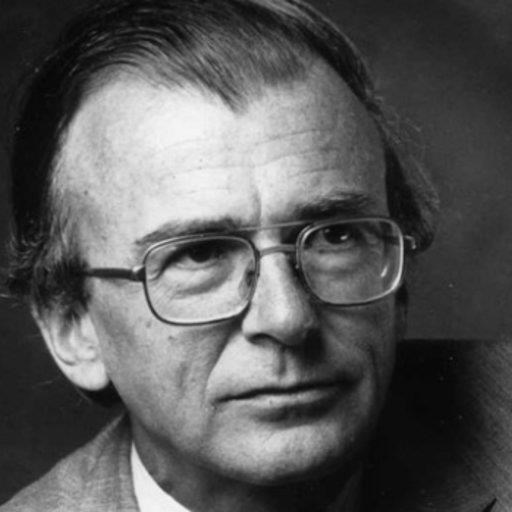
Dr. Alexander Tomasz (1930-2024) died peacefully in his sleep at his home in New York City, on the evening of September 16, 2024. He was 93. A brilliant scientist, a father of four children, and a loving husband, Alexander was celebrated, adored, and embraced by those lucky to be touched by his large personality, storytelling mastery, creative intellect, generosity, and love. Born between two world wars in Hungary on December 23, 1930, Sanyi (his Hungarian nickname) was raised in an academic family, his father a Greek Latin scholar and Dean at the famous Eötvös Collegium in Budapest and his mother, the university librarian. As a young boy, he grew up under the totalitarian restraints of Stalinist Hungary and endured the German and Soviet occupations during World War II, hiding for weeks in the cellar from air raid bombardments, while his father helped shelter neighbors fleeing the bombs. Shortly after receiving his undergraduate diploma in biochemistry, the Hungarian Revolution of 1956 broke out against the oppressive Communist regime, spurring Alexander to join the throngs marching in the streets. When Soviet tanks rolled in to crush the revolution in the ensuing days, Alexander escaped to the Austrian border in a milk truck and emigrated as a refugee to the United States with his then wife Maria Tomasz, settling in New York City.
He received a PhD from Columbia University in biochemistry in 1963 and went on to become a postdoctoral fellow and subsequently professor and head of laboratory at the Rockefeller University, an institution which became his professional home for 56 years. He was a pioneering expert on antibiotic resistance and on the biochemistry of Gram-positive bacteria, such as Staphylococcus aureus and Streptococcus pneumoniae. He discovered quorum sensing, a process by which bacterial cells communicate, in 1965, by showing that S. pneumoniae secrete a chemical that enhances their ability to take up DNA, increasing their pathogenicity. He was a prominent voice warning against the dangers of the misuse of antibiotics and the growing crisis of antibiotic resistance. He received many honors for his research, including the inaugural Hoechst-Rousel award (1982) and the Selman A. Waksman award (1987).
In 1990, Alexander found the love of his life and married genetics professor Herminia de Lencastre, together raising her two sons Alexandre and Pedro, after raising Martin and Julie, children of his first marriage. Among his many passions and extracurriculars, Alexander was an elected town council member, a scout leader and baseball coach in his prior hometown of Haworth, New Jersey. His sense of adventure, humor and spontaneity led to a parade of adventures and misadventures that live on through his legendary stories. Alexander deeply loved poetry and classical music, playing piano and attending concerts. He is survived by his wife, Herminia, four children, Martin, Julie, Alexandre and Pedro and seven grandchildren Lucas, Max, Madalena, Oliver, Christopher, James and Marcelo.
A service will be held at Frank E. Campbell Funeral Home in New York City on Sunday, September 22 from 2-6 pm and a mass will be celebrated at the Church of St. Ignatius Loyola in New York City on Monday, September 23 at 10am.
In lieu of flowers the family requests donations to the American Heart Association.
Show your support
Send Flowers
Add a Memory
Share Obituary
Get Reminders
Past Services
Gathering & Visitation
Mass of Christian Burial
- SEND FLOWERSSEND
FLOWERS SHARE OBITUARYSHARE
- GET REMINDERS
v.1.18.1