OBITUARY
Leonard Mindich
May 24, 1936 – July 30, 2024
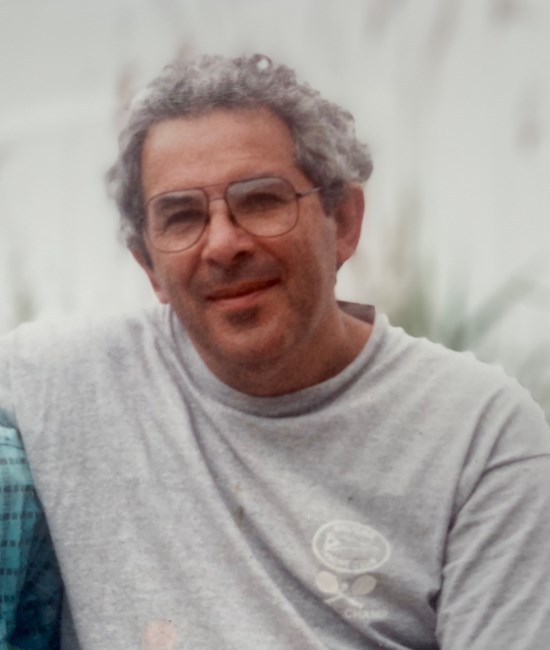
Lenny was brilliant, warm, welcoming, and hilarious. He had a keen sense of the absurd and an infectious laugh. His interests spanned the writing of Gabriel Garcia Marquez, to the Princess Bride, to Assyrian cylinder seals. He brought a sense of wonder to everything he pursued.
Lenny was a man of vitality and physical power. An outstanding, self-taught tennis player, he battled the same friend twice a week for half a century. He taught himself windsurfing, preferring gale-force conditions. He was an accomplished scuba diver. After years of home-schooled dance lessons in his family’s East Tremont apartment, he also developed a mean Cha-Cha.
Defined by his profound and unshakeable sense of ethics, he was righteous in a non-religious way. At Cornell University, he was one of the early members of the then-radical integrated housing facility, Watermargin. He and his wife Margot went on the Selma march in 1965, volunteered for local political campaigns, and protested unjust wars and nuclear proliferation. Lenny lived his principles every day. There are countless incidents of his breaking up fights on the subway, taking strangers to task for hate speech, and chasing after muggers. He had no fear of challenging authority. He was fearless and uncompromising in his beliefs.
At 13 years old, Lenny read the Sinclair Lewis novel Arrowsmith about the life of a microbiologist, after which Lenny knew with certainty that he would be a scientist himself. The son of a laundryman father and bookkeeper mother, Lenny attended Cornell by way of its agricultural school; its $500-per semester tuition was affordable. To pursue his microbiology curriculum and cover his required classes in animal husbandry and landscape design, Lenny took as many as seven courses a term.
Lenny was driven by an intense appreciation for every aspect of the process, community and content of his field. He would speak of his early internships at foundational research centers like Woods Hole and Cold Spring Harbor with the reverence of someone remembering the club house of the 1927 Yankees. Dubos, Watson, Crick, Bohr, Szilard were his inspirations, and he felt profoundly honored to trace their orbits.
Lenny graduated in the second class of PhD recipients from Rockefeller Institute in 1962. He spent his more than 50-year career at the Public Health Research Institute, an independent organization loosely affiliated with NYU and later with UMDNJ and Rutgers. Working side by side with his small dedicated team, Lenny designed and executed some of the most creative and important studies in the history of virology. For half a century, he dove into the most minute details of the mechanisms of virus assembly, studying how simple viruses organize and propagate themselves. Using cutting edge gene splicing techniques, he deconstructed the bacteriophage phi6 into its component proteins, mapping out nearly every step in its development. This pioneering work continues to inform research today on more complex pathogens and their treatments.
Most of all, Lenny loved, truly loved, the work itself, his colleagues and the never-ending dialectic of research. Near the end of his life, with limited ability to speak, he was asked by one of his grandchildren, “Papa, if you could do it all over again would you work, less, more or the same amount?” He answered “More!” with no hesitation.
Lenny was an intensely loving husband to Margot Zucker Mindich, whom he met at Bronx High School of Science. Margot’s best friend and some members of the scientific community predicted the marriage would never last. Instead, their marriage lasted for 64.9 years. Margot’s creativity – she was a businesswoman, poet, and sculptor – and energy were the perfect complement to Lenny’s impishness. Lenny was a rock of stability and support throughout their relationship. It was an extraordinary marriage that was glued together in part by an exchange of ideas, Sharon’s chocolate sorbet, and laughter.
Lenny is survived by Margot; his son, David, and partner, Jennifer Wood; son Jeremy, and wife, Amy Smith; and daughter-in-law Shilpa Patel. Shilpa’s late husband, Daniel Mindich, Lenny’s son, died in 2014. Lenny is also survived by his adoring fans: grandchildren Talia, Isaiah, Satya, Jack, Asha, Vee, and Franklin.
A funeral service will be held at the Riverside Memorial Chapel at 1 p.m. on Monday, August 5, 2024. A shiva will be observed in the evenings during the week. In lieu of flowers, please consider donating to the Mount Sinai Visiting Doctors Program.
Show your support
Add a Memory
Share Obituary
Get Reminders
Services
SHARE OBITUARYSHARE
- GET REMINDERS
v.1.18.0