
OBITUARY
Ellis D Edwards
July 15, 1947 – October 1, 2026
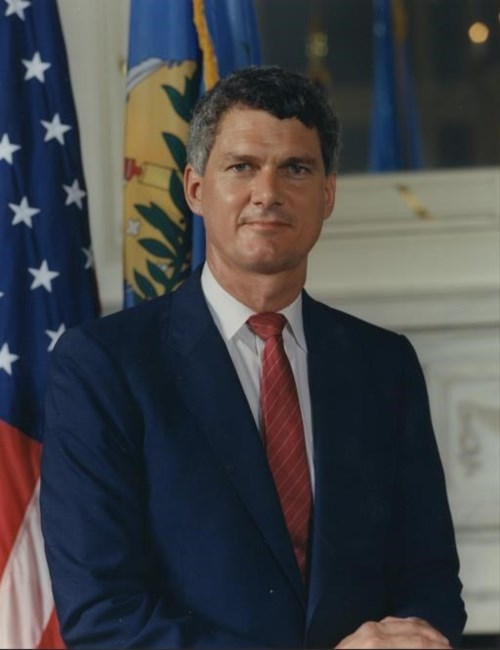
Ellis Duncan Edwards was born in the summer of 1947 to John Handy and Virginia Estey Duncan Edwards in Oklahoma City, Oklahoma. Growing up, he kept busy with many activities, including swimming, riding and jumping (horses then motorcycles), even showing a talent for art. From the beginning, he had a twinkle in his eye and an aim for adventure. After graduating from Harding High School in 1966, Ellis entered ROTC at New Mexico Military Institute (NMMI) in Roswell, New Mexico, an institution which shaped his direction and decisions throughout his life. Edwards continued his ROTC studies at the University of Oklahoma, where he earned a bachelor’s degree in history and was commissioned as a second lieutenant in 1969.
In 1970, Lt. Edwards completed the Infantry Officers Basic Course and Airborne training at Fort Benning, Georgia. He then completed a Military Assistance Training Advisory (MATA) / Army of the Republic of Vietnam (ARVN) course and intensive Defense Language Institute training in Vietnamese. Edwards became an infantry advisor to the armed forces of the Republic of Vietnam.
Ellis began his Vietnam tour in June of 1971, as part of Military Assistance Command Vietnam (MACV), III Corps, Advisory Team 43 Mobile Advisory Team (MAT) 22. Later, First Lieutenant Edwards advised ARVN Regional Force 305, Special Strike Force Battalion, Hau Nghia Province, participating in combat operations, administrative, and logistic functions. He coordinated all interface between his unit and United States forces, including air operations, air support, helicopter insertions, medical evacuation, U.S. riverine naval forces, and intelligence operations.
By the time he completed his tour of duty in Vietnam, Ellis had earned the Bronze Star for valor in combat, the U.S. Army’s Expert Infantryman Badge, the Vietnam Campaign Medal, the Good Conduct Medal, and the National Defense Service Medal. Within two months of his return stateside, Ellis went to the U.S. Army Special Forces School, the Officers Qualification Course, and in 1973 he completed Ranger training. In early January 1975, Lieutenant Edwards fractured vertebrae in his back during a night training parachute jump while part of the 12th Special Forces Group Operational Detachment 212. The injuries eventually caused his retirement from the U.S. Army with an honorable discharge at the rank of Captain.
His experiences in Vietnam shaped the course of the rest of his life. Edwards would forever be linked together with his Vietnamese friends, including the love of his life, Thao, whom he first met in 1971. While back in the U.S. he closely monitored the Vietnam war and remained in contact with his friends. In late March 1975, South Vietnam was quickly collapsing. Ellis recognized the imminent peril and rapidly organized a mission back to the war zone. He and Ben Willey went back as civilians paying their own way to attempt a risky rescue effort.
Upon arrival in Vietnam, they set to work diligently contacting old allies and friends, working to find a way for people to get out of the country before it fell to the Communists. Through a series of harrowing experiences, with imagination, cajoling, convincing, subterfuge, persistence, determination, persuasion, luck, and the grace of God, the effort was ultimately successful. A total of sixty-four refugees were able to flee with Edwards, of which, Thao’s family and friends were a large part. They flew out of Saigon on one of the last C-130 transport planes to leave Tan Son Nhut Air Base.
Reaching the U.S. was not the end of the journey. The refugees landed with almost nothing and needed help to adapt and live in America. Ellis, along with his closest lifelong friend, Charles Watts, sponsored hundreds of refugees in Oklahoma, finding them places to live, jobs, access to schools for their children, and many other necessities of life. The people of Oklahoma City also stepped forward. Through efforts of a small community of caring individuals, Oklahoma City become one of the principal places to receive and assimilate a vast number of Vietnamese refugees, to the greater benefit of all.
As a civilian, Ellis maintained a compelling career path. He served as president of R.J. Edwards, Inc. and was deeply involved in the municipal bond business during the 1970s and ‘80s. He earned an M.B.A. from Southern Methodist University. He opened the original restaurants that now live on as the Snow Pea. He authored the adventure novel Operation Golden Buddha. Then he entered the arena of politics.
In early 1986 Edwards ran for State Treasurer of Oklahoma. He loved engaging with the people of Oklahoma and truly enjoyed the campaign trail. At the end of the campaign, he prevailed and was elected State Treasurer. Ellis was proud to serve Oklahomans and he and his remarkable staff reformed the State Treasurer’s office to modernize it, make it more efficient, and make more money for the State of Oklahoma and its citizens.
Shortly after his time as State Treasurer, Ellis was diagnosed with multiple sclerosis. As a young man, he had already lived through and dealt with many challenges. Enough for many lifetimes. He would not back down from this challenge either. For over 30 years, he faced his especially aggressive multiple sclerosis with courage and determination. He never let it defeat his positive outlook and curiosity about the world. He continued his efforts to help those in need. Ellis remained caring, engaged, and active. With the dedicated help of his wife Thao, and his army of caregivers through the years, Ellis spent the last three decades doing all that he could to make an impact in his community.
Ellis Edwards was grateful for his family, friends, and those who cared for him. In particular, Thoa, Norman, Tenisha, Gema, and Sharonda provided exceptional care that made his life better. The VA Home Based Primary Care program was also essential to his well-being, and he valued the entire team, including Julie E. McDaniel, Kimberly Russell, and Dr. Mary Mohan. He also appreciated Synergy HomeCare and its professionals for improving his quality of life. A special recognition goes to Dr. Dean Shipley who treated Ellis throughout his time affected by MS.
Ellis lived a life of true grit and was a natural leader who was charismatic and fearless. He was relentless and relentlessly positive. Of the many recognitions he received, he was especially gratified to be inducted into the Oklahoma Military Hall of Fame as the recipient of the 2021 Major General Douglas O. Dollar Distinguished Public Service Award for promoting good citizenship, continued patriotism beyond military service and assistance to Oklahoma’s veterans and families.
Ellis is survived by his wife of fifty years, Thao, sons, Eric Duncan Edwards and wife, Vanessa, and John Handy Edwards III and wife, Sarah, and grandchildren, Addison, Estey, Colette, Jack, and Charlotte. He is also survived by his sister, Dr. Helen Edwards Lutsch. His parents, his brother, John Handy Edwards II, and his sister, Josephine Thweatt, preceded him in death.
A Funeral Mass will be held at The Cathedral of Our Lady of Perpetual Help, 3214 N. Lake Avenue, Oklahoma City, OK 73118, on October 17, 2026 at 10:00 a.m. A graveside service will follow at Rose Hill Burial Park, 6001 Northwest Grand Blvd., Oklahoma City, OK 73118, at 1:00 p.m.
In lieu of flowers, donations may be made to the National Multiple Sclerosis Society (https://donate.nationalmssociety.org/campaigns/Ellis-D--Edwards-Memorial-Fund) or the charity of your choice.
Show your support
Send Flowers
Add a Memory
Share Obituary
Get Reminders
Past Services
Memorial Service
Graveside Service
- SEND FLOWERSSEND
FLOWERS SHARE OBITUARYSHARE
- GET REMINDERS
v.1.18.1