OBITUARY
William John Carpenter
September 15, 1927 – June 1, 2015
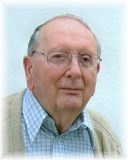
William “Bill” Carpenter, Jr. was born on September 15, 1927 in Pittsburgh, Pennsylvania to Elizabeth and William Carpenter, Sr. He spent his youth in Pittsburgh and in University Park, Maryland. His wife was Beverly J. Carpenter, who predeceased him. He has two younger siblings, Carmella and Kenneth.
While growing up, Bill enjoyed learning about plants and flowers. He attended University of Maryland and earned his Bachelor of Science degree in 1949. He then continued his education at Michigan State College, which is now Michigan State University, where he earned his Master of Science degree in 1951 and his Ph.D. in Horticulture in 1953. While attending Michigan State College, he met Beverly Piper, his future wife, who was a secretary in the Horticulture department while Bill was a graduate student. They lost contact, but a year later, they fatefully ran into each other at a diner and began to date. They were married on June 14, 1952 in Michigan.
They moved to Manhattan, Kansas for Bill to take a job as a professor in the Horticulture Department at Kansas State University. He remained there for 15 years during which time he became a father to three wonderful children: William III, Jeffrey and Kristin.
In 1968, the family returned to Lansing, Michigan, where Bill was a professor in the Horticulture Department at Michigan State University. By 1975, Bill had become nationally recognized for his accomplishments in horticulture and accepted the position of chairman and professor of the Ornamental Horticulture Department at the University of Florida at Gainesville.
During his long and successful career in horticulture, Bill conducted important research in many areas including the effect of light intensity on the growth of greenhouse crops, and testing chemicals for increasing branching growth and for extending the vase life of cut flowers. His research on extending the life of cut flowers led to him being contacted by the Rose Bowl Parade in Pasadena, California to provide assistance to extend the life of the cut flowers on the parade’s numerous floats. Bill developed a sugar-based chemical to extend the life of the floats’ cut flowers. Bill also conducted major research on the cross-breeding of roses while at Michigan State University, which resulted in roses of unusual colors, such as blue and purple, and roses of multiple colors, such as red and yellow on the same rose. His children liked to see the different colors and combinations of the roses and enjoyed going to the greenhouses containing hundreds of roses and being surrounded by their sweet smell.
Bill received many awards for his research and contributions to the horticulture science field. In 1992, he received the prestigious Alex Laurie Award for writing the best scientific paper about floriculture research.
Bill retired from the University of Florida in 1995 at age 67. In 2002, he and Beverly moved to Deltona and later to Sanford, Florida. Bill’s hobbies included gardening and following and investing in the stock market. He taught his children about growing flowers, fruits and vegetables and spent much of his leisure time tracking stocks. He also enjoyed reading and current events. Bill was intelligent, honest, caring, kind and generous. He was very easy-going and got along with everyone, including family, friends, neighbors, colleagues, and even strangers. He helped his children and family. At the assisted living facility where he lived, the nurses and staff would always say how everyone loved Bill.
Bill enjoyed spending time with his family—his wife, children, parents, brother, sister, sister-in-law, and their families. He especially treasured times spent with his four grandchildren, Will, Lindsey, Shayna and Michael. Bill was a very special person who is missed very much.
Show your support
Send Flowers
Add a Memory
Share Obituary
Get Reminders
Past Services
Gathering of Friends
Memorial Service
- SEND FLOWERSSEND
FLOWERS SHARE OBITUARYSHARE
- GET REMINDERS
v.1.18.0