
OBITUARY
Herbert B Hardin
January 21, 1932 – January 27, 2022
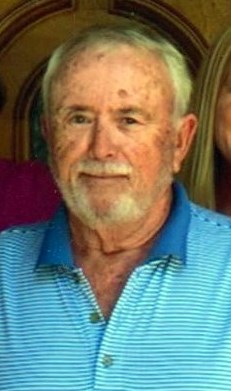
The oldest son of Joseph Milton Hardin and Alma May (Clarridge) Tenny, he was born on January 21, 1932, in Ann Arbor, Michigan. In 1950, shortly after graduating from Ypsilanti High School, he joined the U.S. Air Force where he proudly served for 21 years, retiring as a Lt. Colonel.
For many years he served in the Strategic Air Command, as a navigator-bombardier on B-52s. During the Cuban Missile Crisis his bomb wing at Homestead AFB, Florida was redeployed to Wurstsmith AFB, Michigan for what ended up being six weeks until the crisis ended. While there, he realized that there was not just a problem with Cuba, but that the world was on the brink of nuclear war with the Soviet Union and all the aircraft were put on maximum alert status. In 1968, during the Vietnam War, Herb and the other members of his crew flew 45 bombing missions from Guam, Thailand, and Okinawa. On the 23rd mission, which departed from Guam, when it was time for Herb to open the bomb bay doors to release the bombs, the doors didn’t open due to a technical malfunction. He had only seconds to decide whether to release the bombs through the doors, which they were trained to do when carrying nuclear bombs, or relock the internal bomb racks and only release the external bombs. He did not want to damage the plane with the release of the forty-two 750 pound bombs, so the crew headed back to Guam carrying the extra weight. Unfortunately, the malfunction also caused the rear landing gear to fail. Normally, the plane returned to Guam for the six hour flight without the need to refuel. This time, they had to refuel in mid-air twice due to the extra weight and time needed. SAC headquarters was involved and the crew was connected by high frequency radio to the Boeing technical team in Kansas, the manufacturer of the plane. They arrived at Guam, but had to circle the island for hours, trying every solution that Boeing suggested, and, in part, to wait for daylight. Because of the bombs, and repeated failed efforts to fix the landing gear, the crew was preparing to bailout of the plane and let the plane crash in the open sea away from land - in shark infested waters. Boeing asked the crew to make one last attempt, and if unsuccessful the crew would jump. Initially, it appeared to fail, but Boeing then said it could take up to a full minute to know if it worked. Finally, the crew felt the rear gear come down and was given the green light to land. Herb’s family had no knowledge of this, and many other life or death situations he faced while in the Air Force, until many years after he retired.
Two months before his retirement, Herb moved his family to Florida so that his school-aged daughters could begin the new school year in Seminole County, and he then returned to Kincheloe, AFB, in upper Michigan, to complete his service. He later wrote that “during the two day drive to join my family in Florida, I had a lot of time to reflect over the past 21 years, the good times, the bad times and often scary times and was glad I had decided to make the Air Force a career. The route took me along I-94, which passed within a block of my family’s old house on South Grove Street in Ypsilanti, and as I passed by my old neighborhood it only seemed like yesterday that an eighteen year old kid, without a dime to his name, and not much of a future back in Michigan left home and now was a thirty nine year old that had the good fortune to have traveled all over the world, married a great wife and had three wonderful daughters.”
After his retirement from the Air Force he enrolled in Rollins College and completed his college degree. He also began his second career with Seminole County, as the Zoning Administrator, where he made several life long friends.
Herb was never one to be idle. Over the years he enjoyed time with his family and friends, golfing, woodworking, car restoration, boating, fishing, gardening, reading, flying small planes, cooking, genealogy, visiting Civil War battle sites, traveling, photography, and fitness.
For many years, Herb and his wife, Shirley, enjoyed traveling around the world to places that included London, South America, Greece, China, Turkey, Scandinavia, France, Australia, New Zealand, and cruises to the South Pacific and the Mediterranean.
At the time of his death he was actively trying to learn Spanish, completing the daily crossword puzzle, playing dominos several times a week, taking care of his own yard, pool, and home, riding a recumbent bicycle around the neighborhood almost daily, and planning several trips around the state. One of his last activities was to complete a detailed paint-by-number picture of his friend’s home that he ordered based on a photograph.
Herb had a wonderful sense of humor and enjoyed playing practical jokes. He had a strong work ethic, was very independent, generous, and incredibly proud of his family, often complimenting his daughters on how well they’d raised their children, saying that every one of his grandchildren had turned out to be great people.
He was preceded in death by his wife of 63 years, Shirley Mae Kruse Hardin; and his brothers, Joseph Hardin and Kenneth Hardin.
Herb is survived by his three daughters, Kathy DuBose, Tallahassee; Karen (Kevin) Wendling, Orlando; and Kimberly (Mark) Roberts, Orlando; and eight grandchildren, Lindsay DuBose, Leah (Chris) Morris, and Michael DuBose; Kaitlyn, Nathan, and Austin Wendling; and Tyson and Casey Roberts. He is also survived by a special friend, Maria Keeler.
The family will gather for a private graveside service. In lieu of flowers, those who wish to honor Herb may make a donation to their favorite charity. At a future time, his daughters would welcome an opportunity to gather with some of his friends and share stories.
Show your support
Add a Memory
Share Obituary
Get Reminders
Services
SHARE OBITUARYSHARE
- GET REMINDERS
v.1.18.0