
OBITUARY
Dr. Edward Taub
October 22, 1931 – November 11, 2026
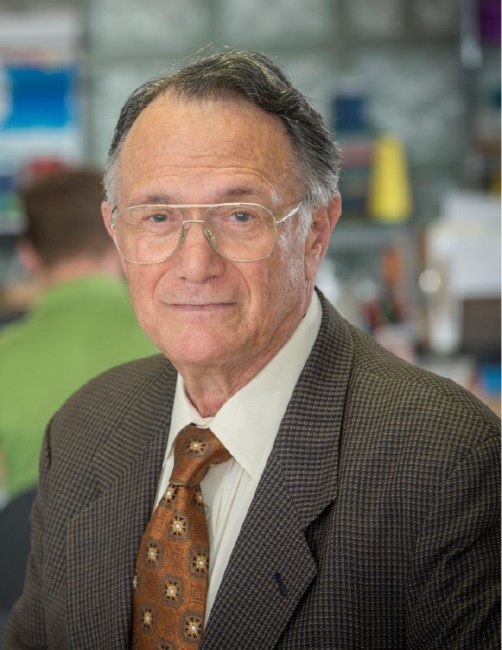
Edward Taub, PhD, a giant in the fields of behavioral neuroscience, motor control, neurorehabilitation, and biofeedback whose discoveries overturned decades of scientific dogma about the adult brain, died of a heart attack at his home in Birmingham, Alabama, on Wednesday, November 11, 2026. He was ninety-five.
Born in Brooklyn, New York, on October 22, 1931, Dr. Taub earned his BA from Brooklyn College and his MA from Columbia University. He earned his PhD in psychology from New York University in 1970 with mentoring by distinguished behavioral neuroscientist Edgar E. Coons, PhD, who became a lifelong friend. Dr. Taub joined the University of Alabama at Birmingham (UAB) in 1986, retiring in 2023 as a University Professor in the Department of Psychology.
Dr. Taub’s seminal work demonstrated that purposeful motor control is possible even without sensory feedback, leading him to identify "learned nonuse"—the phenomenon in which early post-injury frustration conditions the brain to suppress movement in an affected limb. Alongside landmark demonstrations of neuroplasticity in the adult brain, he translated these discoveries into Constraint-Induced Movement Therapy (CI Therapy). By restraining a stronger limb and using intensive behavioral shaping to retrain the impaired one, CI Therapy revolutionized recovery for survivors of stroke, traumatic brain injury, cerebral palsy, multiple sclerosis, and aphasia, earning him honors including a Humboldt Fellowship, the Association for Psychological Science William James Fellow Award for lifetime contributions to basic psychological science, and the American Psychological Association’s Distinguished Scientific Award for the Applications of Psychology.
Outside the laboratory, the center of Dr. Taub’s life was his deep devotion to his beloved wife of 62 years, Mildred Allen Taub (1929–2021). Bound together by a profound mutual love and a shared passion for opera—Mildred was an accomplished soprano who performed at the Metropolitan Opera and later taught voice at Birmingham-Southern College—the two were inseparable companions. Whether attending performances, listening to opera recordings together at home, or taking long, quiet walks outdoors side by side, they found their greatest joy simply in each other's company and the music and nature they both cherished.
A devoted mentor, Dr. Taub shared a decades-long scientific partnership and deep personal friendship with his former student and UAB colleague, Gitendra Uswatte, PhD—taking immense joy in getting to know Gitendra’s wife, Dilhani, and watching their two children, Suman and Asel, for whom he served as godfather, grow up. He also delighted in meeting and spending time with his great-nieces, Imogen Sophia, aged three, and Josephine Mia, aged two, of whom he was deeply fond.
Preceded in death by his wife, Mildred, Dr. Taub is survived by his sister, Phyllis Greer; her husband, Greg Greer; their daughter, Amelia Greer; and Amelia’s two daughters, Imogen Sophia and Josephine Mia, along with countless colleagues, students, and patients whose lives were changed by his work.
A memorial service will be held at a date to be announced. Friends and colleagues who wish to commemorate Dr. Taub’s memory can donate to the American Psychological Association.
Show your support
Send Flowers
Add a Memory
Share Obituary
Get Reminders
Services
- SEND FLOWERSSEND
FLOWERS SHARE OBITUARYSHARE
- GET REMINDERS
v.1.18.1