
OBITUARY
Roberta Guthrie
July 5, 1935 – March 15, 2026
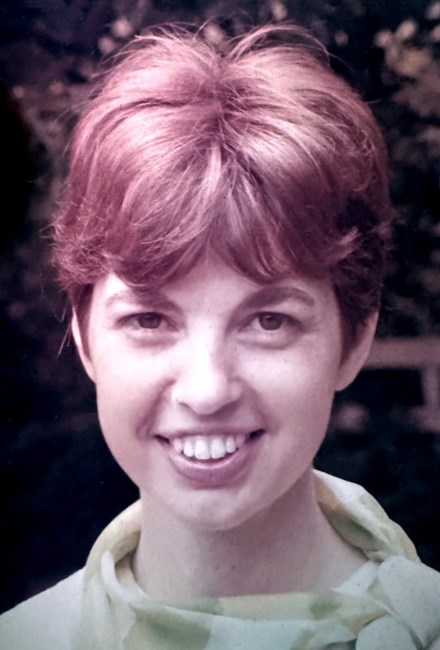
Born Roberta Shepard McCrary on July 5, 1935, in Washington, DC, to Samuel and Lucille McCrary, she was raised in Falls Church, Virginia. As the daughter of one of NASA’s founding engineers, she lived a life defined by creativity, problem solving, and service to others.
She graduated from George Mason High School where she was named Outstanding Junior Girl. While enrolled in nursing school at the University of Virginia, she met Alastair Guthrie, a young medical student whose caring bedside manner made a deep impression. They soon married and embarked on an adventurous life together, raising three sons and a daughter. They shared over 60 years of marriage. Their early years were defined by frequent moves between rural and often remote corners of the United States and Canada, including Embudo, New Mexico, and St. Anthony, Newfoundland. Over time, their moves became less frequent, and they eventually settled in Birmingham, Alabama, in 1987. In 2020, after her husband’s death, Roberta relocated to Houston to be close to family.
She was innately creative—a hands-on problem solver, artist, designer, and maker. She studied watercolor painting under the renowned artist Arthur Hall while living in the New Mexico desert. Though trained as a nurse, sewing became both her passion and, for a time, her profession. In the 1960s, she commuted from Milford, New Jersey, to her job at Spadea, a pattern company in New York City, where she created garment prototypes from design sketches—work that required precision, ingenuity, and a deep understanding of how things are made. One of her garments, a gold Nehru coat, was exhibited at the Museum of Modern Art in New York. That way of thinking—understanding how things were constructed and working them through into form—defined her life.
Roberta was, above all, a giver. Her life was devoted to serving others in practical, direct, and deeply personal ways. A gifted seamstress, she made her own clothes and constructed fully lined, tailored suits for her husband, holding herself to exacting standards. She was the person others turned to when they were stuck—whether working through a difficult sewing problem or handling last-minute alterations. She rarely said no and was seldom compensated for her work.
No sewing project was too ambitious. She took on monumental challenges, including the full production of costumes for a local ballet company’s licensed Balanchine production. The work required strict adherence to detailed specifications and a high level of precision. She singlehandedly created dozens of costumes for dancers of varying body types, each requiring multiple fittings. She undertook this work as an act of generosity, without compensation—an extraordinary effort that reflected both her skill and the extent to which she gave of herself.
In her 70s, she adopted the title “practical engineer”—a moniker that captured how she defined her skill set and approach to the world. Sewing, for her, was not simply a craft but a form of applied thinking. She could analyze, adapt, and effectively reverse engineer almost anything she encountered.
In their household, traditional roles often gave way to a natural balance of strengths. While her husband was more academic in temperament, Roberta was the one with the toolbox. When the children needed a playhouse in New Mexico, she designed and constructed an ingenious collapsible plywood teepee—a cozy hideout perforated with geometric cutouts for climbing and topped with a wooden smoke-ring perch, which later made the move with the family to New Jersey. When the family den needed a wall of bookshelves, she designed and built them herself with care and craftsmanship.
She was active in her church throughout her life and held a deep and steadfast faith that guided how she lived and sustained her through life’s challenges. She taught children’s Sunday school, creating her own props and puppets and leading craft projects with imagination and care. She did not impose her beliefs on others, but shared them quietly through example. She was a constant source of compassion and wisdom.
She taught English to adult immigrants and opened her home to students who could not return to their families during holidays, offering them warmth and belonging. She found deep community in her quilting circle, where she created remarkable, award-winning quilts. She also expressed her generosity through cooking, taking particular joy in southern traditions and dishes such as her fried okra and New Orleans shrimp creole.
As memory loss made sewing more difficult, she turned increasingly to her garden, where she spent hours each day working with her hands. In her later years, she lived with memory loss and resided in memory care communities in Birmingham and Houston. Though her ability to form new memories faded, her essential nature did not. She remained sweet, receptive, and responsive—quick to smile, warm in her presence, and deeply loved by those who cared for her. She was a favorite among the staff, treated with patience, dignity, and kindness. And she was always, not surprisingly, dressed with effortless style.
She is survived by her four children, Stephen, Bruce, Katharine, and David, along with two grandchildren and five great-grandchildren.
Show your support
Add a Memory
Share Obituary
Get Reminders
Services
SHARE OBITUARYSHARE
- GET REMINDERS
v.1.18.0