
OBITUARY
Sandor Zombori
January 7, 1942 – October 11, 2026
1942–2026
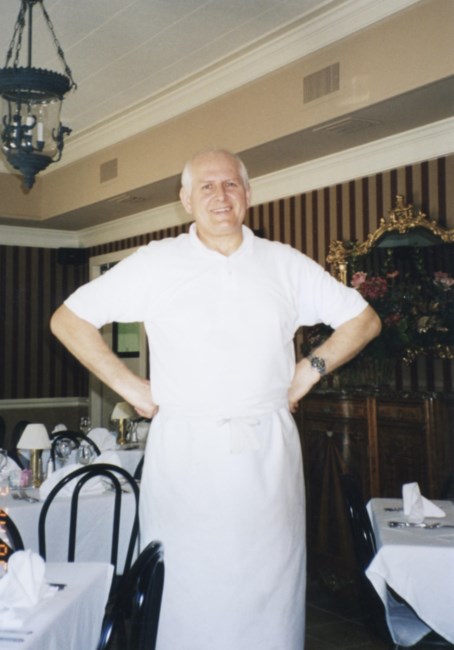
Sandor Janos Zombori, former judo champion, veteran of the U.S. Special Forces, and retired professional chef, passed away on Sunday, October 11, 2026, at Washington Rehabilitation and Nursing Center in Chipley, Florida. He was 84 years old.
Sandor was born on January 7, 1942, in Szeged, Hungary, to Sandor Zombori and Marta Varga. Sandor was the fourth of five children. His family owned a textile factory that was seized during the Soviet occupation of Hungary, along with many of the family’s other assets. During this time, Sandor’s parents became political prisoners for their anti-communist beliefs. As a result, he was placed in an orphanage in rural Hungary. For several years, Sandor lived through harsh conditions at the orphanage, where he fought ruthlessly against other young boys for meager food and clothing rations. To escape this cruel reality, he dreamed of being a cowboy in America. He dreamed of warm weather and tall palm trees. Most of all, he dreamed of food. While at the orphanage, he looked forward to the only Christmas Day present he’d receive each year: a ripe navel orange. His love of food was born out of his gnawing hunger during this particularly brutal chapter of his life, a hunger he would try to satiate for many years to come.
After his mother was released from prison, Sandor left the orphanage, reuniting with his mother and younger brother in Budapest; his father remained imprisoned for several more years. During the Hungarian Revolution of 1956, Sandor’s older brothers, Laszlo and Mihaly, were fatally wounded by the Soviet Army during anti-communist protests, and his sister, Marta, is believed to have also been killed by Soviet forces.
While seemingly free from prison, his family lived under constant threat of violence from the Hungarian secret police. Sandor was detained and beaten several times, once for possessing a six-pack of Coca Cola and a copy of The Catcher in the Rye. For several years, the family lived in fear and poverty, with Sandor stealing food from shopkeepers to provide for himself, his mother, and his younger brother. It was around this time when Ferenc Kroner, a coach at a sports club in Budapest, witnessed Sandor stealing food and confronted him on the street. Ferenc promised Sandor a free meal if he came to the club. There, he introduced Sandor to judo, a sport that would change the course of Sandor’s life.
Sandor trained under Ferenc, who became a lifelong father figure to Sandor and for whom Sandor developed deep respect and admiration. Fueled by his anger over a government that destroyed his family and left him impoverished, Sandor brought energy and ire to each match that was rarely overcome by his opponents. Physically and mentally, he was a fighter, a formidable opponent with enough aggression and technical skill to win his way to the top. As he advanced in the sport, he began fighting in high-stakes competitions, and his winnings were used to support himself and his family. For him, to win was to survive. Within a few years, Sandor became a six-time Hungarian judo champion. In 1968, he won gold at the Hungarian Championships in Budapest in the 80-kilogram category. His successive victories led to one of the nation’s most prestigious honors of all: an invitation to join Hungary’s Olympic judo team.
Unfortunately, judo was excluded from the 1968 Olympics in Mexico City, effectively squashing Sandor’s dreams of competing in the Games.
Sandor’s frustration with the Hungarian government culminated in desperate action for freedom. He had reached the limit of the opportunities and success available to him in the country. In search of a better life, Sandor devised a plan with his friend Paul Jaszy to do the impossible. On May 29, 1969, Sandor and Paul embarked on their journey to escape Soviet-occupied Hungary. They ran from police, climbed electric fences, and dared to trust sympathizers who risked their own lives to provide aid to Sandor and Paul along the way. In total, Sandor traversed eight countries—Hungary, Romania, Bulgaria, Macedonia, Serbia, Croatia, and Czechoslovakia (present-day Slovenia)—before swimming across the Drava River, a defacto border separating Czechoslovakia from allied-occupied Austria. Against all odds, they succeeded. Sandor became a free man on June 13, 1969. For the rest of his life, Sandor observed this date as his Freedom Day.
Unable to secure Austrian citizenship, Sandor instead used this time to travel through Europe and Asia. It was around this time that he was recruited by the Central Intelligence Agency (CIA) and Turkish intelligence operatives to engage in unconventional warfare, sabotage, and guerilla tactics to support the United States in the Vietnam War. Sandor completed training at the Egirdir Mountain Commando School in Isparta, Turkey, to support this mission. In Laos, he provided lifesaving assistance to downed U.S. pilots and reconnaissance for American forces. After narrowly surviving what he was unaware to be a suicide mission, Sandor demanded that his handler at the CIA provide safe passage to America.
Sandor arrived in New York City in 1970. The city became his first home in America, one that he visited often throughout his life.
While living in New York, Sandor worked in kitchens in Manhattan’s Little Hungary washing dishes to support himself and send money back to Hungary for his mother and younger brother. It was during this time that he met Attila and Gabi Perjesy, also Hungarian expatriates, who would become lifelong friends and hosts to Sandor when he visited New York for culinary training. Sandor found much to love about America and sought to make his stay here permanent.
As a path to citizenship, Sandor joined the United States Army in 1972, completing a series of Special Forces training between 1973 and 1974, and thus became a naturalized citizen.
One of Sandor’s proudest achievements was his service to his adopted country. He served as an Army Ranger and Green Beret, and was deployed to places around the world. While in the Army, Sandor welcomed his first daughter, Jennifer “Prema” Marta, and attended school at the University of Massachusetts, earning a bachelor’s degree in computer science. His service in the Army came to an end in 1979, at which time he entered the private sector, working for Digital Equipment Corporation, based in Maynard, Massachusetts.
Sandor’s career as a computer sales executive for Department of Defense contracts eventually took him to Pensacola, Florida. It was there that he met Mary Newkirk, also an employee of Digital Equipment Corporation, a young woman who at first politely declined his many lunch invitations until, one day, she finally accepted. The pair kept their relationship private during their time working together. On December 9, 1983, the couple married in a small courthouse ceremony in New Orleans, Louisiana. Sandor promised Mary a life that would never be boring; Mary could never have imagined the many adventures with Sandor that were to come.
Sandor found much happiness with Mary and the life they built together in Pensacola, but his career ambitions suddenly changed course. His love of food, specifically pasta, and the fine dining experience became a passion promoted to a career. In 1991, Sandor left his corporate job to open his first business, Pannonia Pasta, on N 9th Avenue in Pensacola.
Pannonia Pasta supplied many Pensacola restaurants with fresh pasta, ranging from linguine, fettuccine, and spaghetti, as well as sauces, pates, and cheeses. However, it was an experiment that Sandor wanted to take one step further. He and Mary relocated the business to another part of Pensacola and expanded operations to include a dining area for customers.
With his new restaurant, renamed Sandor’s European Cuisine, Sandor launched his career as a professional chef and what he would become widely known for across Northwest Florida. To hone his craft, Sandor completed training at Le Cordon Bleu in Ottawa, Canada, in 1992, thus enhancing his growing culinary expertise; ten years later, he would continue his culinary education by completing the cuisine course at Le Cordon Bleu in Paris, France.
It was through Sandor’s first restaurant that he met Charles Modica, who encouraged him to relocate his family and business to South Walton County, a small but growing beachside community. In 1994, Sandor, Mary, and their two daughters, Sarah Jane and Rivka “Rebecca” Zanna, moved from Pensacola to Seagrove Beach, and reopened Sandor’s European Cuisine, just steps away from the Gulf of Mexico.
At his new restaurant, where Sandor was the sole chef, Sandor’s dishes were the product of a cosmopolitan life and apprenticeships with mentors such as Eric Ripert, Roland Liccioni, and many other chefs in Paris, France; Ottawa, Canada; as well as New York and Chicago. Perfected through his time working with Ripert at Le Bernadin in New York City, his signature dish was his Chilean sea bass, marinated in ginger and sake, and served with Oriental spinach, Vietnamese purple potatoes, and Indonesian ketchup.
Sandor’s won over the palates of customers and restaurant critics alike. The restaurant was featured in New York Times Magazine, Food and Wine, Gourmet Magazine, and many local publications. In 1996, Sandor’s was recognized as one of the 20 Best Restaurants in Florida by Florida Trend Magazine. Robert Tolf, food critic at the magazine, wrote in his 1999 review that “Sandor Zombori prepares some of the finest food found in Florida, if not the nation,” and later described Sandor’s menu as “inspired by all the weight and magic of superbly select gastronomic traditions.” In 2003 and 2004, Sandor’s won the highly coveted Florida Trend Magazine Golden Spoon Award.
In 2004, after over a decade of owning and operating their Seagrove Beach restaurant, Sandor and Mary closed the business and entered semi-retirement. During this time, Sandor purchased a vineyard in his home country of Hungary and spent a year learning viticulture. In 2007, he graduated from the master chef course at Ecole Ritz Escoffier in Paris, France. Upon his return to the United States, he began working in restaurants across South Walton County as a pastaio and pastry chef, and for a short time taught culinary arts at Gulf Coast State College in Panama City, Florida, and Virginia College in Mobile, Alabama, serving as a mentor for the next generation of fine-dining chefs. Sandor fully retired in 2026 after working 12 years at The Bay Restaurant in Santa Rosa Beach.
In 2025, Sandor was diagnosed with Progressive Supranuclear Palsy. He spent his final weeks surrounded by loved ones, including his close friend of over 30 years, Dr. Mike Morgan.
Sandor will be remembered by his wife of over 42 years, Mary Zombori (nee Newkirk); three daughters, Jennifer “Prema” Marta Zombori, Sarah Jane Zombori, and Rivka “Rebecca” Zanna Revivo (Joshua); and two grandchildren, Ever and River Mendez. He also leaves behind his mother-in-law, Ardath Newkirk; sister- and brother-in-law, Jane and Frank McCarty; nephew, Matthew McCarty (Pamela); and niece, Barbra Stefanovics; along with many friends, colleagues, and compatriots whom he loved dearly.
Sandor’s legacy is more than just his diverse, illustrious careers, his many awards and accolades, or his best recipes. It is the ability to persevere despite impossible odds, to never give up hope, and to live and love fearlessly and ferociously.
Show your support
Send Flowers
Add a Memory
Share Obituary
Get Reminders
Past Services
Graveside
- SEND FLOWERSSEND
FLOWERS SHARE OBITUARYSHARE
- GET REMINDERS
v.1.18.1