
OBITUARY
Margaret E. Perisho
January 27, 1916 – April 26, 2010
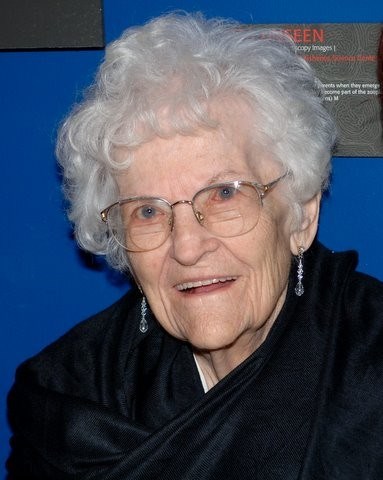
She was born Jan. 27, 1916 in Hoyleton, IL to Louis F. and Elizabeth C. (Gerling) Wehking. She married George D. Perisho on May 25, 1940 in Hoyleton, IL. He survives. Margaret passed away one month shy of their 70th Wedding Anniversary.
Also surviving are three sons, Ray (Mary Beth) of Doylestown, PA, Ron (Kathy) of San Ramon, CA, Russ (Caroline) of Poulsbo, WA; six grandchildren; Mike (Jeremy) Perisho of Stow, MA and their children, Bret and Brooke; Deanna (Rick) Hill of Tolland, CT and their children, Kaitlyn, Ryan, and Keira; David (Nichole) Perisho of Whitefish, MT, Deborah Perisho of Doylestown, PA, Alysha Perisho of Seattle, WA, and Nicolle (Adam) Yates of Indianola, WA. She was preceded in death by her two brothers, Elmer and Waldo.
Margaret grew up on a farm in Southern, IL. She graduated from Blackburn College in Carlinville, IL and from the University of Illinois with a BS in Home Economics. She worked as a Dietetic Intern at a hospital in Indianapolis and as a Dietician at Proctor and Methodist Hospitals in Peoria for many years, retiring in 1975. She had an Income Tax Service at home and did many local farm returns, and was a homemaker for three hungry boys. She was a member of Gems of the Prairie Quilters Guild in Peoria and was honored as quilter of the year. She was an active member of the Peoria Homemakers for many years, an avid Illini Basketball fan, loved to travel and was proud of having visited all 50 states. Many family and friends enjoyed her home made sweet rolls and peanut brittle. She was a member of the Hanna City United Methodist Church and was very active in many church groups and activities.
Funeral Services will be at 11 a.m. Thursday, April 29, 2010 at the Hanna City United Methodist Church with Rev. Joy Schlesselman officiating. Visitation will be from 5 to 7 p.m. Wednesday at Davison-Fulton Woodland Chapel in Peoria and also 30 minutes before services at the Church on Thursday. Cremation will be accorded following services.
Memorial donations may be made to her church, the American Heart Association or the Alzheimer’s Association. View this Life Story at www.Davison-Fulton.com.
Now view Margaret's biography written by her granddaughter Nicolle,
MY GRANDMA:
MARGARET ELIZABETH WEHKING PERISHO
Written by Nicolle Perisho, Margaret’s granddaughter,
as an 8th grade class project in 1999
“I have been truly blessed: good health, an opportunity to do things and travel I’d never dreamed of doing; opportunity for an education; and a loving family. God has been good to me.”
-Margaret Perisho
From the fields of her family’s farm in Illinois to hospitals in Vermont and Rhode Island, Margaret’s life and work exemplified her religious beliefs, her love of family and her love of cooking.
On January 27th 1916, Margaret Elizabeth Wehking was born in a wooden frame country home. Her aunt, Lydia, came to visit for the special occasion. Her brothers did not know that they were about to gain a little sister. Margaret was her given birth and baptism name, and Elizabeth was her mother’s name. As she grew up, other girls at her church used to tease her and giggle, purring “meow-gret” to her.
Margaret Perisho lived a life divided by the seasons. During the winter months, she lived in a nearby small town with her aunt and uncle. Her parents’ house was eight miles from town – and the school - and the roads were muddy and wet, particularly in the winter. Education was something her parents greatly valued, and the only way she was going to get one was to stay in town. Her Uncle Henry and Aunt Lydia made this possible by opening their house to her. This was fun for Margaret, as she could play and do things with her cousin, who was one year older than she was.
During the summer, life revolved around the work on her parents’ farm. Margaret, like everyone else, had her jobs to do, starting early in the day. From planting to harvesting, the regular spring, summer and fall cycle of tasks made for a lot of work. Her parents taught Margaret the need for discipline, responsibility and organization at an early age.
Her father, Louis Wehking, was born in 1872 in Hoyleton, Illinois, and spent his life as a farmer. Elizabeth Caroline Wehking, Margaret’s mother, was born in the same small town in southern Illinois, in 1882, and became a seamstress. Both parents were born of newly immigrated German families. There were many German born families in this part of Illinois and in the community.
Margaret had two brothers, Elmer and Sandy. Sandy was ten years older than Margaret. She never saw much of him because he went to a preparatory school and did not live at home. He eventually became a salesman. Elmer, being only six years older than Margaret, saw her more frequently. Margaret recalls that when she was growing up, she and Elmer had a good sister-brother relationship and id not fight much. However, Elmer soon left for college too. Elmer served n the military overseas during World War II in Africa, Southern Europe and Japan. He was not a fighting soldier; he served as a chaplain in the Air Force.
Living on a farm, Margaret Perisho had pets when she was young. They included Dot, Fido, and some farm animals. Dot, the horse, would be ridden to get the mail and run errands. Fido, the dog, was playful, but Margaret never liked her much after he bit her once. She was also able to look after some of the family’s farm animals.
The house young Margaret Elizabeth grew up in was wood house with large rooms and a parlor, which the heat never quite reached. The dining room was the all-purpose family room, and it held the radio. The family radio was a special possession and the time spent listening to it was a period when the family all came together. In the bathroom, water was drawn into the sink or the bath using an old-fashioned hand pump. To get heated water, Margaret had to put water over the fire on the stove in the kitchen and carry the boiled water to the bath or sink. Also, in the house was a storeroom to place things not in use.
At home, Margaret spoke English, but when visiting her grandparents, she had to speak “low” German. “Low’ German is a spoken, not written, language. Many German immigrants used it to communicate with people that did not know English. Even though her grandparents had lived in the states for many years, they kept using the traditional German language.
Growing up in the rural household, Margaret learned to enjoy and cook a variety of foods, including traditional German foods. Hogs were butchered and made into three different kinds of sausages. Traditional cookies were also eaten during holiday time and raisins put in turkey dressing. Margaret’s mother always made sauerkraut. The food that was on the table was everything the Wehkings raised or grew, including vegetables from their garden and fruit from the trees. Bread would be freshly baked every couple of days. Fresh dairy products came from the farm’s cow that was milked once every morning and again every night. This resulted in delicious cottage cheese, milk and butter. Milk was boiled every morning to keep it from spoiling. To keep the butter cold, it was placed down the water well on a rope and plate which, unfortunately, sometimes tipped over. Many times when the going was rough and meat was scarce, eggs and more eggs were eaten. Food played a big part in Margaret’s life, since later she became a dietician at hospitals. A dietician uses knowledge of good nutrition and medical needs to plan and prepare patients’ meals.
Since Margaret’s youth was during the Depression, there was very little money to spend. Margaret had to keep busy without needing spending money. She would spend a lot of her time enjoying Methodist church picnics and Sunday school activities.
Sometimes relatives came to visit during the summer, which was a nice change of recreational activities. Visiting families often meant that here would be girls Margaret’s age that she could play with and talk to. Margaret enjoyed playing with her dolls, Anita and Florence. Anita, a German pisture – meaning china doll – had real hair and was covered in white leather. Margaret received Anita when she was seven. Once when Anita became damaged somehow Margaret was lucky enough to take her to the “doll hospital.” Florence, another doll, was not treasured nearly as much as Anita, since her face peeled after she was once left out in the rain. Margaret could play for hours and hours without end with her dolls and their little table, chairs, and play dishes. Margaret’s favorite recreational activity after dolls was making mud pies. She still remembers gleefully sneaking out tot the hen house to “borrow” an egg to make a real mud pie without her parents’ knowledge. This marked the beginning of Margaret’s love for cooking.
Taking piano lessons was yet another pastime for this Illinois farm girl. After seeing how Margaret enjoyed singing in church, her parents decided to work harder to get some extra money to fund piano lessons for Margaret – eight miles from home. This was a long way in an age when roads were not paved and were frequently too muddy or too snow-covered to travel.
The first school Margaret went to was Elm Point Elementary. The school was a one-room schoolhouse with kids ranging from grade 1 through 8 – all taught by the same teacher. The building is no longer there, but Margaret vividly remembers listening to the teacher and can recall some specific lessons. Walking everyday to school and running around during recess provided plenty of exercise, without a need for a physical education class. Kids of all ages would play baseball in the schoolhouse yard or sneak into an old abandoned house across the street from the school. During lunch all the kids would bring out their lunches in tin boxes.
High school initiated Margaret’s first contact with large numbers of different sorts of kids, a much bigger world. She had fun joining the home economics club, which was considered only for girls.
Margaret’s mother made all the family’s clothes from cotton. Margaret was never allowed to wear slacks. The trend during the 1920s was to wear full skirts, which Margaret loved to wear since they became popular. Margaret did not have any hand-me-downs because clothes on the farm were either worn out or grown out of, and besides, her siblings were boys. Occasionally, she would have to wear her mother’s dresses; she did not like to wear them, so she learned to sew her own clothes or wear the ones her mother made. One dress that stands out in particular was a tangerine-colored dress specially ordered from a catalogue.
The Wehkings would celebrate many holidays. On Christmas the family would go to the grandparents’ home to celebrate. On their traditional second Christmas day, a German tradition, they would visit more relatives and family. Also, birthdays, homecomings, anniversaries and family reunions were important for Margaret while growing up and she continued the tradition.
Once Margaret was old enough to attend college, she applied for and was admitted to Blackburn College. She was a pioneer of sorts in her community because this was still a time when not many women went to college. Her oldest brother helped make it possible for her to go, by raising money at his job, so that she could earn a good education. Blackburn College was available to her because it had work programs that allowed her to earn tuition and board. Margaret studied two years, majoring in nutrition and learning to be a dietician. She lived on campus. She joined the home economics club at college. Once she completed her studies at Blackburn, Margaret went to the University of Illinois where she received a degree. This was followed by an internship at the University of Indiana. Every day she went to school and then worked two and a half hours, since she made meals for the patients in the University Hospital.
At the University of Illinois, Margaret was part of the professional home economics club and student officer groups. On top of classes, she worked six days a week. Each month she worked a different line of a station at a different job; one month at the main kitchen preparing meals, another month at the children’s hospital and so on, since there were many departments in each hospital. While having that job, she was paid $125 a month, which did not include medical insurance, but did include room and board.
One day during her senior year, while at the church center playing ping-pong with some other students, Margaret met a young student, George Perisho. For the remainder of the year, 1937, their friendship grew. They dated until Margaret graduated, while George continued with school for another year. They continued to write and visit each other. One time George even hitchhiked to where Margaret lived in Vermont to see her; he did not have a car.
Once he finished school, George left to go to a job he had with the 1939 World’s Fair in New York City and then moved to Vermont to be near Margaret. The two were married in May 1940.
The newlyweds soon moved into a one-bedroom apartment. Since it was during the Depression, it was hard for Margaret to find a job. George, however, found a low paying job and Margaret ended up spending a lot of time at the library alone. It was a hard time for the newlyweds, since both were used to being in big groups from college, but finally life picked up for Margaret when she obtained a job. She worked in a hospital in Rhode Island planning, preparing and serving meals to 2,500 patients a day.
Margaret and George moved to Kansas, and then returned to Illinois. Moving to Hanna City, a small town in central Illinois, Margaret and George raised three boys and cared for Margaret’s aging father for the last ten years of his life. Ray was the first of three boys. Ten years later Ron was born and then the baby of the family, Russ. The presence of the active children around the home brought an always busy and pleasant life.
Currently Margaret Perisho likes to travel. She has visited Europe, Canada, and nearly every state in the United States. Her favorite place is Colorado. She also likes to quilt. It has been an ongoing passion since the day she picked up a needle and learned to sew. Religion has always been a big part of Margaret’s life beginning with the early days in the Wehking family in Hoyleton. She has always gone to church regularly and will continue to do so.
Margaret Perisho has lived a full and rewarding life. She considers herself blessed every day and has taught her family what is means to have a positive look on life.
Show your support
Add a Memory
Share Obituary
Get Reminders
Services
SHARE OBITUARYSHARE
- GET REMINDERS
v.1.18.0