OBITUARY
Philip Joseph Fernandez Jr.
March 8, 1960 – October 24, 2026
March 8, 1960 – Oct 24, 2026
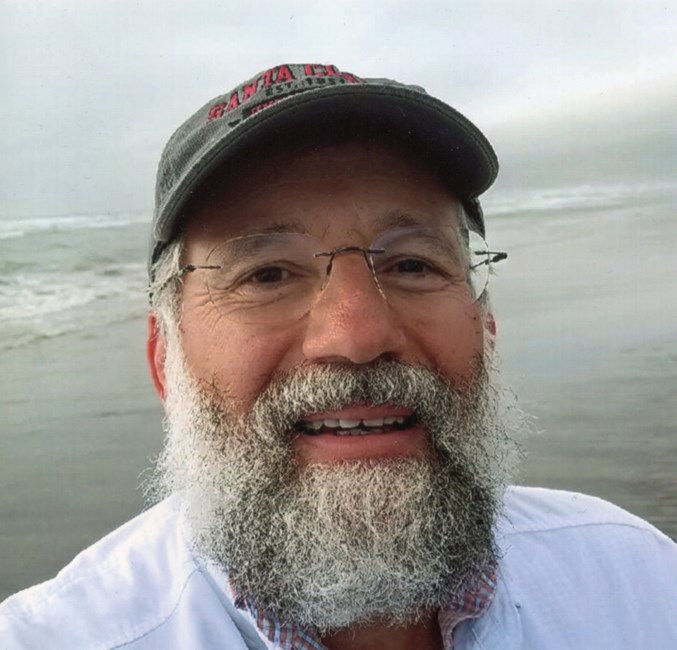
Dr. Philip Joseph Fernandez Jr, known to some as Kip and most as Phil, passed away in the early morning of October 24, 2026, after a long battle with cancer. He was 66.
Phil was born in Phoenix, Arizona where he lived for most of his life, having also lived in Tucson while earning his PhD at the University of Arizona. He grew up in Phoenix in a time when irrigation ditches were open and he could explore the city on his bicycle. He was happiest when he was outdoors, collecting tiger salamanders and leopard frogs for his research, photographing nature, fishing, hiking and spending time with his family. He also loved working on his cars and maintaining his home. He was never afraid to tackle a task be it plumbing, electrical, or carpentry work in the maintenance and improvement of his home. He started working on cars at 14, helping to maintain his family’s vehicles and was never one to pass up a challenge as he and a friend “rescued” a Volkswagen from the Salt River to fix it up.
He loved his yard and garden and could often be found outside tending to his plants. His fondness for gardening was fostered at the age of 12, as he maintained a neighbor's yard, learning how to trim trees and spot whatever a plant could need.
Phil started his lifelong career in academia at Arizona State University where, as an undergraduate, he worked in Dr. Jerry Justis’ lab cleaning axolotl aquaria and learning all he could. Next, he worked in the lab of Dr. Jim Collins, where he earned a Master’s of Zoology with his thesis “Variation in Color Pattern and Pigment Composition of the Arizona Tiger Salamander”. He continued his education in the lab of Dr. Joseph T. Bagnara at the University of Arizona College of Medicine, Department of Cell Biology and Anatomy, who became a lifelong mentor and friend. Using the Chiricahua leopard frog of Arizona as a model for his thesis “The Role of α-Melanocyte Stimulating Hormone in Environmentally Induced Color Change”, he earned his Ph.D. from the University of Arizona College of Medicine.
While earning his degrees, Phil began teaching students as a Teaching Assistant at both ASU and the U of A Medical School, teaching undergraduate and graduate lab courses. Phil then taught at Grand Canyon University from 1989 - 2005, working his way to become a Tenured Professor and the Dean for the College of Science. He taught classes in Ecology (terrestrial and aquatic), Invertebrate Zoology, Vertebrate Zoology, Histology, Anatomy and Physiology, Basic Physiology and Science Communication. He advised over 240 undergraduate biology students, many of whom then went on to earn advanced degrees, something that he took great pride in.
Never one to sit still, Phil was an Adjunct Professor for Arizona State University, West Campus from 1991-1996, teaching Natural History of Arizona. He also participated in the Preparing Future Faculty Program (1995-1999). He was also an Adjunct Professor at A.T. Still University Arizona School of Dentistry and Oral Health in both their Doctor of Medicine in Dentistry (2005-2010) and Post-Doctoral Orthodontics Programs (2007-2024). He especially enjoyed his interactions with his students in the Orthodontics program.
Phil ended his teaching career at Glendale Community College (2005-2025). He taught General Biology and Anatomy and Physiology classes (2005-2024) to well over 2,500 students and was Chair of the Biology Department (2008-2015). He participated in the design of the new Life Sciences building on the main campus. He revised the anatomy curriculum from cat dissections to plastinated human cadavers, giving students a more realistic laboratory experience. He was elected by fellow faculty to the Faculty Senate three times and served on numerous committees.
While teaching, Phil pursued interdisciplinary research involving microscopic morphology and conservation biology. He trained students in histological techniques that they would use in clinical and laboratory settings. Students assisted him in research studies of skin pigmentation, skeletochronology and diagnosis of fungal chytridiomycosis in amphibians. He pursued a long-term study (18 years) in the White Mountains of Arizona on the ecology of the threatened native Chiricahua leopard frogs and the effects of disease and introduced crayfish. His research demonstrated the harmful ecological damage caused by the invasive spread of introduced crayfish in Arizona and was instrumental in five new state regulations restricting crayfish possession and transportation that were signed into law on May 25, 2001.
Always one to break new ground, whether he intended to or not, Phil collected a young female Wandering Garter Snake in 1983 that produced litters of offspring in 1988, 1990, 1991 and again in 1994 after being isolated from all other snakes for many years. Working with Dr. Gordon Schuett, this unusual reproduction was found to be one of the first documented and genetically tested instances of a female snake giving birth without mating, producing all male offspring in a process called facultative parthenogenesis.
Phil cherished his time in Academia, but most of all he loved his family and his friends. He was the first to help a neighbor in need, and eager to volunteer in his community. When there was a need for a coach, a chaperone, a cook, or a strong back, he was there to help. Whether casting his fly rod in the East Verde River with friends on a camping trip or gathering the neighborhood for a New Year celebration he treasured time spent with his loved ones.
At home, Phil was a devoted, hands-on father whose serious academic side was balanced by warmth, humor, and playfulness. He built his family’s home from the ground up, carrying his young children in five-gallon paint buckets and later teaching them to hammer nails, stain wood, and use power tools, often with Elton John, Steely Dan, or mariachi music playing nearby. He coached Little League, attended every father-daughter dance in a silly matching outfit, and encouraged his children to approach the world with curiosity, whether by opening an anatomy textbook to explain an achy wrist or searching the Arizona landscape for frogs, horned lizards, and tarantulas. In his final years, he shared that same sense of wonder with his granddaughter, Isla, as they gathered flowers, citrus, and pecans in the backyard, enjoyed snow peas from his garden, and read books together. The nearly three years they shared brought him immeasurable joy.
Phil Fernandez was a loving husband of 40 years to Cindy Fernandez, father to Emma (Benjamin Hall) and Philip III (Marina MacLatchie) and doting grandfather to Isla Hall. Kip was a fantastic big brother to his sister, Mary Anne Fernandez-Herding (Jon Mincks). He is also survived by his mother, Jeanne Fernandez, nephew William Herding, niece Amanda Coppola (Charlie), grandnephew Luke Coppola and many other nieces, nephews and cousins.
A Remembrance will be held in the Spring of 2027. Further details at a later date. Donations can be made to the National Cancer Institute Gift Fund or Hospice of the Valley.
Show your support
Send Flowers
Add a Memory
Share Obituary
Get Reminders
Services
- SEND FLOWERSSEND
FLOWERS SHARE OBITUARYSHARE
- GET REMINDERS
v.1.18.1