
OBITUARY
Ethel V. Staton
February 21, 1921 – August 30, 2013
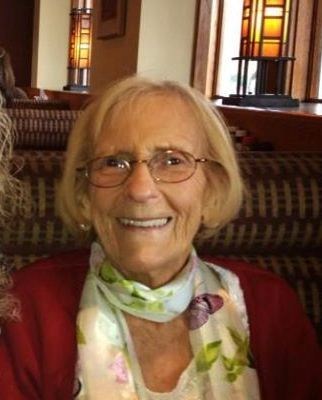
1921-2013
Etheldra Venietta Ellis has left us to join her ancestors and contemporaries who have gone before her. She died peacefully on August 30 in Portland.
Throughout the better part of the 20th century and into the first decades of the 21st one, Ethel’s life reflected the traditional roles of women in our society, the changes in those roles women have experienced, and the liberation from them with new challenges and responsibilities. In her life story there is much to wonder about and much to inspire us.
Ethel’s father, Eugene Thomas Ellis, came from a long line of loggers, farmers, and Methodist preachers. Her great-grandfather, Etheldred Thomas Ellis, immigrated to Benton County, Oregon by ox team in 1852. Etheldred and his brother Asbury were part of the first party of settlers to enter the Alsea Valley west of Corvallis.
Her mother, Victoria Hildreth Hoffman, descended from pioneer and river boat people. Ethel’s great-grandparents married in 1855 at Beaver Creek Church, Oregon adjacent to the Barlow Road portion of the Oregon Trail. Her maternal grandfather, William Hoffman, worked as engineer on the T.J. Potter, a river boat that steamed the waters of the Columbia and Willamette rivers. Ethel’s maternal great uncle, William E. Larkins, worked as a river boat mate and captain on the Columbia River and its tributaries. He died at the wheel of the Lurline in 1908 when the boat collided with Portland’s Morrison Street Bridge in dense fog.
Ethel was born the third of four children on February 21, 1921. She grew up in southeast Portland and the Lents district. The latter neighborhood in those days was farmland, fields, and forest interrupted by clusters of houses. Ethel entered Lents Elementary School and later the old Lincoln High School. But romance interrupted her education. Marriage to her first husband, Allen Ernest McDaniels (Mac), in 1939 left her one term short of graduation. Mac came into her life at a critical time. He represented an anchor from the tumult of her storm-tossed youth. Their union produced four sons: Allen Elwood, Bob Thomas, Jeffry Ernest, and James Charles.
After working at several jobs, including as a pipe fitter at Oregon Shipyard during World War 2 where he sustained a near fatal injury, Mac settled into police work, first with the Portland Police Department and later with the Multnomah County Sheriff’s Office where he served until his untimely death in 1969.
Mac was a dominating figure, a larger than life character who believed in a traditional marital relationship: the man wore the pants in the family, so to speak. But Ethel’s need for independence began to emerge in 1951 when she learned to drive. In the early 1960s, like so many women in America who took off their aprons and put on business attire, Ethel obtained a front office position at The Children’s Clinic in southwest Portland, later in Sylvan. She loved working and remained with the clinic for 26 years. The work helped to sustain her during the aftermath of Mac’s death on August 30, 1969. Sad circumstances had forced her to take control of her life. Speaking of her first husband, Ethel later said, “It was his strength from the grave that helped me. I made decisions.”
After six months she could be more active in the ways she had been for many years—looking after her family, working at the clinic, taking care of a new home, and participating in Eastern Star. Cats became an important part of her domestic life.
Sometime in the early 1980s Ethel met and dated Walter John Staton, Jr. Walter filled an empty place in Ethel’s heart while he enjoyed being cared for. They married in 1988 after both retired from their respective careers. They settled in together, enjoyed relaxing times in Long Beach, Washington where they both owned property, attended Glisan Street Baptist Church in east Portland, and participated in Masonic and Eastern Star activities. Ethel and Walter visited the sick and infirm, and did general good works, often for people younger than they. Both enjoyed the challenges and opportunities of married life for 12 years before Walter’s quiet death in August 2000.
As she aged, Ethel’s own independence became a top priority. During the last years of her full life, she continued to enjoy family, church, and Eastern Star. She kept up with current events via the Oregonian and television. Ethel once said, “As you get older you must do more to put yourself out in the world.” Several serious health issues slowed her in the last three or four years of her life. Her kind, loving, courageous heart gave out on August 30.
Ethel’s four sons and their spouses, three grandchildren, and three great-grandchildren survive her. In remembrance of a long, full, and happy life give something to the worthy cause of your choice; or, do something to express your independence that ordinarily you wouldn’t do; or, watch a sunset and toast the vitality, resilience, and transience of a life.
Show your support
Add a Memory
Share Obituary
Get Reminders
Services
SHARE OBITUARYSHARE
- GET REMINDERS
v.1.18.0