OBITUARY
Manuel Martin
November 16, 1926 – November 27, 2016
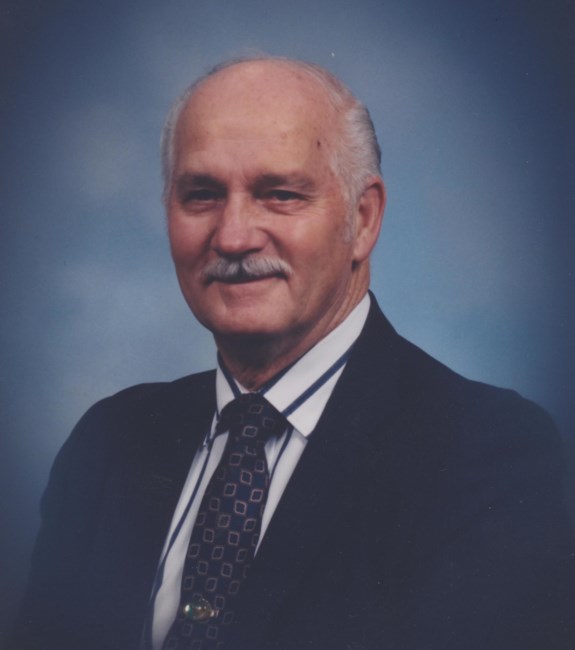
Our dear father, grandfather & great grandfather has gone to be with his Lord Jesus Christ, to whom he devoted his life. He was born in Scotts Bluff, Nebraska to Christ & Christina Martin. He moved to Portland in 1941 and reunited with the love of his life, Eva Jean Ring, also of Scotts Bluff. They wed on October 19th, 1947. Eva has preceded him in their journey to Heaven. He leaves behind a large family and many friends who will miss this kind, funny, gentle and humble man.
Manuel Martin, at age 80-born in 1926.
I was born in Scottsbluff, Nebraska. I had a twin brother by the name of Daniel. We were identical twins. I can remember a few things about him, and us, before he died at the age of five. Mom used to have quite a time trying to tell us apart. She would tie a blue ribbon on one of us and a pink ribbon on the other, but then she could not remember who had which color. She would talk to me and call me Daniel, and I would say “No, I’m Manuel” or vice versa. At times, we lived in a house we called Shoemaker’s place. We moved from there, and back to it at least three or four times. Daniel and I used to play in the dirt alongside of the house with toys we made out of blocks of wood with a sardine fish can nailed to it. That was our truck. Bones of pigs’ knuckles were our horses and cows. I remember there was a fruit cellar there, which was a hole in the ground. I would have to guess at the size, but about eight to ten feet long and six or seven feet wide and about five feet deep. It was made with wood posts and had shelves to store the jars of vegetables and fruit that was canned in the summertime or fall. The cellar had a pitched roof made of wood posts, covered with chicken wire, the door into it was made of wood, and at about a 45 degree angle with sides made of wood and wood posts.
The mound of earth over the cellar, we used for rolling five and ten gallon barrels off it. They were made of oak wood with metal rims. If they were big enough, we would get inside of them and roll down.
The Shoemaker place also had a barn on it with a hay loft. At time, I remember horses and mules being there. There was also a large pasture and at times cattle were in it, also prairie dogs. The prairie dogs would sit on the mound of dirt, out of which they dug the hole, and look all around.
We use to see owls sitting on the mounds. They lived in the holes the prairie dogs deserted, as they were after the little prairie dogs for food.
Across from the Shoemaker’s was Hogan’s Airport. This was the only airport in the area at the time. They were the Piper Club type and the biplane. We used to watch them as they spun the propellers by hand to start them. They use to do stunts with them, fly banners behind them, or write messages in the sky, with what I guess, was smoke.
About a mile from there, towards town, there was a city dump. We used to go there and salvage different kinds of metal and sell it. That was our spending money. Not too far from there, there was a small creek, and Gene used to take his cap and dip minnows out of it. All of this that I remember was from the different times that we moved back to Shoemaker’s.
I remember some things from the different places where we lived, from time to time. One place was what we always referred to as “the Greek place.”
We had a big police dog we called “Buck.” At night we used to hear him fight with coyotes that came from the sand hills. This place was northeast of Scottsbluff. At that time it was not yet developed into farm land as it is now, because of lack of irrigation.
Another place we lived was north of Mitchell, Nebraska. The farmer’s name was Summers. A neighbor boy and I decided we were going to go to town. Someone came along who knew who were and took us back home. In today’s society, that is probably the last time our parents would have seen us alive.
It was at this place, in the fall of the year, I was in the first grade at school. I got a brand new bib overall with two pockets in the bib and a place for a pencil and I thought I was hot stuff. I believe it was when we lived at the Greeks’ place that I went to Kindergarten. I had a hand-me-down coat that used to be Arlene’s with a fur collar. Everyone could see and know that it was a girl’s coat. I was very embarrassed. I cried a lot. One of the lady teachers was so nice to me, but I don’t think I lasted very long in school.
Hand-me-down clothes were quite common in those days. Mom used to sit for hours and darn socks and sew patches on our clothes as soon as they had holes in them. Today they call them “designer jeans.” Alan Jackson would have felt right at home at that time. Nowadays, so called “celebrities” wear jeans with big holes in them and threads hanging down. Or, you can buy jeans with holes in the rump, or look like the rump has been worn thin. What a change in our society.
At one time, we lived south of Mitchell at a man’s place called Loftgren. He had big pens in which he fed sheep. Not far from there, there were ravines. This was in the winter and the water would pool and freeze. We liked to go ice skating.
There were also muskrats and skunks. The boys would set traps and catch them, skin them and sell the hides. Today, the animal activists would carry signs and protest.
While we lived there, we had to walk to school, which was about two or three miles. A time or two we skipped school and went up in the ravines and skated on the ice; we watched, and when we saw the other kids walk home, we would take our lunch buckets and go home too. The roads were all graveled, and we would take the bigger rocks, about the size of our thumb, and throw at the glass insulators on the telephone posts. Most of the time we miss.
Just before we moved to Wyoming, we lived and worked for a farmer by the name of Quint. This was a mile north of the Scottsbluff sugar factory. That was the longest we ever lived at one place, maybe four or five years. I must have been about ten years old. At about eleven years old I got my first bicycle. The Quints were a good family to work for, they were Christians.
While there, we started going to church on a regular basis. All of the farmers we worked for raised sugar beets. That was one of the main crops. The area around Torrington, Wyoming, east through Morrill-Mitchell-Scottsbluff-Gering-Bayard-Minatare-and farther east was known as “The Platte Valley.”
Most all of it was row crops, sugar beets, corn, beans, potatoes, which were all irrigation crops. I am not sure where the water came from for irrigation, but I know they built a big, what they called “The Tri-State”, which brought in a lot of water. I believe, from the north out of Wyoming.
There were also other crops, such as alfalfa, hay, oats, barley and grain. Most all farming was done with horses and mules. Most farmers were very good to their livestock. That was their livelihood. They would decorate the harnesses with white rings (I am not sure what the rings were made of) also with silver studs-large and small, and different colored tassels. During spring, summer and fall the horses and mules were fed grain and oats to give them strength for the hard work season. In the winter they were mostly fed alfalfa hay. Horses were used for the heaviest work, plowing, disking, harrowing, and floating the ground, getting it ready for planting. Mules were used for cultivating once the crops were up and growing in the early stages, as mules had a much narrower hoof.
Both horses and mules were used when it came to threshing grain. First the grain was cut with a machine, sometime pulled by several teams of horses. The machine cut the grain three or four inches above the ground, it bundled and tied the grain with one strand of twine. The grain then had to be shucked, standing them on end with grain heads up, and five or six bundles placed together in an upright position. They were left to dry for a time. Then a threshing machine was brought and placed somewhere in the field and the shucked grain bundles were loaded on hay racks and brought to the threshing machine that had a conveyer belt that took the grain through the thresher which separated the grain from the straw. The grain was sold or stored and sold later, depending up on price of grain at the time. The straw was used for animal bedding in barns and corrals. Not all farmers were wealthy enough to own a threshing machine and would loan or rent them from other farmers.
There were threshing crews that would start in the south, in Texas, since the grain would ripen there first, and they would work their way north, threshing grain, up into Canada.
While we lived at Quint’s, I remember one year there was a small field of grain, of about three to five acres, which Gene and I shucked ourselves. I was about twelve years old and Gene was about fifteen.
At night, in the summer, we would sit outside, next to the house and see the stars, the air being clear, and at times we would see meteor showers. Back then, there were fireflies out at night.
During those years, at times, we would see swarms of grasshoppers, like a dark cloud, and wherever they landed, they would strip the crops and leave only the stems of the plants. Pity the poor farmer in whose field they landed. That was before all of the pesticides that we have on the market today. There were quite a lot of billboards along the highways at the time, and people would cut metal barrels in half and place them at the lower or bottom of the sign, with old motor oil in them. The grasshoppers would hit the sign and fall into the oil. That helped get rid of some of them.
Potato harvest took place in the fall, before sugar beet harvest. The potatoes were lifted out of the ground with a horse drawn or tractor drawn potato digger. The potato digger was about three feet wide-inside with-mounted on wheel, with a steel rod type conveyer, attached to a chain, driven by cogs on the wheels, as the digger was pulled along. A large knife blade in front, in the shape of a V would go under the potatoes, lift the potatoes up onto the steel conveyer, a lot of the dirt would drop through, and the potatoes and vines would roll over the conveyer and out the back onto the ground. Then they were picked into wire baskets, which I think were a bushel, and put into potato sacks which consisted of about three or four bushes to a sack. The sacks were then loaded on a wagon or truck.
Most of the potatoes were sold right out of the field, for whatever the going price was at the time. The potato pickers were, I believe, paid by the bushel or by the sack. Some farmers had potato cellars and could store their potatoes and hope for a better price. The potato cellars were part way underground, with big timbers holding up the roof. There usually were big doors on both ends of the cellar, so you could drive a truck through one end and come out the other.
Sugar beets were usually contracted out. Which included hoeing, thinning, the first and second hoeing for weeds (that came later after the beets were hoed and thinned.) Then, in the fall of the year, piling and topping the beets.
My oldest sister, Christina, has already described how the beets were hoed and thinned and harvested in the fall, so I won’t go into that. Except for the beet tops which were left in the field to dry and then later picked up with forks, loaded onto wagons or trucks and fed to the cattle in the winter. Most all of this field work was referred to as “sloop” labor.
While still living by Quint, in the fall of 1940, I started junior high school, which consisted of the seventh and eighth grades. It was located in the high school building. I was fourteen years old. In about March of 1941 we moved to Wyoming, on a farm as sharecroppers. That meant the owner supplied the money and equipment and we did the work. We had one Farmall tractor, three horses and the equipment to work the land. We lived in an old house which only had three rooms and a small porch. I slept on the porch in a single bed. In the wall were honey bees, and once in a while I would get stung. I did not go back to school because the spring work would soon start and I would have to stay out of school anyway.
I believe there was a small house on the place and Mary and Alex and the two girls lived in it for a while. Dave and Christina had moved away and Scott and Mary moved in. At fourteen, I had to harness a team of horses, hitch them to the wagon, and scoop and haul manure from the corral to the field. One time, after I unloaded the wagon, I went to help Dave who was plowing or disking with the tractor, and he was stuck in the mud. I left the team and wagon, but unfortunately, a streak of lightening flashed and the team took off running. But Dave caught them and avoided a disaster.
One time, as I was floating the ground-getting it ready for planting, my left leg slipped and got caught under the float. I stopped the team and the ground was loose enough to scoop the dirt away and pull my leg free. I was not hurt at all and kept on floating the land and finished the job.
Gene had been in Portland for a while, and came home for vacation. He said there were a lot of jobs in Portland. I believe he worked for Doembecher Furniture Manufacturing Company at the time. I believe this was about July of 1941.
It was kind of a mass exodus of all the Martin family, moving from Wyoming and Nebraska to Portland, Oregon. Only Henry and Hanna stayed on the farm, in Wyoming, which Henry had been farming for several years. We sold some household things, and remainder were loaded on four wheel trailer and we headed for Portland, We did not have much to sell because we didn’t have much to begin with.
Everything went okay of the trip until we came down Cabbage Patch Hill, just before you get into Pendleton, Oregon. I am sure that my dad left some pretty deep bite marks on his tobacco pipe. I admit it was kind of scary. I couldn’t believe the size of the Columbia River once we got into the Columbia Gorge, and all of the huge fir trees. For a boy of fourteen, who had never been more than fifty miles from home in all of his life, it was quite an experience. Then as we came farther down the gorge, on the old Highway 30, which at that time was the only highway, was also pretty scary. It was full of curves and hills, and if you got behind a big log truck, it was hard to get around it because you could not see far ahead, going up and down the hills and around it because you could not see far ahead, going up and down the hills and around the curves. I still remember my dad saying, “who ever laid out this highway had to be crazy.”
We finally got to Portland and moved into a house on 58th and Gleason Street.
That fall I had to go back to school and needed to take the seventh grade over again. The name of the school was Mt. Tabor. In December of 1941, World War 2 started. In the summer of 1942 we moved to the Northeast Albina area. Later, we moved to a house on Vancouver Ave. I don’t remember what the rent was for either of these houses but it was wonderful to have indoor plumbing, to take a bath n a real bath tub rather than a wash tub. Dad could have bought the house on Vancouver Ave, for eighteen hundred dollars but he would not do it. Dad never bought or owned a house in all of his life.
The reason we moved to the Albina area was because there were mostly German people there and German businesses. Grocery stores, meat markets, furniture stores, shoe shops, and others. There were at least three shipyards that opened up on the Willamette River, the Albina and Swan Island-and Oregon shipyard which was in the St. John’s area.
I was sixteen years old in November 1942 and I went to work in the Oregon Shipyard where my dad worked. He and I worked on the same labor crew. I think we were earning ninety-five cents an hour. That was big money at the time.
Later, I got a job at West Coast Picture Corp., where we made picture frames. I worked there until I went into the Navy in February 1945.
I took basic training in San Diego, California, and shipped out of San Francisco, sailing beneath the Golden Gate Bridge. We sailed to Hawaii and I was able to spend a week there with Dave, who was stationed at Hickham Air Base in Hawaii.
We sailed from there to the island of Entwetok, which was part of the Marshall Island chain. I spent about fourteen months on Entwetok and Perry Island, building Quonset huts and other buildings for military personnel. That was quite an experience. Most all of the trees were gone because of the bombing that had taken place to recapture the island from the Japanese. There was a small fighter plane air strip on Entwetok. Perry Island was about ten miles away and smaller than Entwetok.
After the war, the military did a number of atom bomb tests on the island of Entwetok and the waters of the Entwetok Atoll.
In July of 1946 I was discharged from the navy as 3rd class carpenters Mate, Seabee, or C.B. which stands for Construction Battalion, it was a branch of the U.S. Navy.
In about July or August 1946, Eva came to Portland with her sister Mollie and husband Vic Hoffman, who had gone back to Nebraska on vacation. When they came back to Portland, the stopped at the Walnut Park Fred Meyer store, located on Union Ave and Killingsworth streets, they bought some groceries for the next week and Eva asked for a job and was hired on the spot. She was only sixteen at the time.
My mom and the Hoffman’s went to Ebenezer German Congregational Church on 7th and Stanton Street. Mom told me that Eva was here and we started dating, then after about a year, we got married. We were married on October 19th, 1947 at Molly and Vic’s house.
We rented a house and then later moved to an apartment until we bought our first one bedroom house on 70th between Halsey and Glisan streets. We drive by the house now and then and it is still in good shape. Ernie was born at this house in 1950. Dan was born in 1952 at the house we bought just one-half block North of Alberta Street.
After getting out of the service, I worked in the wood products industries such as M&M Plywood, Nicoli Door, a plywood mill in Milwaukie, Oregon and several others. But it was pretty much seasonal work. Then I worked for the Union Pacific Railroad for about four years but was laid off three or four times. Then I went to work for Lincoln Memorial Park Cemetery and never missed a paycheck in the almost 38 years that I worked there, until I retired in 1991.
After starting to work at Fred Meyer stores at the age of 16, Eva worked for Fred Meyer for 42 years, only taking time off when the kids were born. She worked at a number of different stores, and helped set up several new stores as they were built, including the first Fred Meyer store in Salem, Oregon. The last Fred Meyer stores she worked at were 5th and Morrison, until they closed it, and then moved to Sixth and Alder. She was section head of candy and tobacco until she retired in September 1991, at age 62.
We both retired in the same year, and we thank the Lord for being with us, and all of His blessings throughout those years. Our home was one of the first houses in this area of development at the time and we are one of the few original owners still living here. We had this house built for us in 1976 at 2293 SE Kelly Ave., Gresham, Oregon.
Show your support
Add a Memory
Share Obituary
Get Reminders
Services
SHARE OBITUARYSHARE
- GET REMINDERS
v.1.18.0