OBITUARY
Joseph Kastle Roberts
June 5, 1931 – August 29, 2023
The defining thread of Joe’s life was uncompromising opposition to capitalism, exploitation and imperialism. He was driven by the deep conviction that teaching, intellectual work and political engagement profoundly mattered for changing the world. It was his responsibility to contribute his utmost in this regard.
Joe was born in Whiting, Indiana on June 5, 1931. To protect young Joseph’s health from oil refinery pollution, the family soon moved to nearby Flossmoor, Illinois, where Joe’s younger brother George was born in 1935. Their father, Joseph Kastle Senior, was a chemical engineer with Standard Oil Company of Indiana, eventually rising to become company Director, and then Vice-President. Joseph Senior’s hailed from Kentucky; Joe’s mother, Marion Robb, had Huguenot roots and came from Carroll, Iowa.
Joe’s earliest experiences with class and inequality were formed during the Great Depression, when jobless itinerants sought help on the family’s doorstep. Throughout his youth, Joe’s mother Marion was a profound influence, supplying Joe with books, and impressing on him a strong sense of duty and responsibility for others.
Joe’s great intellectual leap came when he moved East to study at Princeton University. He went there expecting to follow in his father’s footsteps, becoming an engineer and entering the world of business. On the brink of failing out of the engineering program, Joe discovered Harper Hubert (Hube) Wilson, professor in the Department of Politics at Princeton University. Hube was a scathing critic of McCarthyism, an enemy of FBI Director Herbert Hoover, and a foe of the US cold war state who championed civil liberties and human rights. Joe was inspired and excited by Hube’s ideas; he soon became active in peace movement, the Scientists' Committee for Radiation Information, and in civil liberties defense organizations resisting anti-communist repression.
After earning his undergraduate degree in 1953, Joe enrolled at Columbia University in New York, where he studied with sociologist Bob Lynd, and Frankfurt School luminaries like Herbert Marcuse and Franz Neumann. In New York, Joe met Marxists Leo Huberman, Paul Sweezy, Harry Magdoff and Paul Baran of the Monthly Review school. Their conceptual framework influenced Joe’s thinking for the rest of his life.
While at Columbia University, Joe met his first wife, Jo Ann Hefter. They were married in New York City in 1957, with A.J. Muste presiding. In 1961, they left for Sierra Leone, where Jo did her graduate field work in anthropology, and where Joe gained a first-hand glimpse of British and US imperialism in Africa. He was awarded his Ph.D. that year, studying the role of the oil companies in the 1956 Suez Crisis.
Joe returned from Sierra Leone to teach at Columbia and then the University of Michigan. In 1965, Dallas Smythe and Hube Wilson (then on a visiting professorship) urged Joe to establish the Political Science department at the Regina campus of the University of Saskatchewan. He arrived in Canada in fall 1966, with a wife and new baby (Eric) in tow. A second son, Chris, followed in 1969 in Regina.
Joe embraced Saskatchewan, its climate, culture and people, and made decades-long friendships in the provincial New Left. Amidst the civil rights movement and political ferment of the late 1960s and early 1970s, Joe threw himself into cultivating an environment of critical inquiry and political engagement in the fledgling Political Science department. His teaching combined a deep understanding and radical critique of US public administration and foreign policy. In the force of his personality and the determination of his ideas, Joe’s outsized influence extended far beyond campus and into the union, women’s and student movements.
Joe took seriously the social responsibility of the intellectual. He was generous with students and colleagues, but had withering contempt for craven politicians and the careerism of some university colleagues.
In Regina, Joe met and fell in love with Sheila Roberts, a leading social-justice activist in the Saskatchewan Waffle and women’s movement, and working as representative of the Alliance of Canadian Television and Radio Artists (ACTRA). In 1981, Joe separated from his first wife, and he and Sheila were married in 1987. Life partners and intellectual soulmates, they traveled together through Saskatchewan, Canada and the world.
Joe retired from the University of Regina in 1998 after more than three decades teaching. He remained a sharp critic of the rightward drift of social democracy, earning him enemies on the left as well as the right.
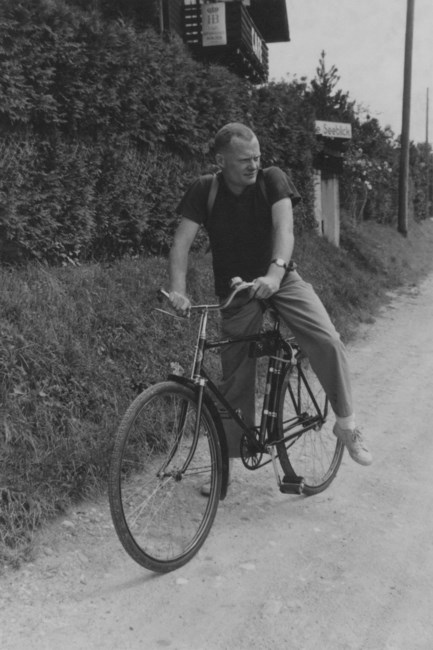
Joe had a deep love of nature. As a young man, he travelled to Germany and hiked in the Tyrol. He participated in annual bird counts in Regina, and joined Sheila in a love of birding – despite owning a succession of cats. Annual fishing trips to northern Saskatchewan were mostly an excuse to be outdoors with friends and family. Joe and Sheila delighted in opera and fine food, and their house was often full of friends and comrades.
Joe had an epic and lifelong love affair with beer. Beer was the universal solvent for collectively working through difficult problems of political thought and socialist strategy. For decades, Joe convened a weekly ‘seminar’ of students and colleagues and friends over beer in Regina taverns.
Among friends and family, Joseph’s physical fortitude and stamina was legendary. In 2006, Joe was diagnosed with a serious case of esophageal cancer, underwent major surgery, and quickly moved on with his life, with his cancer in full remission. In 2014 and then in 2016, Joe was heartbroken when first his brother, and then his beloved Sheila died. He lived quietly and independently in his home and garden until the last month of his life.
Joe prized political engagement and the determined struggle for social justice. He instilled in his children the importance of individual and collective responsibility, consideration, and thought for others. He is remembered by friends and family for his warmth, generosity, and his irrepressible and contagious laugh. His wide network of friends and admirers, and the lasting impression he left on a generation of students and comrades, were evident in the outpouring of reminiscences and kind wishes following his death.
The memorial to celebrate Joe’s life will be held in Regina on Sunday, November 26, 2023 from 1:00 p.m. to 4:00 p.m. at Local Market, 1377 Hamilton St, Regina, SK. Friends are invited to bring photos and share memories.
Show your support
Add a Memory
Share Obituary
Get Reminders
Services
SHARE OBITUARYSHARE
- GET REMINDERS
v.1.18.0