
OBITUARY
Kenneth Chenault Keyes
September 27, 1961 – October 24, 2026
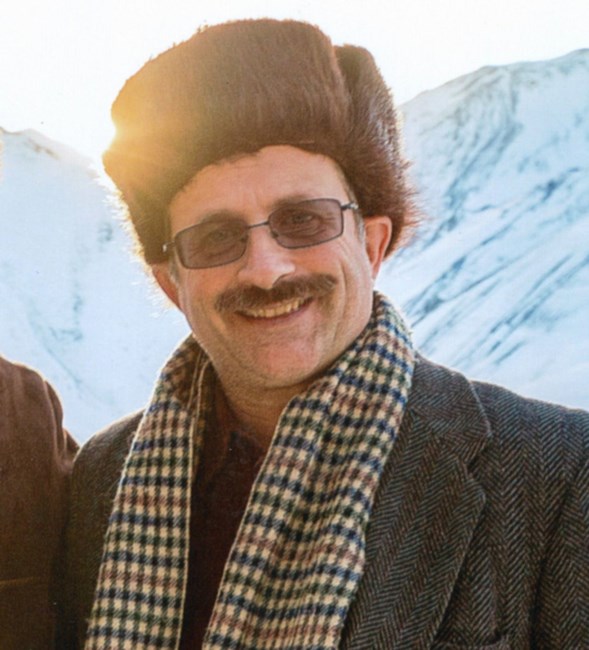
Kenneth Chenault Keyes was born on September 27, 1961 in Kennewick, Washington to Valerie and Mark Keyes before the family moved to Kent, WA in 1962. The second of five boys, Ken was an avid reader, naturalist, and gifted wildlife artist, collecting, drawing, and cataloging specimens. He was fascinated by anthropology, learning as much as he could about various cultures and languages by reading books and National Geographic magazines.
He enjoyed family hunting trips for upland game birds in Eastern Washington, happily lost among the flora and fauna of its wheat fields, sagebrush deserts, canyons, and hill ranges. He became a Christian in high school where he learned German, the first of many languages, followed in his 20s and 30s by Mandarin, Cantonese, Russian, ancient Hebrew, and koine Greek among others—too many to name. From an early age, Ken demonstrated exceptional intellectual and athletic abilities. A state champion wrestler and Junior Olympics judo competitor, he distinguished himself through both physical discipline and remarkable intelligence. But it was his extraordinary aptitude for languages that would ultimately shape his life’s calling, taking him across the world in service to others through linguistics and Bible translation. After college at Washington State University, Ken was employed in overseas shipping in Seattle, where he met many Central Asian friends and first began exploring translation work.
In 1997, Ken received training at the International Linguistics Center (ILC) in Dallas, Texas, to prepare for Bible translation, where he met Kathy Niver, a member of SIL Global and Wycliffe Bible Translators who had recently returned from Africa. They married in 1998 and Ken earned his MA in Linguistics from the University of Texas at Arlington in 2001.
In November 2001, Ken and Kathy joined Wycliffe as a couple. In January 2002, they left for Saint Petersburg, Russia, to pursue Russian studies for work in Central Asia—areas that were formerly part of the Soviet Union. Once settled, they dug into language learning. Ken quickly gained command of the focus language and of Russian.
Ken joined the translation team, providing exegetical preparation for Hosea, Joshua, and Job. Perhaps his even greater contribution was converting the existing translation files into a format that could be more easily edited, archived, and used in the newly-developed Paratext software. This improved consistency, provided readily available reference materials, and sped up the translation process. He also continually contributed to the exhaustive dictionary. During this time, sons Maxim and Marat Peter joined the family.
As that translation project neared an end in 2010, the family moved and began work in a neighboring country. Again, Ken soon mastered this national language and began looking at minority languages spoken by smaller people groups that lived in the mountains. Ken made several trips to remote areas to develop relationships, explore their languages, and gain their trust. Ken’s linguistic ability, his computer skills, and huge heart were very apparent and active. Ken sought out men of peace in each language community to champion their language. He provided computers for their work and developed custom keyboards that allow anyone to type their language, even those with unusual letters, using phones and computers. Two of his keyboards have each been downloaded over 1,000 times.
Ultimately Ken focused on one language with two eager translation workers. They began translating Genesis as it contains history that they are somewhat familiar with from the dominant religion of the region. After they finished the draft of Genesis and while Ken looked for people to help with the involved process of checking Genesis, they began work on Mark's Gospel. Ken continued to meet and encourage men in several languages. Together they created picture dictionaries in the regional languages which featured culturally appropriate drawings that highlighted common objects and provided translation into the national language.
In 2017, the Keyes family returned to the USA and bought a house in Dallas, Texas, near the ILC center where Ken and Kathy had studied. Here, Ken continued to work with the language teams remotely via Zoom and other technologies, but even with trips back to encourage the men, the work grew increasingly difficult.
Ken was asked to orchestrate getting the instructional videos for SIL's Paratext edition 9 translated and made accessible via the internet for other major languages. Those videos have been used globally. Because of the work of Ken and his team, and now with the use of AI, the over 100 Paratext training videos can incorporate new desired features for each language in the 10th edition without having to rerecord everything.
Ken was in Dallas near a superb hospital system when his brain cancer (glioblastoma) was discovered in October 2022. He received state-of-the-art care in the four years following his initial surgery.
Sadly, the cancer gained in ferocity and his body could no longer fight it. After a rapid decline beginning in September 2026, on October 22, Ken had a prolonged seizure from which he came in and out of consciousness. While his family was at his bedside in the early morning of October 24, Jesus took Ken home.
In addition to his wife Kathy, Ken is survived by his sons Maxim Andrew and Marat Peter, his mother Valerie Drumheller, and his brother Nathan (wife Rae and children Daniel, Zachary, and Hannah) and Forrest (wife Annalisa and children Aviah and Anson). Ken was preceded in death by his father Mark and brothers Matthew and Stewart.
Ken will be buried at Mountain View Cemetery, Auburn, Washington, but his memory will be present around the world.
The family suggests that memorial donations be made in Ken’s name to SIL Global specified for Paratext. Use this link: https://give.sil.org/ken-keyes.
Show your support
Send Flowers
Add a Memory
Share Obituary
Get Reminders
Services
Visitation
Funeral Service
Committal Service
- SEND FLOWERSSEND
FLOWERS SHARE OBITUARYSHARE
- GET REMINDERS
v.1.18.1