
OBITUARY
Gordon Edward Call
December 7, 1935 – August 8, 2025
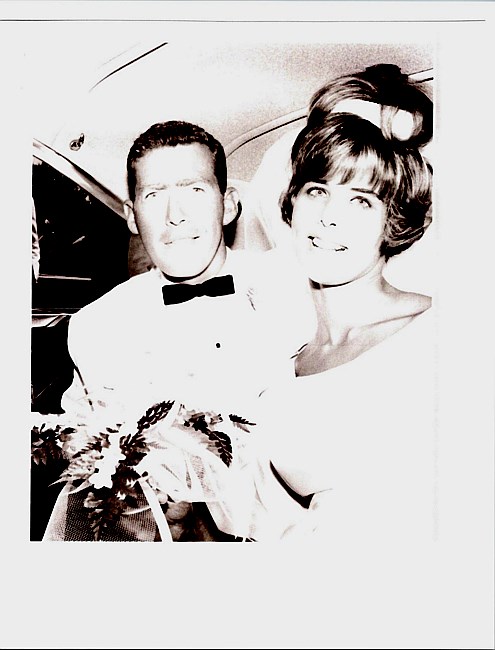
My Life- Gordon E. Call
The country was experiencing what has been referred to as the Great Depression that started in 1929 and lasted until 1941. In recounting her life my mother, then Catherine M. Mays, told me stories of the dyer situation she and her family, found themselves after the depression began. She and her three sisters moved in with various relatives and living was hard. There were many aunts and uncles that also began to live together in survival mode. On one occasion an uncle was able to shoot a robin and bird stew was served as a special treat. My mother met my father, Ray J. Call, through a friend. She was especially attracted to him as he was one of the few that had a job. After a short courtship they were married August 26, 1933. They were each twenty-two years old. My father's sister, Lucille, moved in with them and they all got along very well. They lived in Seattle at 520 East 56h Street. Early in the evening of December 7, 1935, I was born at the St. Luke's Hospital in Seattle, Washington. My mother was then twenty-four years old and my father, twenty-five.
My memory wasn't so developed until I was about five years old, so most of the following to that age is from my mother's recollection. When I was one year old, plus a few months, my father got a job that was funded by the Works Progress Administration (WPA) and he, my mother and I moved to San Francisco. We were there to join in the Pedestrian Day opening of the newly constructed Golden Gate Bridge on May 27, 1937. And we were the first to walk out on the Bridge when it was first open, the whole family. We lived near the panhandle of the Golden Gate Park. The one thing I do remember from age three or four is the corner candy store with the wood floors. We loved California and San Francisco, and having a "stay at home mom", she and 1, along with Aunt Lucille, who was a frequent visitor, spent many enjoyable days at the Park. The 1939 World's Fair was on Treasure Island, a man made island in San Francisco Bay to celebrate the completion of both the Golden Gate Bridges and the Bay Bridge. The whole world was invited and San Francisco was a glorious city. A lot of fun, my parents and their friends were all young and had a lot of fun. Many relatives came to visit us and take in the World's Fair, and so did my mother. And then we had a fiesta time every year after that to celebrate the Golden Gate Bridge and the other bridge. Lucille and Harry Mead were married September 7, 1938 in San Francisco. They lived near us and took me to the Golden Gate Park every day and we really enjoyed ourselves.
In 1940 we moved to the new and very large, Sunnyvale Housing Project, located on the outskirts of San Francisco, two blocks for the Cow Palace. We had a two bedroom end unit, at 65 Santos St., with a big yard. It was build for low income people, but a nice place to live. Continuing from my recollection, on my sixth birthday everyone was coming to my party. Well, the event of the day was not that I was six years old but that Pearl Harbor had been bombed by the Japanese and we would now be in World War II.
My mother, father, Lucille and Harry were there when the news came in. For the next three and a half years it was blackouts, air raids warnings and rationing. The submarine net was placed across the entrance of the San Francisco Bay. Other than that life went on pretty much as normal for us. We had very little money but neither did our friends so it didn't matter much. I remember mowing lawns, organizing kids to sell flowers. I grew flowers and collected pine cones from the nearby park. Then several children of my age were commissioned to go door to door selling to same. I somewhat remember that I got five cents a bunch and they got a few pennies, or maybe a nickel, for selling. I typed (one by one - no copy machines) and distributed flyers that mom took in sewing and made button holes with a special machine. She also made sequence jewelry that I sold door to door and she had Tupperware and Beauty Care Cosmetics sales parties. At Christmas time I bought cases of cards for door to door selling. Once Grandma Mays sent us $5 for food. I was sent to the store and lost it on the way. My mother and I desperately looked for the S5 with no luck. Kraft dinner, at $0.14 a box, was a good menu choice. Also, Blackie, my cocker spaniel puppy, was very sick. Being an only child with all cousins of my age living far away in Washington, Blackie was valued as a very dear close friend that was in my care. I prayed, "please God don't let Blackie die". Blackie died. At about age 10 my thoughts about money and God were set. I was going to get lots of the first and none of the second.
My grammar schools were Visitation Valley 1941-44, and Guadalupe 1944-48. We annually visited my grandparents on both sides and vacationed in Washington. We never owned a car, and always made the trip by Greyhound or Trailways bus. In 1945 in July the Atomic Bomb fell on Hiroshima and Nagasaka and the War was over and August 16, 1945 was the big celebration for VJ day. The war was over and everybody was happy and celebrating. But, shortly thereafter things were not going well between my parents In recollection she said "And we had a good life together and enjoyed everything. We moved to Visitation Valley in south San Francisco and took in the parks and all the things to see and do and we had a good life together, but in 1950 my marriage was over, just one of those things. But it was a good life while it lasted." After the War, when I was ten years old was about the time I was aware that things were not going so well. My father was working as a manager of a Haslett warehouse. The custom was a 5 ½ day work week, with payday being at noon on Saturday. I would accompany he to work each Saturday with the specific task of getting him home before all the money was spent, the bar being the usual place to cash his paycheck check. Well, I enjoyed playing in the warehouse, driving an electric type of forklift and operating the freight elevator, along with consumption of unlimited Nestles candy bars from damaged cases. At the bar I got to be pretty good shuffle board player and pinball. I don't remember how long that lasted but at some point I was not going with him on Saturdays. This was a time when it was very unusual for people to divorce. At about 12 years old, I was discussing their relationship with my mother and sarcastically asked what do you have to show for all the years of marriage? She answered "you". End of discussion.
Our home addresses in San Francisco were, 506 3rd Ave. Jan '37 to Jan '41; 65 Santos St Jan '41 to Jul '55; 47 Baywood Ct. Jul '55 to Jul '56; and finally 1150 Dolores St. Apt. 1 Jul '55 to Jan '57.
I was active in the Boy Scouts for many years, and then several years in the Sea Scouts Around age 15 many weekends were spent at the Sea Scout base located in Aquatic Park, near Fisherman's Wharf in San Francisco. This time spent out of the housing project on the weekend which was a good thing. As a teenager I had a few neighbors friends but not truly close friends. The housing project was in a largely undeveloped part of San Francisco so from age nine I was commuting to school by public bus. In that situation the friends at school tended to only be seen at school. About age 10 I heard of a family friend that made a lot of money as an engineer. So, I decided that's what I'll be. This type of thinking was foreign to the kids I knew in the project. Following a path to become an engineer at Balboa High School, for additional training my lunch time was spent in the mechanical drafting room with a few other seeking additional training. My high school was not in the best part of town with more than its share of gang types. A few of us planned improve our situation in time. After grammar school it was Denman Jr. High, graduated (9th grade) Jan 13, 1951; Balboa High School, graduated Feb. 1954
Although the essentials of food, clothing, and housing were paid for by my parents the word allowance was not part of my vocabulary. Some of my jobs beginning as a teenager were as follows.
Madrona Beach Camino Island, WA: summer 1951 boathouse job $0.75/hr US Post Office: Christmas rush Dec. 1952 night shift 11PM-7:30AM $1.72/hr Gantner & Mattern: summer job 1952 stockboy $0.50/hr School Lab. Asst. Balboa Hi: Feb - June 1953 $50/mo Mt. Zion Hospital: Lab Clerical after school Feb-June 1953 $1.25/hr Pacific Rod & Gun Club: launching clay pigeons $0.75/hr from time to time S.S. President Cleveland: Ordinary Seaman summer 1953 $228/mo plus OT Banner Play Bureau: helped them move $10/day Attorney's Messenger Service: Process Server evenings 1953-54 Industrial Relations of Calif.: Jr. Clerk April *54+ $200/mo. S.S. President Wilson: Ordinary Seaman summer 1954 S.S. American Transport: Ordinary Seaman summer 1955 Public Works Dept: Surveyor on proposed Southern Bay Crossing summer job.
About 1949 a union business agent moved in as our next door neighbor. I think it was that family that introduced my mother to Al Del Carlo, an assistant District Attorney in San Francisco. He became her divorce attorney and then dated her almost twenty years.
Al provided some guidance in advising me avoid wasting time hanging out with the kids in the project. His brother Dan Del Carlo was president of the Building Trades Union and a very "connected" guy. He made it possible for me to become a member of the Sailors Union of the Pacific which was an ideal high paying summer job. The policy was for member to add their name to a waiting list that could gain seniority for up to ninety days. So at the start of summer vacation I was top of the list and could choose a ship that fit my schedule. I would always choose the Orient run which was away six weeks in duration. As a seventeen year old I was issued a U.S. Merchant Mariner's ID clearance from the Coast Guard March 25, 1953. At the time it was common to write letters and after my mother's death I found that she saved all of my letter which now serve as a journal for me to better recall the past.
My first time at sea was as a deckhand aboard the passenger ship SS President Cleveland This was a time before ease of communication with phones, so people wrote letters. I no doubt wrote to several people but it's one's mother who would tend to keep letters. did and referring to them allowed me to recall notable travels out of the San Francisco Bay area. Aboard the Cleveland, a few hours before arriving in Honolulu on the way to Hong Kong, June 29, 1953 I wrote, ... it seems like we have been crossing the ocean for a month. They have about five movies for the crew each day, all good. As an example of the food, today I had turkey, etc. for lunch and steak for dinner. My watch doesn't have any breakfast because we sleep 'til 11 A.M., work 12 to 4 P.M., eat at 5 and see movies or play cards 'til 12 P.M. and go on watch again til 4 A.M.. We then eat a snack and sleep 'til 11 A.M. Don't worry, I'm not in it but in one crap game I've seen three guys that work for the house pull in over $1,000 in two hours at a $25 limit. When I first saw them it looked like they robbed a bank (a stack of bills about two inches high of $5s, 10s, 20s, with a couple of $100 bills. P.S. Just now, still at sea maybe 100 miles from Honolulu a stowaway tried to jump ship. They caught him off Yokohama on the last trip and were bringing him to the doctor. Two mates saved him and now he keeps pounding his head against the wall.
About ten days later the ship arrived in Yokohama and I wrote .... Well, we finally made it to Japan. On the way the stowaway tried to hang himself. About two days out of Yokohama we hit the end of a typhoon. There were waves as high as the ship and during this time we had to be on deck to fix things. The fog was so thick that you couldn't see to water from the ship so we were late getting in. It was just like a war picture. Wile we were just sitting there in the fog, too thick to move, a Jap tanker came up astern and missed we by not more than twenty feet. We went through a submarine net that was put up because of the Korean War. There were junks all over and boats that you wouldn't believe could float. In Japan as soon as you get in a cab he starts honking his horn and doesn't stop 'til you get where you're going. The people run like chickens when they hear the horn. ... I'm learning all the tricks at the Black Market.
The next letter was written about Manila, Philippines. The four day run was hot and windy with many people sunburned. We passed many of the World War II Pacific naval battle sites. In Manila Bay there are about fifty half sunken ships from the war. Manila is getting to be a rough place because of an upcoming election. Three more stowaways were caught one mile out of Manila on our way to Hong Kong. They were given life jackets and thrown overboard.
The next letter was about Hong Kong. As soon as we hit the strait that goes into Hong Hong the hills were green and many junks were in the water, very beautiful. On the junk s everyone works, including old women and children about four years old do the same work as the men. It was very hot and the air stuffy. We tied up at Kowloon, looked around, and took the ferry to Hong Kong. In Hong Kong I took Peck Tram cable car up 1,400 feet for a spectacular view. There are modern buildings but a greater area of slums.
You see little kids, some with their heads caved in and some with sores all over their body. There are lots of little kids that ask for money but one must be careful as they will rob you blind. We (refers to other crew members) rode around in rickshaws and went to a couple of air-conditioned shows to beat the heat. The ship sailed at midnight and by 1 A.M. the third class section, where all the Chinese travel, smelled and looked like someone dumped a garbage truck. They are the dirtiest people I have ever observed They blow their noses onto the deck, as well as dripping sticky food, and a lot more They'll be on board for a long time, destination San Francisco. Apparently I was writing to many people but would not be writing from Yokohama as it's not far from Hong Kong and I could only get a five dollar draw for both ports on the return trip.
The next letter posted from Honolulu describing the ocean crossing. At Yokohama just before sailing ship personal caught a guy they thought was a stowaway, put him ashore and later found out that he was a passenger. On the way to Honolulu we went through several thunder showers. They only last about five minutes but it was the heaviest rain that I have ever seen. And the sound of thunder was so intense that one would think the ship was exploding. This was accompanied with gale force winds. We have been working twelve hour days. I took some pictures but the film melted in the heat. Then a short vacation and back to high school for a semester, graduating in February 1954. I then worked for the State as a junior clerk for a few months while waiting for my ship. The pay scale for a month of full time work was $200.
Then May 30, 1954 I sailed on the SS President Wilson sister ship to the Cleveland and traveling a similar route. One day out of San Francisco the water was rough the weather cold. As before I had the 12-4 watch and as we traveled west the clocks would be set back with the passing time zones, resulting in a five hour watch much of the time. In Honolulu another crew member and I got off watch early and went surfing at Waikiki. One time I was way out and road a good breaker all the way in. But on another try the board got away from me, separating us by fifty feet. I was about 500 feet off shore and began to swim. I found myself in water about two feet deep covering a coral reef. My feet were cut a little by the coral but no resulting infection. I've been watching many movies on the ship that have all been good.
In Yokohama another guy and I looked through some shops and ate in a fairly nice restaurant. The seafood chow mien was excellent. The total cost for both of us was 300 yen or about 75 cents. Traveling to Manila the heat was so intense in my bunkroom that I planned to sleep in the recreation room. We passed many beautiful jungle islands.
In Manila to beat the heat it was common to go to an air conditioned movie theater and the largest, most modern, in the East is there. It this port one seaman was taken off the ship feet first. He didn't show up for his watch last night, wasn't around in the morning, and was thought to have gone overboard. A search of the ship found him in one of the toilet stalls, apparently dead for about twelve hours. His head was swollen and his eyes were glassy. He was taken ashore for an autopsy. The crew figured he took poison and a needle of something in the vein going to his heart. If it was heroin the ship will be crawling with customs when we return to the States. The ship developed a vibration so a diver checked the shaft. The problem was fixed without going into dry dock. I was pleased that I worked fourteen hours overtime on my day off making $22. That's eight hours at $1.37 and six hours at $1.87, which was good money but the weather was very hot. After work we'd go ashore for swimming and a movie. For Manila June is the hottest, with the most rain, month of the year.
Nothing new in Hong Kong from my first trip. I was now on the 4 to 8 watch which is better then the 12 to 4 watch I had on the last ship. I wrote that this is the last passenger ship that I hope to sail on as you don't learn anything and there is too much cleaning instead of doing a man's work. The captain is planning to leave Hong Kong 1 ½ days early as a typhoon is expected. The qualified harbor pilot is not available so we'll be sailing as scheduled. I think a family friend in San Francisco provided the name Jimmy Ling as the Hong Kong contact person for buying things. I made contact and he was truly a big time wheeler dealer. He supplied all the big stores in the United States with women's gowns and is featured in the best fashion magazines. Cost of the gowns in Hong Kong are one-third of the price of those sold in the States. I brought back a fine silk robe for my mother that she later gave to Carole, my wife. I learn that mom moved from 65 Santos Street in the Sunnydale project to a rental house at 47 Baywood Court She was so happy that she invited all her friends to what became a rather noisy party The police were called but with many of the guests holding high positions in city government I expect that spirits were not dampened The Sunnyvale housing she left was in a downward slide. Now it's notorious as a very dangerous gang ghetto housing project.
In Kobe one of the crew was fined $1,100 for trying to get two cases of cigarettes ashore. Most, if not all countries, place high tariffs on imports coming into their territory Arrived in San Francisco July 9, 1954.
Then in September 1954 I enrolled at San Francisco City College with an engineering major. In June 1955 for a summer job it was again on a ship. This time I sign on a freighter making the Orient run.
I left San Francisco aboard the SS American Transport June 17, 1955. From Pearl Harbor I wrote "Having a good trip on a good ship with a good crew." The ships can accommodate up to twelve passengers. There are three seamen assigned to each watch The watch is four hours on then eight hours off around the clock. The three seamen rotate spending equal time on standby, as lookout, and at the helm. At first I didn't think I was going to steer the ship as it's put on automatic pilot soon after it sails. But when we were half way to Yokohama the gyro broke and we had to use hand steering for four days Coming into port I got to steer the ship almost all the way in but an Able Bodied Seaman has to take the helm when the pilot is aboard. Some days during the hours we're not on watch we work overtime.
We arrived at Yokosuka, the largest navy base in Japan July 6th. It was the main base of the Jap fleet during World War Il. There are many huge gantry cranes. There are caves in the surrounding hills where supplies were stored. Many oil storage tanks are also underground.
At Okinawa there was a typhoon in the area so we had to wait for three days until the port was opened. During this wait time we cruised at about four knots, ready to run if the storm changed course.
From memory I recall that at a small jungle village in the Philippines south of Manila with a huge volcano towering over the village. There was no pier so the ship was anchored close to the beach to pick up a load of copra. Copra is the dried meat of the coconut from which oil is extracted for many products. Gangplanks were positioned from the beach to the ship and natives formed what looked from a distance like a trail of ants from the jungle onto the ship and back to the jungle. Each was carrying a fifty pound sack of copra on his head or shoulders. The naked kids and bare breasted women were in the water playing and washing their water buffalo while the men worked. The area was truly beautiful. I gave one fellow something from the ship stores like a bar of soap or crackers at a value of about ten cents for coconuts. He delivered more than enough coconuts to cover my bunk before I noticed and said enough.
We anchored out at Hong Kong and went ashore by launch. I bought some things from Jimmy Ling. Then it was on to Yokohama, arriving July 29, 1955, and then on to San Francisco, arriving August 10th. The next day I stayed onboard for a run to Southern California then back to San Francisco leaving the ship August 22" in time for the Fall semester of engineering.
After the Spring '56 semester, my summer job was on a survey crew working on the San Francisco side of the proposed Southern Crossing bridge. Then it was back to City College, graduating January 25, 1957. I was living at 1150 Dolores, Apt. 1, San Francisco.
Then, without any break in January '57 I began work as a concrete inspector for Pacific Gas & Electric on their Kings River Development, consisting of the construction of two dams and an underground powerhouse. I was based at Balch Camp. The work was interesting at first, but after six months a bit repetitious. So, in July '57 1 decided to go for the money. Dan Del Carlo, who got me into the Seaman's Union, fixed it for me to become a member of the Operation Engineer's Union. I went back on the same construction project but this time working for the contractor rather than the owner, making more than double to pay. I learned a bit about heavy construction. One time I hiked the long tunnel leading to the powerhouse chamber that was being shaped from the solid granite mountain. In the chamber one wall had holes drilled, were stuffed with dynamite, blasting caps attached ready for a shoot. Had my flash camera and took a picture. I later learned that it was very dangerous to do that as even such a small electrical charge could activate the blast. Another time I was asked to lower a very heavy six foot pry bar down a vertical shaft to miners working thirty feet below. With the boy scout training I thought I knew just what to do. I tied a timber hitch around the bar and just as I started to lower the same it slid free of the rope coming very close to impaling one of the miners. And we were in the heart of rattlesnake country. I heard that a nest of hundreds was dynamited and rattlesnakes went flying in all directions. Working around heavy equipment, injuries were not unusual. We were working a lot of overtime and the money was good at the time. Working through the union on construction was paying far above a typical wage. I made $2.60 per hour regular and $3.90 on overtime, with room and board provided. After a year of work it was time for more formal education..
I enrolled at San Jose State College January 1958. I later learned that their engineering program was not yet accredited. I decided that I could best achieve my goal of becoming a civil engineer by joining the Army Corp. of Engineers. June 1958 with thoughts of furthering my education in engineering I relied on false promises of an Army recruiter and joined for a three year tour. When my streetwise friends were told that I enlisted they thought I was out of my mind. Turns out they were the wiser. Sometimes you can learn more from the street than in school. It was a horrible mistake resulting in the waste of three years during which had I taken a different path would have probably resulted in me becoming a registered civil engineer. The recruiter was more that happy to assure me that I was on track to achieve my goal. This was when the promises of recruiters were oral while now I've heard they must be written. Anyway after basic training I was to attend their engineering degree program and become an officer in the Corp. of Engineers.
I began active service July 9, 1958. I turned myself at the Oakland Induction Center in the morning but we didn't get into bed at Fort Ord until 2 A.M. Then everyone got up at 4 A.M. to stand in line, observing the Army policy of hurry up and wait. We were being processed, receiving cloths, shots, hair cut to a length of ¼ inch, and taking tests. It's very cold and we wear our hats to bed. It looks like a prison camp with all the skinheads.
For basic training I was assigned to Company D, 1* Platoon, 11* Battle Group, 3rd Brigade, Fort Ord, California. I was now Army property. To stress the concept we were told that should we become sunburned it would be considered damaging government property. Our overlords are required to give us only one hour of sleep per night. They don't give us much more than that. I was pleased to learn that after basic I would be assigned to the Corp. of Engineers. At Fort Ord I prepared an application for O.C.S (Officer Candidate School) and security clearance. However, the O.C.S. specialist then said it would be best for me to go to the Engineers school first and apply for O.C.S a few months after I get assigned to a post. They said if I go now I would have to waive my enlistment guaranty and may end up in the Artillery or Infantry. At the end of basic when we received our orders for those of us that expected to be stationed with the Engineers in Virginia at Fort Belvoir we learned that we were all going to Fort Leonard Wood is Missouri.
Fort Leonard Wood is a training camp for Combat Engineers. October 3, 1958 reported to Company D, 1ª Battalion, 1ª TNG, Regt. Engr. I wrote that this part of the country shows me nothing. I had pictured an engineer as a professional person but there everyone is called an engineer. I wished that I had known that San Jose State would be accredited as I'm sure I would have finished rather join. After being away from the books for a while I would sure like to get back to something that would take a little mental effort November 28, 1958 I left Fort Leonard Wood for the East Coast for shipment to Europe Army policy seems to be send the cooks to mechanics school and the mechanics to cooks school.
I joined with the promise that I would be in the Corp. of Engineers on construction projects. After basic training I was sent for a second eight weeks of Combat Engineer training. When my group reached Fort Dix for overseas shipment the Army had a need for bodies in the Quartermaster Corp., and that's where we all went. These where typically rugged guys from the hills that didn't do well behind a deck or as a boy. It took me about a year, with letters to my Congressman, before I was transferred to an engineering company. Was stationed one year in Munich and one year in Frankfurt, Germany. The other condition of me joining was that I could get leave to be at the 5Oth wedding anniversary of my grandparents. Another broken promise. The Army taught me the value of freedom and built a great dislike for the military structure. Another broken promise was that I'd be sent to OCS and serve my time as an officer.
June 2, 2002 - A Touching Moment - "Granny" looked through an album, noting the good times with many friends (Lena, Gus, Al, Pattie, et al) and relatives (her parents, Dorothy, Myrtle, John, et al) who are now gone. "Folks lived 'til they were 91", she said. I had earlier reminded her that it was June and that she would be 91 this month. Upon completing the album she said "it's been a good life", and tears streamed down her cheek.I felt sadness as if we were saying our final goodbye.
Part2
This is continuation of my life story. Many years ago I wrote about myself from birth to age 25. My age is now 84 and I'll be going back 59 years, and take it from there to the present time.
I was in the Army from July 11, 1958 to June 16, 1961. After basic training at Ft. Ord I was sent Ft Leonard Wood for combat engineer training, and after that to Germany for two years, from December 1958 to November 1960. While waiting for assignment to an engineering company someone decided that the Quartermaster Corp needed bodies my group was assigned to the 7th Army QM DS Co in Munich. The group of combat engineers in my graduating class were tough guys who liked to build things and also blow up things, under combat conditions. They were not happy being reassigned, nor was I.
From Munich Dec 27, 1958 l wrote home the following: I really do like it here in Bavaria and Munich. The younger people about my age are very friendly toward Americans. Our fort is located in a slum area at the edge of town. I visit a Gasthaus (bar) quite a ways from the fort, in a high class part of town. I have gotten to know quite a few Germans in Munich. In a Gasthaus of the higher class part of town if a German can speak English he will introduce himself and start a conversation. He'll introduce you to others and they'll all want to buy you drinks and show you a good time.
March 26, 1959 l graduated 15th out of 185 from the Seventh United States Army Noncommissioned Officers Academy in Baden Baden, Germany. This school was recognized as the best and roughest NCO academy in the Army. Aug 3,1959 | got the results from the investigation about O.C.S. and it boiled down to the fact that they aren't going to shake up the three colonels on the board for a P.F.C. It's very difficult to transfer out of the 7th Army. With my first sergeant, who had a lot of military connection, in mid August we drove to the 200 miles to Heidelberg to meet with the Post Engineer. We got a very late start so when on the Autobahn (no speed limit) I drove the Mercedes at 120 miles per hour and we arrived early for the appointment. The colonel we met with said that he had an assignment that would be right for me. It would be at what the Army calls a double fenced area (top secret) and sounded very interesting.
After a year and much effort, Nov 21, 1959 | was assigned to the 69th Engineers Topo Co., based in Frankfurt. My transfer is a story in itself including contact with a Congressman, an Army General, and others. When transferred to the 69th Engineering Co. I arrived driving a Mercedes, with no transfer orders yet received, months later the company clerk told me that it was suspected that I was a CID agent sent to check on the Company. The friend who took me to Heidelberg to meet with the General told me that on this new assignment I must be very selective of my friends and stay pretty much to myself, watching everything I say or do, for security reasons. I was a surveyor, issued a 45 cal pistol, and I think as part of the process I received a security clearance. It was a topographical mapping company with a mission to accurately map such things as the main train station so that if the "Ballon Went Up", referring to the Russians invading, the Americans would retreat, and certain structures would be bombed. The Berlin Wall separating east and west Berlin was under construction and tensions were high. I was flown there Jan 14th, 1960 and saw the modern west vs the backward east, a day vs night comparison.
Soon after I arrived in Germany I bought a 1956 Mercedes sedan and toured many countries in Europe. Especially enjoyed small towns in Germany. My favorite was Garmisch, a resort village in the mountains near Innsbruck, Switzerland. In Garmisch the Army appropriated a large facility that Hitler established as dating place for german military on leave. As a US solder our cost to stay was $1.00 per day. At US military facilitys cost of beer $0.10 per glass, cigarettes $1.00 per pack. Went to Rome with some Gis and payed $1.50 per person for nice lodging in the middle of town.
May 22, 1960 my mother and her friend Al Del Carlo flew into Frankfurt for a five weeks tour of Europe. I took leave and joined them with me doing the driving. My mother kept a journal with extensive daily entries which is filed with her papers. The itinerary took us from Frankfurt along the Rhine River and to many areas of Germany, and then to Switzerland, Italy and France. Her journal paints a picture of how things were in Europe only fifteen years only the end of World War II.
After being stationed in Germany for two years I was transferred the 537th Engineering Company at Fort Belvoir, Virginia for my remaining six months. It was full on playing war games night and day. Think poison ivy, insects, snakes, and rain followed by hot and humid weather. Also I was attending night school and working on correspondence course started sometime ago. Made extra money playing cards. The Cuban missile crisis is front page news so I have concern that my discharge date could be extended Was discharged June16,1961 and with another dischargee drove straight through from Virginia to Washington changing drivers at each fuel stop. There was a big family gathering for my arrival at my grandparents' home on Camino Island.
In July 1961, I was back in San Jose and moved into Allen Hall at 325 So. 10th Street, ($9.50 per week for a room) and enrolled in ten weeks of summer school consisting of four courses, Strength of Materials, Engineering Dynamics, Public Speaking and Philosophy. I considered the cost high at $11 per unit ($110 for the 10 units). Met lots of nice kids. I drove out toward Mt. View to see what the land was like and noted the growth to come but that big developers had control of most of the land. I will focus on San Jose real estate. When summer school was over I moved to 151 So. 13th St., Apt 8 and through the Operating Engineers Union began working as a surveyor on a 400 acre General Motors site in Fremont. They bought the land at a price of $400 per acre by not raveling that they were the actual buyer. When word got out, land value in the area went from $400 per acre to $2,500 per acre. I took advantage of the school's program for working people, with classes offered from 4 pm to 10 pm.
Landlords near the college typically rented by the person and match you with others. I paid $35 per month, based on four people being in a two bedroom furnished apartment. The landlady told me that the owner of this building owns many around the college and is planning to build more as fast as he can. One needs money to make money so l plan work through the union for a while before going back to school.
November 11, 1961 made a $2,000 deposit to buy 653 South 11th Street. It was an old house in need of a lot of work, but close enough to the college for a student rental. The price of the property was $12,500 paid by a $6,000 1st, $4,000 2nd, $2,500 cash, subject to me being able the get an $800 loan on my Mercedes. My parents had never owned real estate, nor had I, so now I do and here we go. My goal becoming wealthy suffered a three year delay with my enlistment in the Army. From a draft of a letter, dated 27 July 1958, send to a friend when I was in basic training stated "I got to straining the brain on the way things will be about ten years from now as far as being another Harry Doelger." That was a builder of thousands of homes in San Francisco. "Doelger started with one house not too many years ago." I went on writing about my forecast for population growth, people's living patterns, and related thoughts.
Then the work began to make the house livable. I had two close calls in the process. One night a faulty toaster almost set fire to house but the two deserted dogs that came with the house started barking a warning that woke me. And on Dec 27, 1961 | was working late and the incident was caused by someone removing the exhaust pipe that had run from a gas heater in the enclosed porch through the roof. Probably the only thing that saved my life was that I worked until 12:30 AM and by that time there was an odd smell. If I would have gone to bed as usual - too bad. I wrote a note to myself on the spot about the event "even now my lungs feel caved in kind of and I feel a little faint, place is airing out". Work on the house was finally finished and then furnished with two single beds in each bedroom maybe three beds in a back inclosed porch area I think. It was at the low end of rental market for students. I still remember hanging around the college housing office to hustle some renters. My first renter was Jim Kincaid, who crashed his Jaguar on the drive from southern California and had his head wrapped with a bandage when I met him at the housing office. It didn't take long before all beds were rented. Jim was also very interested in real estate investing. He told me stories about people larger parcels in the Santa Cruz mountains, dividing them and selling at great profit. We discussed many real estate ideas and he said I should meet a student with similar thoughts that he knew. It was Hugh Bikle who also became a renter in the old house, and we had many conversations about a future in real estate. Without much of a written record I will try and remember some highlights of this 55 year partnership that still exists.
In 1963 we formed Call-Bikle Investments, the 11th Street house was sold, July 11, 1963 and the partnership bought a "teardown" at 215 So. 11th St, with some investor cash and the seller agreeing to take a second, subordinate to a construction loan. We drew plans for a three story apartment building, found a contractor that would build it at cost, and delay his profit until we had a takeout loan. Hugh and I would be active in the construction. This new property was well located, close to the college and adjacent to fraternity row. We only rented to girls, six to a three bedroom apartment. During this period Hugh and I shared an apartment at 679 So. 11th St, Apt 4. Also living in the same complex was Carole Dickason, who became my wife August 22,1965.
The building under construction was three stories high with four three bedroom units and one studio unit. There were a few events during construction that I still remember.
One day a business agent from one of the trade unions came by to check membership cards. Hugh and I were told that we were not allowed to work on the building without becoming union members. The fact that we were the owners made no difference as it was a commercial building. With the thought of making business contacts I had recently joined the Mason Order so I had on a Masonic ring and I knew the secret handshake. On the agent's finger I noticed his Masonic ring so I identified myself and told him what I thought about him being un-American in not letting us work on our own building. A settlement was reached with either Hugh or I joining the union. Doing construction, through the night we took turns standing guard, shotgun in hand with shot removed and replaced with salt, to discourage stealing. Jan 14,1965 we were loading in refrigerators, plowing the ground so it would dry enough to pour the driveway and walks. Next day carpet to be installed. One evening, with the building nearing completion and secure we went to dinner. On return the firemen were there, having responded to a report that smoke was coming from the roof. False alarm, we had fireplaces in our apartments. A novel idea for the times.
Circa 1964 we purchased 470 So. 11th St., a large troubled apartment complex in the college area. It was many units in a three story building with underground parking Probably did our usual MO of raise capital from investors, remodel units, raise rents, and sell.
In circa Sept. 1967 Call-Bikle Investments bought a property one block off highway 50, near the "Y" at So Take Tahoe. There were 5 apartment units and 49 individual rentable rooms. The business agent of my union told me about a property he and others owned and wanted to sell as there were problems with the manager and the income was low as they didn't rent rooms in the winter. We felt that we could promote a winter ski crowd. We advertised to college students looking for a cheap to stay. We named it Heavenly Affair and sent a gang up to make it ready for winter rentals. We also found ourselves with an onsite manager problem. We got reports from renters that the rooms seemed all occupied, but income reports from the manager did not so reflect. After more investigation there was no doubt that we had a manager that was skimming big time. On evening Hugh and I dropped in for a surprise audit and had a sheriff deputy there for an arrest. Manager was stealing a lot but the deputy would not make an arrest as to do so would put the manager's family on welfare at county's expense. The late '50s, early '60s, were boom years for apartment builders. We were late on the scene for that, but the bubble burst and then for the rest of the '60s it was foreclosure city. Two more people joined us a business partners and Thrust IV came into being. Dick Henry, a fraternity boy with contacts, was our fundraiser and Russ Hayes was in charge of remodeling apartments that we acquired. Harry Crockett, a loan officer with American S&L, told us about many foreclosed the S&L owned real estate and provided the funding to buy them. It was almost as if you could drive around, see a complex you liked and find out which bank owned it.
One of the first complexes we bought in 1967 was Terrace Apartments, an 88 unit complex consisting of twenty-two four-plex buildings, on Ayala Drive in Mountain View. It was not bank owned but the owner had financial hard times and was anxious to sell. We set up our Thrust IV office in one of the units. Doing much of the work ourselves we remodeled the units, increased the rents, and after holding for a few years sold and moved on. My mother left her job in San Francisco and became the manager of this complex.
From a Savings and Loan we bought 120 existing units and the adjacent land with funding to build another 120 units. The existing units had a big problem with bad tenants. The police avoided this area and onsite security personal could not handle it. We hired off-duty police officers to be the security and problem solved. We did build the additional 120 units. This property we named Walnut Grove, consisting of 60 four unit buildings. After a few years we sold the buildings individually. Not having more than four units per building qualified each one for a government insured loan.
Our onsite manager of Walnut Grove told us about an 80 unit complex at Payne and St Thomas Expressway that she heard was bank owned. We made a deal with the lender and became the owner of eighty very large three bedroom units in a great part of San Jose. The units were very well designed for individual ownership so we hired a real estate attorney in San Jose and Stonegate Apartments became the first conversion of apartments to condominiums in the San Jose area under a recently passed California law that allowed this.
Our typical project required private capital in additional to institutional funds. We had Private Offerings for most new ventures which legally limited the number of investors to twenty. Thrust IV would have an agreement to buy a parcel of land, get the local governmental approvals, plans were drawn, costs estimated, market studies and many other details done. Investors put up the risk capital and an institution funded the bulk of capital required. During the rental period the investors got the net cashflow and we received a fee for managing. Years before I went through the procedure the get a real estate broker's license which was now required. On sale, first the investors received the amount they invested back and then it was a 50/50 split was Thrust IV.
There were other smaller deals during this period, and all of the Thrust IV partners purchased their own homes, as well as some small personal real estate investments. The Thrust IV staff was growing. We had an office staff and field crews. Hugh's next door neighbor was an architect. They became friends and together drew plans for future building projects. Hugh enjoyed designing plans for our new construction and years later we had had a lady draftsman on staff directed by Hugh. On staff we had a licensed general contractor who was very good at his job. When our crew was doing the framing he would buy lumber futures when thought necessary. We subbed out the civil engineering, plumbing, electrical and some other things. We had a list of lawyers, each having their specialty such as agreements, evictions, a litigator, et al. We were actively developing in Mt. View and hired knowledgeable people such as the city's zoning administrator to be on our team.
Hugh and I were interested in getting our pilot's licenses and acquiring some planes. I joined the Flying Twenties flying club and we began flying. The first year in business our tax return was audited as was the common practice. We had deducted our flying expenses, arguing that one can best decide where to build from the air. Half of the flying expenses were disallowed (and half were allowed), the lesson learned was if you don't claim it you get nothing, so deduct questionable items and you have a chance. Over time Hugh bought many planes including a P51 Mustang (WW2 fighter) and an antique open cockpit Stearman biplane. In 1978 l bought a new Piper Dakota and entered an agreement with the flying club for them to rent out the plane thus qualifying for a first year tax deduction of the total purchase price. And with the top income tax rate at 70% federal plus 10% +/- state rate my plane's effective purchase price was 20% of the sticker price. Also Thrust IV bought a new twin engine Cessna Citation 10 passenger plane that we leased to FedEx.
In 1969 a need for housing and office space was noticeable. It has been said in business, "find a need and fill it". The need was obvious so Thrust IV began building apartments and homes along with a few office complexes. In acquiring land there were some improved lots we got but our goal was acreage in Mt. View for a large apartment complex. From the city planning department I purchased an aerial photo and a zoning map. On one very large parcel there was old, about to fall down, sign stating that the owner, Armanino Farms, wanted the sell at $32,000/acre. We made the deal and built Cypress Point Apartments, a 302 unit upscale development with lakes, tennis courts and other high end features. After many years we converted the units to remodeled condominiums, and sold to individual buyers. We purchased additional land around this development and built many townhouses that sold quickly. No market studies were needed and construction loans were easy to get.
The Wall Street Journal included a section every Friday that listed large real estate property in the western US. One Friday I noticed two raw land parcels in Santa Cruz were listed. A deal was made and a couple years later on one parcel we had 240 apartments and 95 townhouses. On the second parcel we built the 28 townhouses of Whalers' Cove.
My favorite acquisition story is of a Cupertino land purchase from the Catholic Church. There was about a ten acre parcel fronting on Foothill Bivd between Stevens Creek Bivd and the Freeway. I learned that the church was taking offers a day after bidding was closed. They had about ten written offers but all included various conditions. The land was in a hill area study zone but our staff planner knew exactly what could be done with the parcel so if we could get in an offer no conditions were needed. I went to Archbishop's office waited for him to see me. While waiting I overheard him talking to someone about cashflow problem they were having. After that conversation he invited me in and I explained that if he would accept Thrust IV's bid it would be with no conditions and payment of a sizable deposit upon signing. Deal made and Thrust IV constructed fourteen large homes and large lots fronting on the new Poppy Dr.,
The engineering company doing work for us was furnishing leads about land owners preparing their land for sale. Twenty acres, in Mt. View, north of Bayshore Freeway, deal made, formed assessment district for roads, and after ten years of getting approvals and building roads, Landmark Office complex construction started. The engineering company told us about land of Jim Bardin, descendent of original homesteader of the Salinas Valley, that was being prepared for sale. Deal made for hundreds of acres, purchase of some with options to buy more. About ten years in the approval process, then the construction of many hundreds of homes, apartments, some office complexes, and a shopping center. The lists of projects goes on and on but, enough, now for the other life of marriage, family, travel, etc.
Carole and I began dating in about January 1964. In the summer of that year I visited her home in Temple and met her family. Carole was working but there was time for us to go to Knott's Berry Farm, Disney Land and a few night clubs. Her dad took us and and her two brothers out on his sailboat for deep sea fishing. We caught a lot of fish, bonitos and bass. March 31, 1964 Carole lived at 3206 Impala Dr., San Jose. October 2, 1964 Carole took me out to dinner in celebration of her first paycheck as a teacher.
Carole and I married on August 28, 1965, honeymooned in Carmel, and lived at 1285 Plum St., Apt 7, San Jose for a while before moving to an apartment at 233 Rose Ct., Campbell, and then in 1969, our first home at 22275 De Anza Circle, Cupertino. Our son Geoff was born January 12, 1970, followed by Garrett September 7, 1971. In 1985 we moved to 10386 Avenida Lane, Cupertino and lived there for about thirty years.
Show your support
Add a Memory
Share Obituary
Get Reminders
Services
SHARE OBITUARYSHARE
- GET REMINDERS
v.1.18.0