
OBITUARY
Richard Daryl Westrup
February 18, 1929 – November 24, 2015
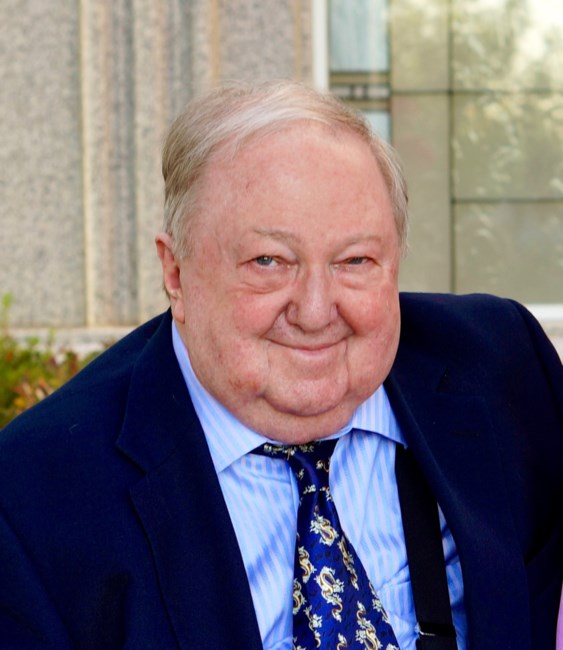
On November 24th 2015 after a brief illness, Richard Daryl Westrup passed away peacefully in his sleep. Richard was born on February 18, 1929 in Richmond, California to Ellis Arden McGlaughlin and Gertrude Mrytle Schrader. Richard’s paternal great-grandparents were among the earliest pioneer settlers of Humboldt County, California. On his mother’s side he could trace his lineage back to the Mayflower and his great-grandfather Schrader was a German immigrant who fought during the Civil War as a member of the 12th New York Volunteer Infantry—a unit made up of many recent German immigrants to the United States.
He was born only months before the stock market crash of 1929 and his early life was shaped by the Great Depression. When his parents divorced, he and his mother relocated to Bowman, a small town near Auburn, California. His mother met and married Joseph Alford Westrup, a local entrepreneur and store owner. “Al” Westrup, as he was known, adopted Richard.
During his early teen years, Richard worked in the fruit sheds in Newcastle—just outside of Auburn—building the crates used to ship peaches and other fruit from local orchards. He placed a high premium on hard work—something he taught to his children and grandchildren.
He attended Placer High School in Auburn where he was a member of the German Club, the California High School Cadets and the school’s Rifle Team. World War II began shortly before he entered high school and he had cousins who served in the armed forces. Like many of his generation, he left high school to enlist in the Army. He completed basic training at Camp Stoneman and was stationed at Camp Beale near Marysville, now Beale Air Force Base. He was assigned to the Transportation Corps and rose quickly to the rank of sergeant and was at one time--at the age of 17--one of the youngest sergeants in the Army. He was selected for Officer Candidate School with the promise of occupation duty in post-war Japan, but he chose instead to leave the service and return home.
Returning to Auburn, he resumed his studies at Placer College—the forerunner of today’s Sierra College. Education was always very important to him. While in college, he worked at Rankin’s, a men’s clothier, in Auburn.
Richard was a life-long member of the Church of Jesus Christ of Latter-Day Saints. After his time in the Army, he served a three year church mission to Switzerland and Austria. When his missionary service concluded, he returned to California to resume his college studies. He had planned on transferring to the University of Utah and while in Salt Lake City making preparations, he had a chance meeting with RoseMarie Haaf, an acquaintance from his missionary days in Switzerland. RoseMarie and her mother had immigrated to the United States and settled in the Salt Lake City area. They courted and he asked her to move to California so they could become better acquainted. She stayed with her future mother-in-law in Auburn. He and RoseMarie married in 1954 in the Salt Lake City LDS Temple. After their wedding, they moved to Sacramento so Richard could attend Sacramento State College.
While attending Sac State, Richard had several jobs to support his young family. He sold shoes at J.C. Penney. He worked for the Department of Motor Vehicles. He was a student teacher at C. K. McClatchy High School and he was a technical writer at Aerojet.
In 1960, after completing college and the teacher credentialing program, he applied for a teaching job at Mira Loma High School which had opened that year. It was the beginning of a relationship that would span five decades. He was interviewed and hired by the Department Chair of the Social Studies department—Len Frizzi—who became a lifelong friend and teaching colleague. In the 43 years he worked at Mira Loma, Richard taught social studies, physical education, driver’s education, health and safety and Spanish, but will be remembered most as the German teacher from room B-14.
He believed that teaching German was not just about learning the language, but also about experiencing the culture. He frequently held ‘culture days’ where he exposed his students to German cooking—done mostly by his wife RoseMarie. He started a German Club at Mira Loma which was another vehicle to introduce students to German culture. Judging from old year book photos, the German Club was the largest and most active club in Mira Loma history.
In the 1970s, he began taking students on backpacking trips through the German-speaking countries of Europe for intensive language and culture study. This was a natural outgrowth of what he did in the classroom. These trips continued until his first stroke in 2003. Many of the students who participated in these trips will tell you of his sturdiness—often walking many kilometers from the train station to the youth hostel, back pack on his back. Students in tow. If you know someone who went on one of these trips ask them about the walk up to the youth hostels at Admont or Hohen Werfen. The steep hills were legendary. Richard established a school exchange program with a secondary school in Freiburg, Germany and he and RoseMarie often hosted German educators in their home during these exchanges.
Over the years at Mira Loma, he was one of the founders of the International Studies and International Baccalaureate (IB) programs at Mira Loma High School. The IB program was the first of its kind in the region when it began at Mira Loma. He also started an international night where language students and other Mira Loma students from different cultures could showcase their culture to the larger school community. He spent summers in Costa Rica to establish exchange relationships with teachers there. He helped found the Mandarin Language School at Mira Loma. Later Japanese and Chinese language instruction would be added to the curriculum and Richard began to establish ‘sister schools’ in Asia. Student exchanges with these schools continue today—part of his enduring legacy at Mira Loma.
Later, using pioneering foreign language teaching methods, he was invited to teach English at a secondary school in the People’s Republic of China as part of a foreign language learning demonstration project.
Educators from Asia and Central America soon joined their counterparts from Europe as guests in the Westrup home.
He will be remembered not only for his professional accomplishments, but also for the many lives he touched both inside and outside of the classroom and the enduring legacy of programs he helped to establish that continue to influence students today.
One of his earliest former students, Charles Haussler, who like many became extended family to the Westrups said it best, “His greatest accomplishment, aside from his family, was his unique ability to make people feel ‘at ease’ and ‘at home’.” This sentiment has been echoed by scores of students who have posted social media messages when they learned of his passing.
He is survived by his loving wife of 61 years, RoseMarie, and their four children--Roger, Rochell, Raena and Reynold, fifteen grandchildren and ten great-grandchildren. He was preceded in death by a granddaughter, Reagan Ellis Westrup.
We will miss him, but we bid him a fond Auf Wiedersehen—which means ‘until we meet again’!
In lieu of flowers, the family wishes that donations be made to the United Cerebral Palsy of Greater Sacramento
Show your support
Add a Memory
Share Obituary
Get Reminders
Services
SHARE OBITUARYSHARE
- GET REMINDERS
v.1.18.0