
OBITUARY
Dr. Earl Martin Stenger Jr.
May 25, 1941 – September 9, 2026
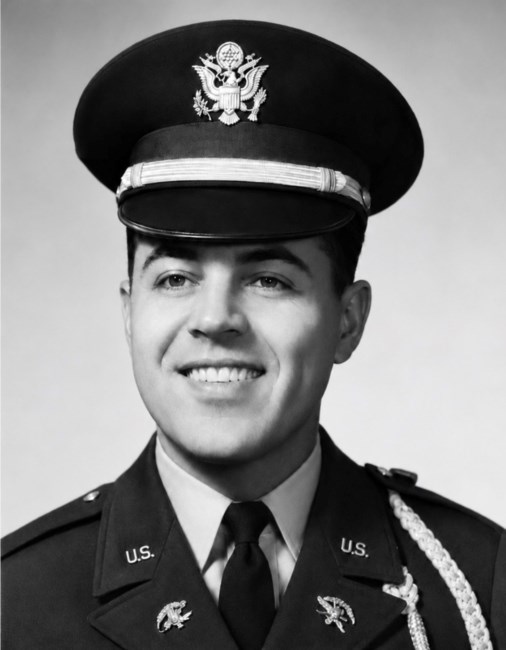
Dr. Earl Martin Stenger, Jr., physician, psychiatrist, advocate for the humane treatment of the mentally ill, and a man of extraordinary generosity and independence of spirit, died on September 9, 2026. He practiced psychiatry until the age of 84. He was 85 years old at the time of his death.
Earl was born on May 25, 1941, to Earl Stenger and Lucia Castro Stenger. He attended Central Catholic High School in San Antonio, graduating in 1959, and later attended Texas A&M University. While at Texas A&M, Dr. Stenger was a Lieutenant Colonel in the Corps of Cadets and served as a captain of the Ross Volunteers, the honor guard to the Governor and the State of Texas. He pursued his medical education at the National University of Mexico Medical School and later continued his medical training at the University of Texas Health Science Center at San Antonio, completing his studies there in 1970.
Dr. Stenger devoted his professional life to psychiatry and to a deeply held belief that people suffering from mental illness deserved dignity, compassion, and meaningful treatment rather than mere confinement. That conviction led him to England, where he trained in the circle of the renowned Scottish psychiatrist R. D. Laing and the Philadelphia Association. Dr. Stenger's experience included time at Kingsley Hall in London, the experimental therapeutic community closely associated with Laing and his unconventional approach to the treatment of severe mental illness. Laing, whose influential work, The Divided Self, challenged many of the prevailing assumptions of institutional psychiatry, sought to understand the experience of the mentally ill rather than simply suppress its symptoms. These ideas had a lasting influence on Dr. Stenger and reinforced his belief in a more humane and meaningful approach to psychiatric care.
Dr. Stenger continued that journey in the United States through his work as a forensic psychiatrist in federal court litigation challenging the conditions and treatment of patients confined in Texas mental health institutions. In connection with Jenkins v. Cowley, Dr. Stenger undertook the unusual and courageous task of observing conditions within the institutional mental health system firsthand as an undercover patient. His psychiatric expertise and observations helped expose deficiencies in the care and treatment of institutionalized patients.
The litigation was pursued by Dr. Stenger's brother, attorney Frank Stenger, and his law partner Aglaia Mauzy. The case asserted the constitutional right of institutionalized persons to adequate care and treatment and pioneered fundamental changes in the Texas mental health system, significantly improving both the psychiatric and physical treatment of patients confined in state mental health institutions.
Throughout his career, Dr. Stenger was inquisitive, fiercely independent, courageous in his convictions, and unwilling to accept conventional wisdom merely because it was conventional. At the center of his professional life was compassion—particularly for those who were vulnerable, misunderstood, or unable to advocate for themselves.
But Earl's life was by no means defined by medicine alone.
On a personal level, he was known for his grand entertaining, his considerable skills in the kitchen, and the memorable feasts he prepared for family and friends. His table was a gathering place, and his home was rarely a closed one. He was generous to a fault. Anyone who needed help, companionship, a meal, or
simply a place to stay could find a welcome at Earl's house.
He possessed a curiosity about people and the world around him that remained with him throughout his life. He lived on his own terms, valued friendship and family deeply, and gave freely of himself and what he had. Dr. Stenger is preceded in death by his big sister, Diana Stenger Dupre, and he is survived by his sister, Patricia Meritz, and his brother, Frank Stenger; his nephews and nieces, Joe Fertitta Jr., Gianna Fertitta, Eric A. Dupre, Darren Meritz, Martina Meritz, and Sabrina Dupre; and his great-nephews and great-nieces, Ben Valdez, Cris Valdez, Aidan Fertitta Valdez, Evan Dupre, Dylan Dupre, Isaac Meritz Alvarado, Mila Meritz Alvarado, Luna Kolodner, and Xolo Kolodner.
Dr. Earl Martin Stenger, Jr. leaves behind a legacy that reaches beyond his accomplishments as a physician and psychiatrist. It can be found in the lives of the patients for whom he advocated, in the reforms he helped bring about, in the colleagues and family members he influenced, and in the countless people who experienced his friendship, hospitality, generosity, and compassion.
He will be remembered as a physician who believed that medicine must never lose sight of humanity, and as a man whose door—and whose table—were always open.
A memorial service is being planned for a future date.
Show your support
Send Flowers
Add a Memory
Share Obituary
Get Reminders
Services
- SEND FLOWERSSEND
FLOWERS SHARE OBITUARYSHARE
- GET REMINDERS
v.1.18.0