OBITUARY
Jan Jarboe Russell
January 14, 1951 – September 29, 2026
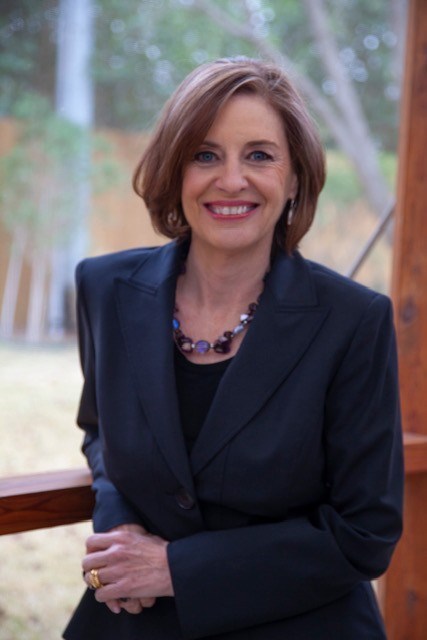
Jan Jarboe Russell, an award-winning journalist and author whose fearless reporting, lively curiosity and deep compassion illuminated the complexities of Texas and its people, died September 29, 2026, in San Antonio. She was 75.
For more than four decades, Jan was one of Texas’s most distinctive writers, known for her sharp eye, tenacity, wit and ability to find the story beneath the story. Her work appeared in Texas Monthly, the San Antonio Light, the San Antonio Express-News, The New York Times, Slate and other national publications. Her books included acclaimed biographies of Lady Bird Johnson and Eleanor Roosevelt, as well as “The Train to Crystal City,” a New York Times bestseller that brought national attention to a largely forgotten chapter of American history.
But Jan’s professional accomplishments tell only part of her story. To those who knew and loved her, she was a fiercely loyal friend, an exuberant conversationalist, a devoted mother and wife, and a woman whose enthusiasms seemed to know no bounds. She had an infectious laugh, an unmistakable voice that rose with excitement, and a remarkable capacity to make people feel seen, understood and loved. As one longtime colleague put it, she was an extraordinary writer and an even better friend.
Born on January 14, 1951, in Beaumont, Jan grew up in Cleveland, a small town in the Piney Woods of East Texas. Her father, Lloyd Jarboe, was a minister of music in Southern Baptist churches; her mother, Laverne (née Pope), was an elementary school teacher. Books and music filled the family home.
At 16, Jan landed a part-time job at her hometown newspaper and discovered her calling. She loved East Texas’s natural beauty, particularly the Big Thicket, but was troubled by the region’s racial attitudes and social conservatism. Throughout her career, she would explore the contradictions between the stories communities told about themselves and the truths they preferred to leave unspoken.
Jan graduated from The University of Texas at Austin in 1972 with a journalism degree. After a brief stint at the Savannah Morning News, she joined the San Antonio Light as a political reporter in 1973. In 1976, she moved to Washington, D.C., to join the Hearst Bureau, covering Texas politics. In 1984, she was one of 12 American journalists selected for the prestigious Nieman Fellowship at Harvard University.
She returned to Texas in 1985 as a senior editor at Texas Monthly, beginning a long association with the magazine. Jan was persistent, funny and disarming, but she never shied away from difficult subjects. Her reporting ranged from profiles of powerful Texas personalities to investigations of social injustice. Her award-winning 1988 story “Adoption: The Woes of Wednesday’s Child” exposed troubling adoption practices, and in 1993 she won a second Headliner’s Club award for “Why Me?” about the family of the Rev. Jimmy Allen, who lost three family members to AIDS. Jan had an instinct to listen to people whose stories might otherwise go unheard and to bring those stories to the world.
From 2000 to 2004, Jan wrote a nationally syndicated, twice-weekly column for the San Antonio Express-News. She remained fascinated by Texas politics and culture, but her interests extended to history, literature, art and the complicated lives of people who challenged conventional expectations.
Jan’s books reflected her determination to look beyond familiar narratives and recover overlooked histories. Her early work included “Cisneros: Portrait of a New American” (1985), about former San Antonio mayor Henry Cisneros, and “Lady Bird: A Biography of Mrs. Johnson” (1999).
Based on extensive research and interviews, including conversations with Lady Bird Johnson herself, the biography challenged the conventional image of the First Lady as merely ceremonial. Jan portrayed a consequential woman whose business acumen, political judgment, environmental commitments and influence on Lyndon B. Johnson deserved greater recognition. The Washington Post named the book one of the best of 1999.
Jan later explored Eleanor Roosevelt’s time in New York City in “Eleanor in the Village,” another portrait of a woman finding her own power.
Her best-known work, “The Train to Crystal City: FDR’s Secret Prisoner Exchange Program and America’s Only Family Internment Camp During World War II” (2015), grew from a story she had learned about decades earlier. Through years of research, she uncovered personal histories from a Texas internment camp where German, Japanese and Italian immigrants and their children—including American-born children—were held during the war as part of a little-known prisoner-exchange program.
The book became a New York Times bestseller and won the Texas Institute of Letters’ Carr P. Collins Award in 2016. It exemplified Jan’s determination to recover difficult history and restore the experiences of people largely forgotten.
She also chronicled San Antonio’s contemporary-art organization Artpace in “Dreaming Red: Creating Artpace” and compiled and edited “They Lived to Tell the Tale: True Stories of Modern Adventure from the Legendary Explorers Club” (2007). She was a member of the Texas Institute of Letters and the Philosophical Society of Texas and received Gemini Ink’s Award for Literary Excellence in 2018.
Jan’s curiosity extended beyond writing. In 1995, while working on “Lady Bird,” Jan discovered Nia, a movement practice that combines dance, music, and martial arts, exploring the connection between body and mind. What began as a way to overcome writer's block became a transformative part of her life.
She trained for years and eventually earned a first-degree black belt in 2014. For 25 years, Nia was an essential part of her life. Beginning in 1999, Jan taught Nia at studios and community spaces throughout San Antonio and also became a JourneyDance facilitator. She brought to teaching the same qualities that distinguished her writing: intelligence, a gift for language, curiosity about human experience and a desire to help people discover something new about themselves. Her classes were more than movement lessons; she used music, words and physical expression to encourage reflection, connection and healing. Her students remember her authenticity and the permission she gave others to be imperfect. Jan made people feel that they could simply be themselves.
San Antonio was Jan’s true home. She loved its history, creative energy and distinctive character, and it was there that her professional and personal lives flourished.
In 1995, Jan married Dr. Lewis “Lucky” Russell. Their first date became part of family lore. When Lucky arrived in a red sports car, Jan was so delighted that she kicked off her shoes, put her bare feet on the dashboard and announced that, had she known about the car, she would have painted her toenails red.
It was classic Jan: spontaneous, funny, unguarded and full of life.
The couple later discovered an unexpected connection from years earlier: Jan had once reported on a drug dealer caught in a confrontation between police and reporters. After shots were fired, the dealer was taken to a hospital where Lucky, then a medical intern, operated on him. Their paths had crossed long before they met.
Their marriage brought together Jan’s children, Maury Margaret Rabb and Tyler Jarboe Rabb, and Lucky’s daughters, Cory Russell Leahy and Megan Russell. Jan loved Lucky’s daughters and cherished the family they built together.
Jan’s love for family and friends was wholehearted and active. She called, wrote letters, remembered the details of people’s lives, celebrated their triumphs and stayed close through their crises. She could move effortlessly from politics to family, from a new book to a friend’s private worries, bringing equal measures of humor, candor and compassion.
Jan’s later years were marked by Alzheimer’s disease, a cruel illness for a woman whose life had depended on memory, language and unquenchable curiosity. As the disease progressed, she lost abilities that had once come naturally, but the relationships she had built endured.
On her 75th birthday in January 2026, longtime friends from across the country joined a call to celebrate her. Although speaking had become difficult, Jan listened intently as they recalled funny and wonderful moments from their years together. Her friends could still see a familiar twinkle in her eyes.
Throughout her illness, Lucky remained her steadfast companion and caregiver. The devotion that had sustained their marriage became even more evident during those difficult years.
Jan leaves behind a remarkable body of work, but her legacy extends far beyond books, awards and bylines. She believed stories mattered because people mattered. She sought out voices that had been ignored, questioned comfortable assumptions and found meaning in the complicated lives of others. She understood, too, that friendship was a daily practice of attention, loyalty and love.
Those who knew her will remember her laughter, fierce intelligence, candor, red toenail polish and boundless enthusiasm. When Jan took an interest in your life, she was interested in all of it.
Jan was preceded in death by her mother, father and brother, Allen Jarboe. She is survived by her husband, Lucky; her children, Maury, Tyler, Cory and Megan; and the many friends, colleagues, students and readers whose lives she enriched. The family would also like to acknowledge the beautiful loving care given to Jan by Diafana Angel, Norma James, Rebecca Rivera, and Janice Rackley.
A celebration of Jan’s life will be held at 10:00 a.m. Monday, November 2, 2026, at University Presbyterian Church in San Antonio. In lieu of flowers, the family invites donations to Gemini Ink, San Antonio’s literary organization.
Show your support
Add a Memory
Share Obituary
Get Reminders
Services
Celebration of Life
Share
Service
SHARE OBITUARYSHARE
- GET REMINDERS
v.1.18.0