OBITUARY
Joe De La Garza
May 2, 1928 – March 9, 2021
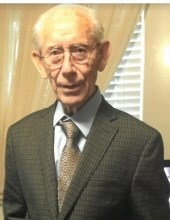
Joe Dela Garza (a.k.a Coche) 92, of San Antonio Texas returned to our Lord Tuesday Morning March 9, 2021 less than two months away from what would have been his 93rd Birthday. Joe passed away peacefully in his home as a result of complications related to Dementia. He was born on May 2, 1928 to Josephina De La Garza (Mother) and Mateo Flores Garza (Father). Joe is survived by his Wife of 50 years Ellen G. Garza of San Antonio whom he married at St Cecelia Church. He was a devout catholic who had completed his religious sacraments at The Immaculate Heart of Mary church located on San Antonio’s west side.
Joe attended Brackenridge high school back in the 1940’s where he was one of less than 20 Latino/ Hispanics to attend the school. At the time he and a few others from San Antonio’s west side stuck together. They would walk the tracks that crossed streets such as Brazos, South Flores and Probandt. These would eventually lead to the high school. Joe befriended many regardless of their background or race; for fun he wrestled with guys at the school that were nearly twice his size. This was tenacious as Joe was a medium framed kid and never backed down from the larger kids who often challenged him. He emphasized that these much bigger kids could “never” beat him or pin him down. They always had the same questions for him: wanting to know what it was that he ate and how come they could not beat him… Our Dad would often laugh when telling us this story. His conditioning came purely from working, it was a natural thing. Although not active in sports like most kids in his age group, his mother fed him well and it was the digging of graves by hand with Mateo his father and his brothers that gave him such incredible strength and endurance.
In an old voice recording my father discusses how he would hand dig two graves a day and in “some” instances up to three a day by pick and shovel. Joe described the process simply; “as long as you dug the grave slowly and took it easy while digging you would not get tired as fast”. Even when it rained this would not stop him from digging graves; he would just put up a small tent and as he said, “you had it made”. He never put off things that could be done today for tomorrow. His famous saying to us “tomorrow never comes.”
Joe recalled a time where he had to dig a grave by hand at St Joseph’s Church in Honey creek well after sunset. Back than this Church was located near a quiet and unpaved old country road that had little to no traffic (Today this road is known as FM 46) That night Joe had just finished digging a grave and had packed away all his tools. He was tired, dirty and ready to go home; only his truck would not start.
Much time passed that evening before a car would eventually drive by. Joe attempted to waive it down as it drove on past him. One could only imagine the disappointment of knowing you would be spending the night in the middle of nowhere, only this was not the case. That same car cautiously returned and out came a person who my father described as looking afraid. “What are you doing out here so late?” the person asked. “I drove passed you the first time because It was late, you were dirty, and I was frightened. I returned because my conscience would not allow me to live with myself had I not returned.” the man exclaimed. That man turned out to be the priest of Honey Creek Church who lived on top of the hill and was leaving for the evening. There were times when Joe would dig graves at night; with nothing but a gas lantern at his side, and sounds of the wind and wild animals from a distance keeping him company.
Soon After high school Joe would enlist in the United States army where he would serve in the
Korean war conflict from 1951-1952 in the grave registration department. (he ended his service as a E-5 Non-Commissioned officer). His training would take place in Colorado where he would see the “beautiful mountains” as he called them. He described the mountains covered at the top with snow and looking like the tops of Ice cream cones. In Colorado he received special training and physical conditioning; how to prepare during actual war-time fighting and jumping off of tall platforms by bungie cord. He never had to jump out of a plane but had the training to do so.
While stationed in Colorado you would find Joe constantly cleaning gear and sweeping up around the barracks; He was the type of person that could NEVER sit still. It was this dedication that got him noticed by one of the company officers. (sic “Smith”) This Officer would ask, “why are you always working?” Over time he and my father would become good friends. During My Fathers time in Colorado this Officer would often take him to church and Dinner with his Wife and two Daughters. They developed a sort of weekly routine that Joe found comforting. Other soldiers took notice of the relationships Joe built with his superiors; he always attracted the attention of people in charge because of his dedication and attention to detail. When Joe’s time in training camp had ended several of the officers threw a going away party for my father. The officers who attended also pitched in for the event. It was something that my father was very proud of and would often talk about privately amongst his family.
The Officer (sic “Smith”) that befriended my father was sad to break the news that Joe had orders for Washington. It would be in Washington where the soldiers would then board ships and be sent out to Korea. He generously gave my father a few days to visit home in San Antonio before being sent to Washington.
He arrived home late one evening and attempted to quietly sneak into his home. Instead, he was greeted by his mother Josephina. Seeing that her son looked very tired, she allowed Jose to sleep in the following morning. His father Mateo had work very early the next day, so she did not wake Mateo and inform him of Joes surprise visit.
Disappointed that his mother Josephina did not wake him for work that following morning, Joe caught a bus and met up with his father who was working a burial service at the old Roselawn cemetery. From a distance Joe walked towards his father; Mateo thought nothing of him until the young man got closer. When taking notice of the familiar young man’s frame as he got closer Mateo asked, “are you real or a ghost?” He was completely surprised as he was not aware of his son’s arrival whilst knowing his son was a soldier. After this short visit to San Antonio, Joe boarded a train to Washington for deployment. There he would spread word of his expertise in handling and caring for the dead. This was a time in which your skills could potentially determine your survival in war. (They understood him to be an undertaker, instead of a grave digger and he went along with it)
It was also in Washington where Joe would meet up with one of his old Friends from the Neighborhood, Richard Cavazos.
In Korea, my father was sent to a regiment where he would work directly under a (G.R.O) or
Grave Registration Officer. His responsibilities included retrieving the remains of fallen soldiers and their possessions. The conditions in which these soldiers were found made it a difficult and tall task for any person to even imagine. In fact, the Grave Registration officer at the time had seen too much death and had “snapped” short into Joe’s arrival. My father recalled this moment as he walked into a service co. tent. It was the end of the day and he discovered the G.R.O in charge rambling and holding a gun to his own head. Joe quickly notified the nearest M.P.s of the situation however by this time, it was too late.
After this incident Joes responsibilities would become more mentally challenging as the officer in charge immediately pointed to my father and said, “You’re in charge now.” With zero hesitation Joe found himself climbing mountains that were crash sites for airplanes, carefully removing booby trapped soldiers from destroyed tanks, and taking flipped over jeeps off the bodies of crushed service men.
During my father’s time in G.R.O he was provided three soldiers who would work directly under him. These soldiers would be responsible for helping him retrieve the dead and were also responsible for guarding the area where the bodies would be housed. This area was separated from the other camps, as it served as a holding spot for the dead. It was guarded in a way so that other soldiers were kept away in effort to keep moral up. Not only was this area or Garrison as some called it used to house the “fallen”, it was also used for storage of supplies, beer and liquor which Joe would also be in charge of.
“I never once sold beer or whiskey to a Soldier” my father exclaimed several times as he could have easily profited from this situation. It was hell out there and he would give it to soldiers to help ease their nerves when the fighting was at a calm. It was during the few calm times he would think about his Friend Richard.
My father recalls checking on Richard after a major rain; Richard was ordered to stand watch in a fox hole near the front line with water up to his waste and was not allowed to leave. Seeing this Joe left and would return with dry clothing for his friend. It was later My father would learn that his friend Richard was severely injured and lost an eye in combat. In effort to save Richards Family from major heartache caused by a vaguely written letter sent by the military, my father personally wrote Richards family to inform them the wound was non-life threatening.
Joe could have Chosen the Military as his career path and it would have been a most honorable one. In conversation with him he would say. “I’d have to pick up all the parts of peoples bodies, man it was Hell, I just wanted to come home to my family with all of my limbs so I could help my Father Mateo again.” He felt as if throughout his entire time in Korea someone was looking out for him.
Joe eventually followed his Father’s footsteps and become a reputable gravedigger who serviced several of the local San Antonio Funeral homes. He specialized in burial services which consisted of lying to rest thousands of thousands of San Antonio Natives. In 1977 one of the more notable services Joe (aged 49) assisted with, was the burial of a Beverly Hills socialite and widow of Texas oil tycoon Ike West. She was famously buried inside of her $20,000 sports car. What was intended to be private was made a spectacle which made national news.
On November 11,1993 Joe D. Garza and Son Joe P. Garza assisted in reinterring the remains of a high-profile individual to San Antonians’, (Sidney Johnson Brooks, Jr.) They successfully assisted in transferring the remains from the Alamo masonic Cemetery near downtown San Antonio to what is now known as the Sidney J. Brooks Jr. Memorial park. This was commissioned at the request of the city Council. Brooks Field (Now brooks Air Force Base), was named in his honor.
The last three months of Joes life he experienced the Birth of his fourth Grand-Child, A weeklong winter blast where his Grand-children would bring him in a 20-inch-tall snow man and still much love. Happy B-DAY Dad, we are proud of you.
Joe was a strong believer in education. He utilized the GI bill to become a certified barber as well as studied photography. He and his wife would both cut their children’s hair in the backyard. The boys would end up with crew cuts, his preferred style for the both of them. He sent all three of his children to Catholic schools and along with his loving wife Ellen, had a strong commitment to both faith and family. Joe’s work ethic, values, and perseverance transcend through the lives of his children.
Joe Garza laid the foundation of what was later to become South Texas Cemetery Services one of South Texas’ largest grave digging operations, and South Texas Memorials a manufacturer of custom headstones and Memorials. We love you Dad.
Show your support
Add a Memory
Share Obituary
Get Reminders
Services
SHARE OBITUARYSHARE
- GET REMINDERS
v.1.18.0